Welcome to the June night sky. The planet Venus dominates the early evening sky in June when it will be seen high in the west.
This is the brightest Venus will get this year and you will still be able to see this planet until nearly three hours after the Sun has set.
When Venus is as brilliant as this and visible low down in the a dark sky, it is often mistaken for something alien and when it is very low on the horizon, the earth’s atmosphere causes the light of Venus to flash and change colour rapidly and to make it appear very strange indeed, so it is easily confused with something “out of this world”.
Venus has a surface temperature of 450ºC and an atmosphere of carbon dioxide and sulphuric acid clouds, and it is often said that Venus is so hot due to a “runaway greenhouse effect”.
But, in fact, hardly any sunlight reaches the surface of the planet and the high temperature is due entirely to the internal heat of Venus being retained by the exceptionally dense atmosphere, which is 90 times denser than our Earth.
On June 11, the planet Venus will be close to the two bright stars Castor and Pollux, which represent the constellation of Gemini. Venus will, however, be much brighter than these two stars.
The crescent Moon will be close to Venus on the evening of the 14th.
The ringed planet Saturn is well visible high in the south during June evenings. By the end of the month it will set in the west at midnight. Saturn is in the constellation of Virgo and shines with the yellow light and is easy to identify.
Planet Mars is in the constellation of Leo at the moment and will be close to the star Regulus on June 5. Mars is quite a distance from the Earth now and not much detail is visible through a telescope.
The giant planet Jupiter is in the constellation of Pisces and rises 2.30 a.m. The summer Solstice is on June 21 and this is when the Sun is at its highest point in the sky at midday.
Meteor showers
June sees three regular meteor showers and the first being the Arietid meteors that can be seen originating from the constellation of Aries on the night of the 7th.
On the night of the 16th, the Lyrid meteor shower is visible and on the 30th the Draconids should be active.
None of the meteor showers of this month are expected to be dramatic but are worth looking for if you have time to spare on a warm June night.
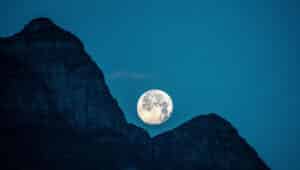
The Moon is at first quarter on the 4th, full on the 12th, last quarter on the 19th and new on the 26th.
Clive Jackson is the Director of the Observatory and the Camera Obscura (next to the Castle in Tavira), specialising in education and public outreach. Tel 281 322 527, fax 281 321 754, email cdepa@mail.telepac.pt and website www.cdepa.pt.