Desertification of south is “inevitable”
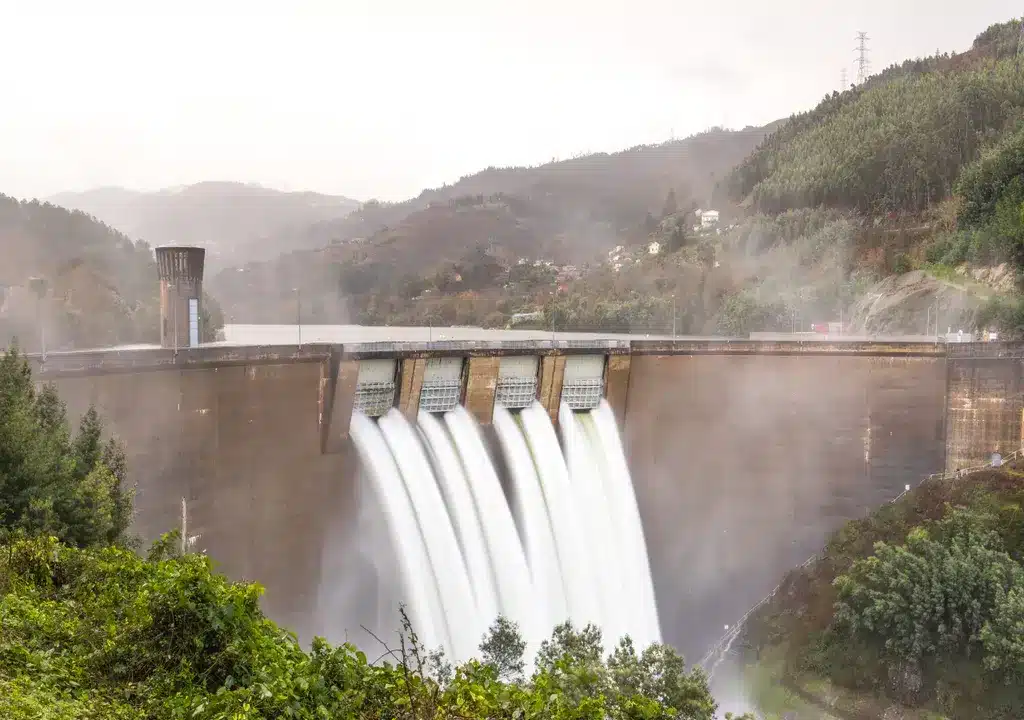
A long article in Diário de Notícias today suggests northern regions, with their brimming dams and reservoirs, reject the idea of a water highway to feed the parched south – a solution now being pushed by mayors in the Algarve – saying “we don’t have excess water”.
It’s an assertion that certainly doesn’t ring true this year. The north is practically overflowing with water. But mayors and producers in certain areas tell the paper there has been such a lack of structural solutions, that, in some years of depleted rainfall, communities have been forced to ‘bus in’ water in tankers.
And then there is what appears to be a mixture of indifference and the feeling that the south has ‘brought it all on themselves’.
Luís Vila Real, one of the largest producers of apples in the agricultural Ansiães plateau, and also president of Afuvopa, the association that brings together producers in the area, alluded to the “super intensive olive and almond plantations (of the Alentejo) that are sucking up the water from Alqueva” as well as the berry greenhouses in and around Odemira and the avocado plantations in the Algarve, all of them crops “that require a lot of water all year round” – and which it has to be said local people never wanted but which authorities insisted was the ‘agriculture of the future’.
Whatever the ‘blame’ for the dire situation in the south, DN’s message is that the north is not prepared to help out.

“I don’t see that the north has too much water,” stresses Luís Vila Real, emphasising that “no water structures have been created to store water that would actually be surplus to the crops grown here in the region” while, in his mindset, the “south of the country is suffering a phenomenon which is the advance of the North African climate, and an almost inevitable desertification that requires other adaptations”.
Rui Cortes, a specialist in water resources and professor at the University of Trás-os-Montes and Alto Douro (UTAD), “also disapproves of the idea of (water) transfers”, says the paper.
Not only do these infrastructures “imply very high investments, which would increase the cost of water fivefold”, but “they are tragic in terms of the environment and land use planning“, he explained. “We have to preserve aquatic ecosystems and their quality,” says Cortes, a member of the National Water Council and of the Douro river basin defence movement ‘MovRioDouro’, pointing out that the Water Framework Directive (the main instrument of the European Union’s water policy) is “against the idea of transfers, because that implies precisely environmental degradation”.
Right now “water is already being diverted from the Sabugal Dam area (Douro) to the Meimoa Dam (Tagus), for the Cova da Beira hydro-agricultural development, “but these are limited transfers, nothing like what is being called for now”, he told DN.
“Furthermore, the researcher points out, these water transfers promote “social and regional tensions” that can be difficult to manage. He gives the Spanish example of the Tejo-Segura transfer, which began more than 40 years ago and has led to more and more protests from the farmers of the Tejo, from where water is taken to feed the gardens and mass tourism of the Spanish Levante (Murcia, Alicante) – which has led the Spanish government to announce a 40% reduction in these transfers from 2027.
“Rui Cortes agrees that this year it has rained “more than average” in the north of the country, which means that most of the reservoirs in the Douro Basin are now full or almost full.
“According to the latest monitoring bulletin provided by the Portuguese Environment Agency (APA), dated January 8, the Douro basin had more than 90% storage in its reservoirs, slightly above the average for the season. But it is not always like this – hence the palpable reluctance to even consider ‘water sharing’ with populations of the Alentejo/ Algarve.
DN’s much longer article on this subject can be read in its entirety here. ND