Experts call areas “to be taken into account when planning marine territory”
With so many world governments focused on what is loosely termed ‘the economy of the sea’, marine conservationists are working hard to create Important Marine Mammal Areas (IMMAs) – as ways of protecting chunks of the world’s oceans. A working group has just approved 33 new IMMAs, four of which are in Portugal.
In a statement, Porto-based Interdisciplinary Centre for Marine and Environmental Research (CIIMAR) – part of the working group – has emphasised the importance of the new classifications which include areas of the Azores and Madeira.
One of the mainland IMMAs “has the harbour porpoise as one of its target species” – species “at serious risk of extinction off our coast,” according to CIIMAR researcher Cláudia Rodrigues.
Another IMMA covers the River Sado, and focuses on the importance of the region for “the small resident population of bottlenose dolphins, which is highly dependent on the Sado estuary for vital activities such as feeding, resting and nursing their young,” researcher Inês Carvalho, of the Instituto Gulbenkian de Ciência, in Oeiras, near Lisbon, told Lusa.
Francisco Martinho, from the Associação para as Ciências do Mar (APCM – Association for Marine Sciences), also believes that it is important for the IMMA announcement “to act as a reminder of the urgency of joining forces to conserve this unique population of dolphins in Portugal.“
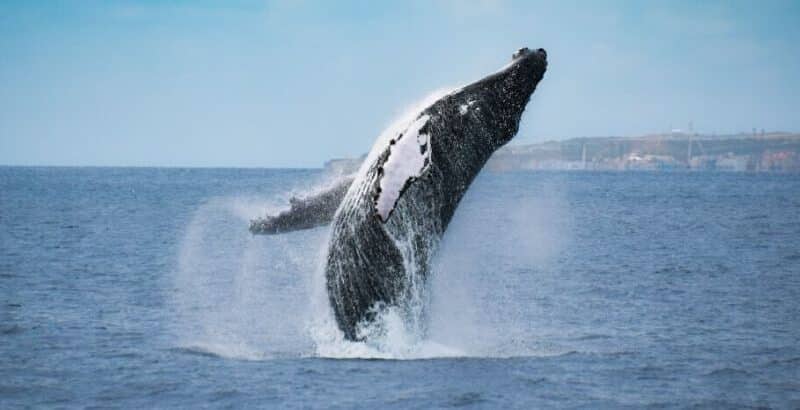
The Azores IMMA covers “the waters around all the islands up to a depth of two to three thousand metres” and aims to protect the “high biodiversity of cetaceans in the region” – emphasising the importance of the archipelago “as a feeding, breeding and migration area for various threatened or vulnerable species, such as the blue whale, common whale and sperm whale,” in the words of researchers Mónica Silva, Laura Gonzalez, Sergi Pérez-Jorge and Margarida Rolim, all from the University of the Azores.
For its part, the Madeira IMMA also covers Spanish territory, including the Canary Islands.
“This IMMA is home to a third of the world’s cetacean biodiversity and is home to resident populations of bottlenose dolphins, pilot whales and beaked whales,” said Luís Freitas, of the Madeira Whale Museum.
Filipe Alves, of the University of Lisbon’s Marine and Environmental Sciences Centre (MARE), is quoted as stressing the importance of theis area for “feeding, resting, socialising and developing the young of at least 10 species of cetaceans.”
The researchers involved are now calling for these IMMAs to be taken into account when planning marine territory, creating marine protected areas and carrying out environmental impact assessments.
In the past (some of it relatively recent) there have been murmers of ‘exploiting Portugal’s natural marine resources’ – a direction that has seen conservationists race to find areas that require protecting.
There are currently 380 IMMAs and 185 areas of interest worldwide. ND
Source material: LUSA