Marcelo’s words on ‘colonial reparations’ being highlighted
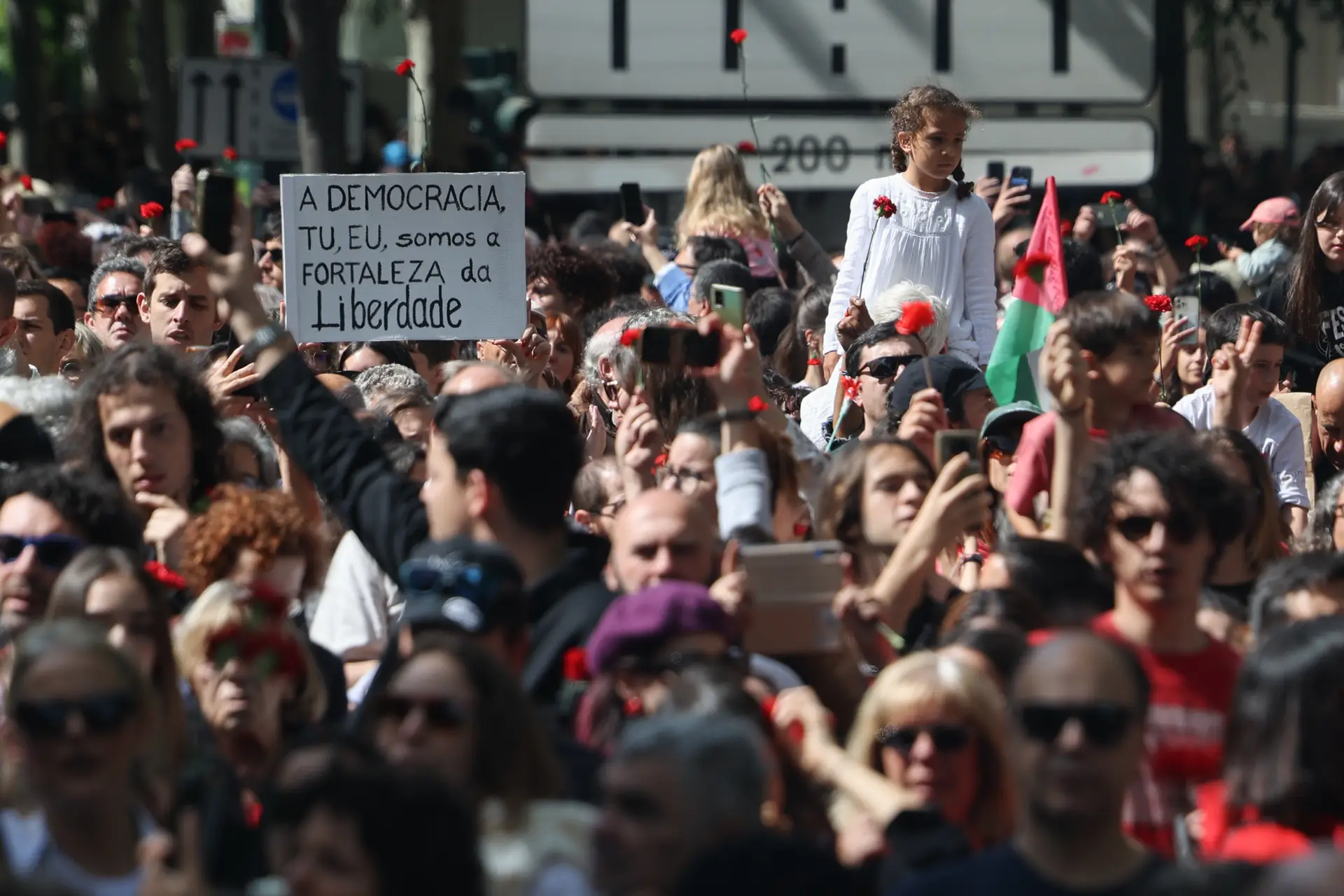
The emerging controversy over colonial reparations and the images of the popular celebrations of the 50th anniversary of the 1974 Revolution are today being featured in the international press, with particular emphasis on newspapers from Portuguese-speaking countries, writes Lusa.
The website of Mozambique’s Jornal de Notícias headlines the importance of the African peoples in the changes in Portugal.
“The President of Mozambique, Filipe Nyusi, said yesterday (Thursday) that the Portuguese people, in celebrating the 50th anniversary of the Carnation Revolution on 25 April, should not forget the contribution of the African peoples”
For the Mozambican president, the presence of representatives from these countries at the celebration was a tribute to the “heroes of the anti-colonial struggle and the young people who put an end to the oppressive regime”.
Participation of the heads of State and representatives of countries of the Community of Portuguese-Language Countries in the commemorations was also been highlighted in Jornal de Angola, which mentioned the presence of President João Lourenço.
In the edition of Cabo Verde’s Expresso das Ilhas, a news item accompanied by a photograph states that the MpD (Movement for Democracy) caucus remembered the 50th anniversary of April 25 and renewed its commitment to the ideals of freedom and justice, “through a political declaration.
“On this 25th of April we celebrate not only the date, but also renew our commitment to the ideals of freedom and justice. Cabo Verde is a nation that seeks to strengthen and valorise these fundamental principles”, said MpD MP Euclides Silva.
The same portal also highlights statements made by academic Daniel dos Santos, who considered April 25 to be one of the “most important and memorable” dates in the history of Cabo Verde, despite the fact that the country has not kept its promises.
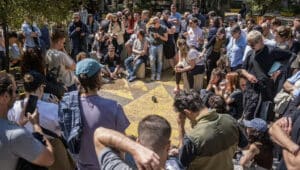
In Brazil, the Folha de São Paulo website published photographs of the celebrations and the electronic edition of the Globo headlined: ‘“Fascism never again”: Tens of thousands of people celebrate 50 years of democracy in Portugal”.
The Globe notes that commemorations of the 50th anniversary of the Carnation Revolution were “tak(ing) place against a backdrop of a resurgence of the far right and after statements by the president (Marcelo Rebele de Sousa) about historical reparations“.
It’s a “Toxic Theme”, writes the Globe, which accompanies the texts with photographs of the celebrations in the streets of Lisbon.
The website of Spanish newspaper El Pais publishes a photograph of an armoured vehicle used in 1974 by the Armed Forces Movement (MFA) surrounded by citizens with red carnations.
“Portuguese take to the streets to reclaim the freedom won with the Carnation Revolution. The far right despises April 25 1974 and attacks Marcelo Rebelo de Sousa for offering reparations for colonialism”, writes the paper’s correspondent in Portugal today.
In La Vanguardia, Félix Flores writes April 25, 1974 “is a military coup that deserves to be celebrated.
“The president of Portugal, Marcelo Rebelo de Sousa, said on the eve of the anniversary that “the right shares the same pride in the peaceful transition” that April 25 represents. For some, this means emptying the content of a civil and military revolt that was left-wing”, the article adds.
The same portal published the work Filmar a Revolução (Filming the Revolution) with colour photographs of the Carnation Revolution.
British newspaper the Guardian published a gallery with more than 10 photographs of Thursday’s celebrations in the Portuguese capital.
“Thousands of people celebrated the 50th anniversary of the Carnation Revolution in Lisbon on Thursday, which overthrew Europe’s longest fascist dictatorship and ushered in democracy. The almost bloodless revolution was led by a group of junior army officers who wanted democracy and an end to the long wars against independence movements in African colonies”, writes the paper.
The same newspaper published an article by academic Vicente Valentim on 1974 and the rise of the ‘far right’.
“In Portugal, we are celebrating 50 years of freedom. So why is the far right coming back?” asks the Portuguese political scientist from Oxford University and author of the book “The End of Shame”.
“It’s not yet clear how Portuguese democracy will respond to the new challenges posed by the rise of the far right and the end of the traditional two-party system. What is clear, however, is that Portugal is at a crucial political crossroads”.
On the website of the French newspaper Libération, Marcelo Rebelo de Sousa’s statements on reparations for the crimes of colonisation are covered in an article accompanied by photographs.
“At a time when various organisations are calling on former colonial empires to assume their responsibilities, Portugal’s head of State, Marcelo Rebelo de Sousa, has announced that he wants to “pay” for the crimes committed by his country”, writes Libération.
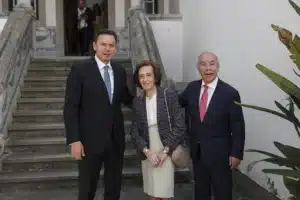
Le Monde publishes a photograph of Vasco Lourenço, a member of the MFA and president of the April 25 Association, next to Salgueiro Maia’s widow.
“On April 25 1974, the Portuguese military overthrew Salazar’s authoritarian regime (…). On the occasion of the 50th anniversary of this revolution, those involved and those who witnessed it are retracing the few hours when the old world gave way to the new”, said the Le Monde article, accompanied by photographs of the popular celebrations.
What Portugal’s political parties say about the idea of ‘paying’ for country’s colonial past:
Response has been swift and scathing by all parties of varying degrees of ‘the right’.
The centre right CDS-PP, for example, has “rejected revisiting colonial legacies” and “duties of reparation”, stressing that Portugal “did not change regime to become an insolvent State…”
CDS-PP’s parliamentary leader Paulo Núncio said: “History is history, and our duty is to the future, built and founded between sovereign States spread across the four continents without discrimination or prejudice between the northern and southern hemispheres, from west to east,
“We don’t want historical controversies or duties of reparation that seem imported from other contexts outside the Portuguese framework”, he pointed out.
It is an opinion shared almost exactly by Iniciativa Liberal, one of the country’s other ‘centre-right’ parties, and the 4th political force in the country (mustering admittedly only 8 MPs) – albeit leader Rui Rocha was much more critical of President Marcelo, suggesting that “compensating third parties” for the past, was “an attack against the interests of the country”.
“No sir”, he responded to Portugal’s head of State. “History is not a debt. History does not oblige penitence”.
The most ‘violent’ of rejections so far, however, has come from CHEGA (the country’s 3rd political force, voted up at the last elections to the point that it now has 50 MPs and the apparent support of well over 10% of the country).
CHEGA leader André Ventura accused President Marcelo of “betraying the Portuguese” by telling them that they need to feel guilty and responsible for the country’s history.
CHEGA’s parliamentary leader Pedro Pinto also delivered a blistering speech in parliament during the traditional ‘solemn session’, in which he said the president would have to withdraw his words on ‘reparations’ for Portugal’s colonial past – and that his party would be taking the matter further. “One of the things on the table” will be a request to be received by the president, he said.
As for the parties of the left, these too could not be said to have ‘welcomed’ the president’s idea of reparations, no doubt for the simple fact that Portugal was indeed a ‘great colonial power’, but it is now a country (like so many others) struggling with debt, deep-rooted social problems and issues, and certainly not in any kind of position to start ‘paying’ for the actions, however brutal, of its ancestors. ND
Source material: LUSA/ SIC Notícias/ Jornal de Notícias