Portugal’s new government responds to President’s comments
Portugal’s fledgling centre-right government has reacted today to Marcelo Rebelo de Sousa’s controversial statements on what he believes is a duty of reparation to the former colonies.
“With regard to the issue of reparations to these States and their peoples for the Portuguese Sate’s colonial past, it is important to emphasise that the current government is following the same line as previous governments. There was and is no specific process or programme of action for this purpose”, said the statement.
“Even so, the Portuguese State, through its sovereign bodies – namely the President of the Republic and the government – has made gestures and cooperation programmes to recognise the historical truth with impartiality”.
“This is how we can understand, by way of example, the assumption of the decisive contribution of the struggle of these peoples for their independence to the end of the dictatorship and for the apology for the tragic massacre of Wyriamu.
“Within the framework of cultural and historical cooperation, the Portuguese State financed the National Liberation Struggle Museum in Angola; the setting up of a museum dedicated to the Tarrafal concentration camp in Cape Verde; and the restoration of the slave ramp on Mozambique Island in Mozambique.
“Added to all this is the overall priority given to general cooperation policies and their materialisation in areas as significant as education, training, language, culture and health promotion, in addition to financial, budgetary and economic cooperation.
“The Portuguese government’s line is and will always be this: deepening mutual relations, respect for historical truth and increasingly intense and close co-operation, based on the reconciliation of brotherly peoples”, concludes the statement.
The last few days have seen a number of almost bizarre statements by Portugal’s head of State – admittedly some which he may not have been aware were being recorded.
In a meeting with international journalists he described the current prime minister as having “rural behaviour” and “slow”, as he described the former prime minister António Costa – “slow, because he is oriental”.
Reading between the lines of Marcelo’s comments, one can see that he was attempting to show the ‘inscrutability’ of the new prime minister (someone, he remarked, who was neither from Lisbon nor Porto, and therefore almost unreadable…)
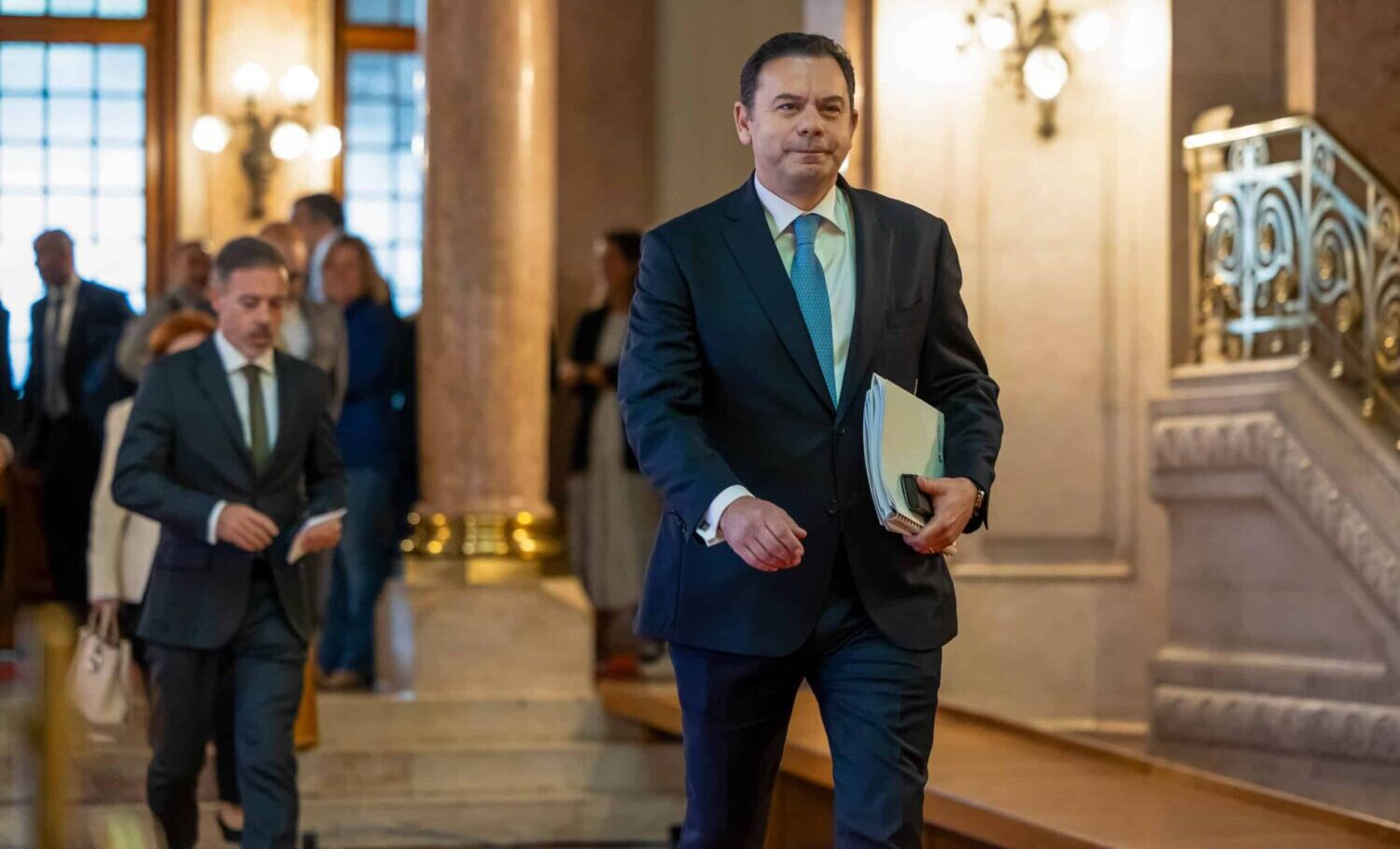
In many ways, the discourse elevated Luís Montenegro as an independent force, who (it appears) will be doing things his way, whether the country’s president likes it or not – or sees decisions/ actions coming or not.
So, is this an end to the matter? Very possibly not. Even today, the president was returning to this toxic theme (a term coined by the international press over the April 25 Bank Holiday), suggesting debt forgiveness, co-operation and funding as ‘examples’ of how Portugal could repair the consequences of the colonial period.
Talking to reporters in Peniche, he reiterated that, in his opinion, Portugal should ‘take full responsibility’ for what happened hundreds of years ago, and ‘pay the costs’.
It is a stance that was heavily criticised by political parties of the centre-right and right earlier this week – and now the government has made its position ‘crystal clear’.