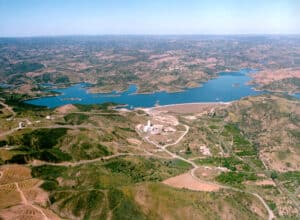
Pomarão project continues to attract criticism
Environmental association Almargem has joined the chorus of protests against the project to supply the Algarve with water collected from the Guadiana River at Pomarão in the Alentejo.
Describing it as a “mega project” which will not solve the “structural problems” behind water scarcity in the Algarve, the association states there are other solutions that should be prioritised over this plan.
“Aside from the many environmental impacts caused by this project, which are mentioned in Almargem’s report, some mistakes and omissions were also detected, namely that there is no sign of negotiations with neighbouring Spain, Portugal’s partner in the management of the flow of the Guadiana river,” the association says in a statement to the press.
Almargem breaks its worries down into three main points, starting with the motives behind the project.
Diverting water from the river to the Algarve for “other economic purposes” will result “serious environmental damage, compromising populations, local economic sectors, and natural values,” says the association. It also points out that water availability through this project will depend on “rainfall” and the commitments of Empresa de Desenvolvimento e Infraestruturas do Alqueva, S.A, which manages the irrigation areas surrounding Alqueva.
Almargem argues that “it is irresponsible” for this water to be used to supply the tourism and agriculture sectors instead of adopting measures to “reduce consumption” and “promote increased water infiltration and availability in the soil”.
Almargem uses the word “irresponsibility” again to describe its second gripe with the project: the lack of information about an agreement with EDIA. “It is not public if it exists, as nothing was revealed about the matter,” the association points out.
Lastly, Almargem calls for a different approach to the “sustainable development of the region,” namely one that is not rooted in “two sectors which consume a lot of water.”
“It won’t be with mega projects such as this one that the structural problems of water scarcity in the region will be solved,” the environmentalists state.
Instead, the association advises regional water company Águas do Algarve to invest in surface water harvesting – in other words, placing collection points at different locations where water is discharged from pumping stations, which connect the systems of the main dams for public water supply. The goal is to take advantage of water that’s already flowing out of these stations instead of letting it go to waste.
While Almargem recognises that this volume of water isn’t widely known about, there’s a “significant amount” of it, and it’s not being used efficiently. By capturing this water, the associations believe it could be put to better use, providing a more sustainable solution to the water supply issues in the Algarve region without the negative impacts associated with large-scale projects like the Pomarão project.
On a closing note, Almargem says that the Algarve must adapt its economy to what the region can handle, being realistic about its capacity to provide natural resources and having economic sectors being the ones to adapt to the available resources and not the other way around.
“Nobody would think it would be good business to build a ski slope in Cerro de São Miguel,” Almargem says, referring to a mountainous area in Moncarapacho, Olhão, where there is no snowfall.
“Thus, we cannot continue planning to use water based on quantities that do not exist,” the association adds.