Council of State – officially on Ukraine – an opportunity to push defence spending
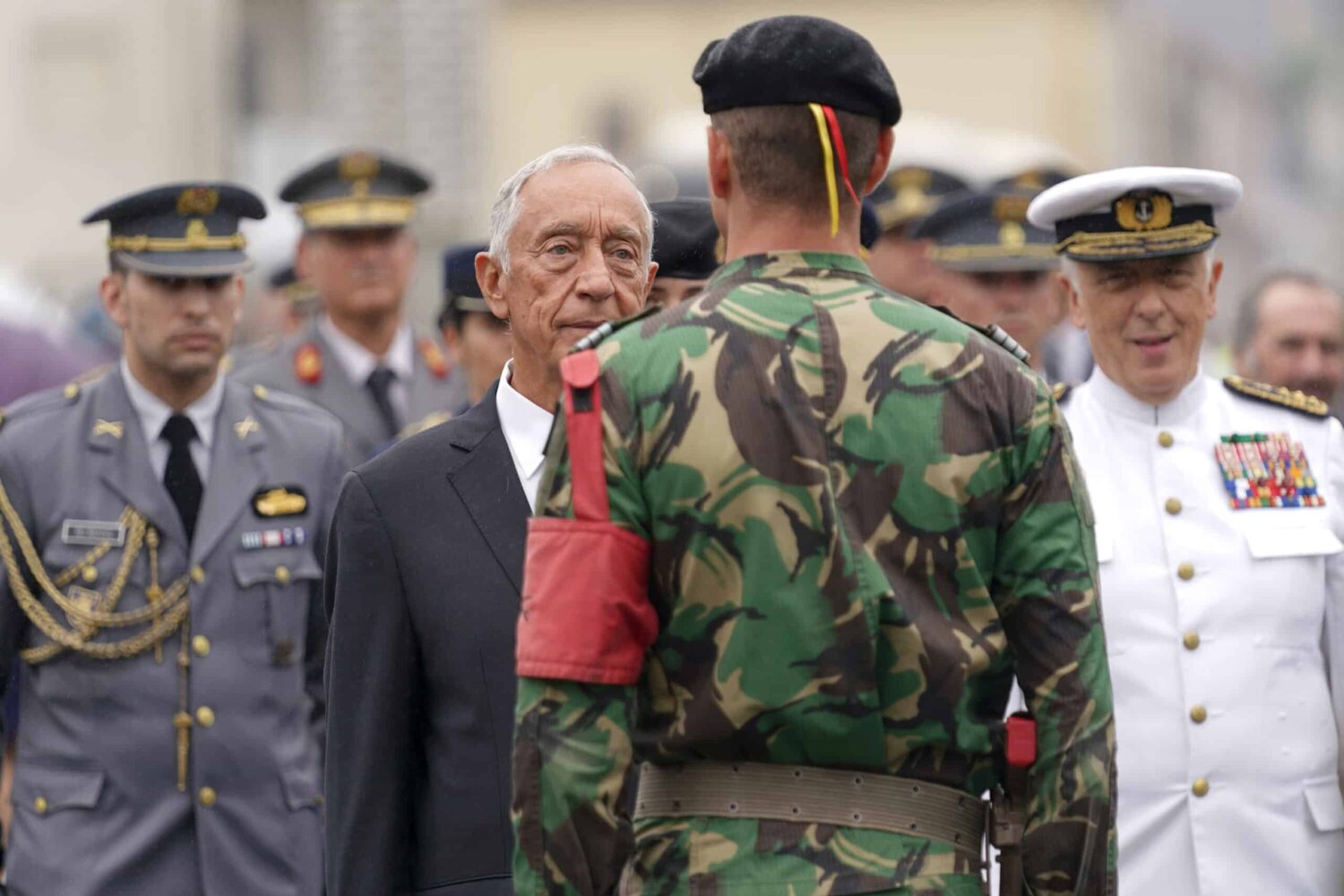
Today sees the official site of the presidency issue a three line announcement on the Council of State convened for July 15. It will be on Ukraine, says the text. But it will also be about Portugal’s military spending – and how President Marcelo reportedly believes the country should be spending more on defence in the 2025 State Budget, writes Expresso.
July will also see a meeting of the National Defence Council (equally billed to discuss the war in Ukraine) and a NATO summit in Washington.
Then, three days after the Council of State in Lisbon, there will be a new meeting of the European Political Community in the United Kingdom (this community, inspired by France’s President Emmanuel Macron, unites countries from the UK to Turkey, Ukraine, Armenia, Azerbaijan, Georgia, Iceland and Moldovia).
According to Expresso, the community’s focus will be on the war in Ukraine, and ‘the problem of migrations’.
But what will also be at issue in all these encounters is the demand of NATO that ALL its 30 allied countries spend at least the annual equivalent of 2% GDP for the privilege of membership – and Portugal doesn’t.
In fact Portugal remains among the (only) nine NATO member States that fails to meet the alliance’s minimum demands.
This country doesn’t even spend as much as Croatia on defence (and Croatia doesn’t spend as much as 2% either).
Spending 1.6% of GDP, we rank below Albania (2%), Montenegro (2%), Slovakia (2%), Romania (2.3%), Northern Macedonia (2.2%), Latvia (3.2%), Estonia (3.4%), Bulgaria (2.2%), Czechia (2.1%), Lithuania (2.9%), and many other much more wealthy countries. Poland, for example, spends 4.1% of its GDP on defence, an annual increase of 30% (precisely because of the war in neighbouring Ukraine, and its proximity to Russia/ Belarus).
Surprisingly perhaps, Spain, Slovenia, Luxembourg, Canada and Italy are also lagging behind in defence spending (Spain only mustering 1.3% of GDP).
But, clearly, Marcelo does not feel comfortable being part of the ‘poor payers’ group’. He wants Portugal to start making strides towards paying its way, which will imply another billion euros per year spent on defence (right now, our 1.6% works out at an annual expense of €4.248 billion).
The previous government committed to Portugal reaching 2% of GDP by 2030 – and this far the new minister of foreign affairs, Paulo Rangel, has suggested this is an objective to maintain.
Expresso’s article does not refer to the possibility that the United States could have a new president by 2025 (one that believes allied countries who do not pay the 2% minimum should not expect to be protected by NATO) – but this possibility, once so starkly put into words, is difficult to forget.
As Rangel has said: “The target was 2% in 2030, so that’s what has been agreed, but let’s see how we can credibilise our response“.
In other words, Ukraine will be on the agenda, but next month’s Council of State will also be about tackling the thorny issue of money, and how best to get Portugal to the point where it is paying its full whack in NATO.
natasha.donn@portugalresident.com