- with apologies to Christy Brown and Daniel Day-Lewis
As I am writing, we are approaching the conclusion of the opening group stage of the latest edition of the European Championships of the world’s most popular spectator sport – football – held in Germany, which are keeping a lot of us out of the Algarve sun towards the end of most days during these weeks of intense competition.
A bit like the club I have supported for the last 50 years – Tottenham Hotspur – I have always been passionate but never particularly good at football. My earliest memories going back to junior school are still positive and saw me starring in goal, largely due to the fact that I was taller than all the other boys, although I also seem to remember a stocky girl called Ulrike being better than me.
A few years later, I was allowed to turn out in defence for the Hampton School third XI on cold and usually muddy Wednesday winter afternoons – much by default rather than selection, I suspect.
On one remarkable occasion, I unleashed a huge punt from the halfway line which struck the opposition crossbar allowing our ‘goal hanger’, Carl Davis, to head home the rebound with ease. I concentrated mostly on middle distance running thereafter until becoming part of one of our university five-a-side league teams, ‘The Dapper Squad’.
Again, I only have one stand-out memory when going for improbable glory with a long-distance drive, defying a chorus of “don’t shoot, don’t shoot” shouts from my teammates, but this time the ball almost burst the ‘Bad News Bears’ goal net – the rest of that evening drowned in an imaginary storm of camera flashes and more than a few actual pints of lager.
But that is enough about me. Football has played an important part in Portugal’s more recent history, in particular since the dictator António de Oliveira Salazar came to power in 1932 and actively steered public interest away from politics and towards the game.
Success on the pitch was used as a propaganda tool promoting the Estado Novo regime, clubs were not allowed to sell their best players as they were regarded as property of the state, and any number of PIDE secret police agents and informers made sure that the talk in pubs and cafes revolved around football and nothing but football – a bit like today!
The ‘oldest alliance in the world’ also played its part with any number of British managers fostering and building the game here, starting with Scotland’s Charlie Bell at Sporting in 1919 followed by Englishman Arthur John, who also managed Benfica between the wars, and fond memories still existing at the Alvalade Stadium of three-time title winner Randolph Galloway in the early 1950s.
The ‘70s saw Jimmy Hagan a multiple champion with Benfica before failing at Sporting and high-profile Tommy Docherty at Porto. Ex-Manchester City and Crystal Palace manager Malcolm Allison, enjoying spells at Sporting, Vitória de Setúbal and briefly Farense, headed up a new British invasion during the 1980s, which also saw John Toshack, Keith Burkinshaw (both Sporting) and John Mortimore for a second time at Benfica arrive in Portugal.
Finally, during the 1990s, Graeme Souness’ failure at Benfica in contrast to the memorable serial title-winning tenure at Porto of Bobby Robson, who got his start at Sporting with José Mourinho as interpreter, put a temporary end to the flow of managerial talent from the British Isles.
Given Portugal’s long and colourful football history, there have been relatively few truly outstanding players. The first real international icon was Eusébio, the ‘Black Panther’, the then 18-year-old’s move to Sporting Lisbon from his homeland Mozambique being hijacked mid-Atlantic by Salazar-club Benfica before his rise to fame and an unprecedent – and yet to be repeated – third place finish with the Portuguese national team at the 1966 World Cup in England.

The vacuum on the big stage left behind by Eusébio’s retirement was finally filled by Luís Figo, a supremely gifted winger who managed to join a small and exclusive band of players equally successful and adored at both Barcelona and Real Madrid after leaving Sporting – and marrying a Swedish super model to boot!
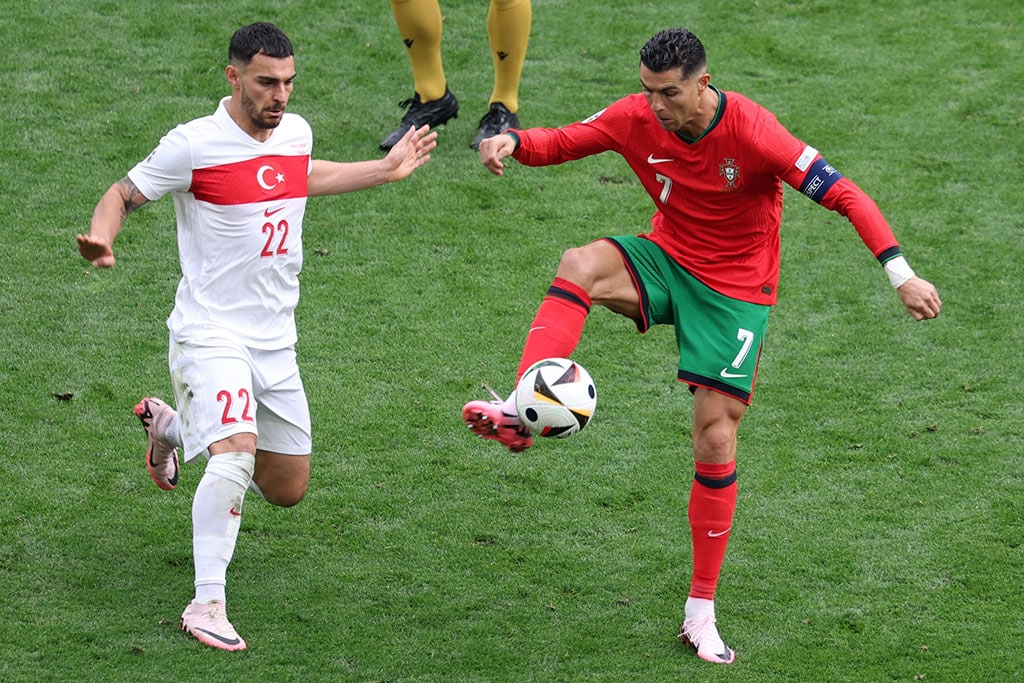
And then there is Cristiano Ronaldo. The now 39-year-old made his international debut in 2003 and much of Portugal’s more recent history is closely interwoven with that of the mercurial and at times divisive player from Madeira who, as I write, has amassed 208 appearances for his country during which he has scored a record 130 goals.
His first big tournament came a year later with Euro’2004 which has also been Portugal’s to date only ‘major’ ahead of co-hosting the 2030 World Cup alongside Spain and Morocco in six years’ time. Now termed a ‘Greek tragedy’, Ronaldo scored his first senior international goal during a 2-1 group stage defeat to Greece.
Manager ‘Big Phil’ Scolari’s talented squad did manage to recover from that opening loss and eliminate Spain, Russia, England and Holland on the way to the final on home turf in Lisbon but were again beaten by the Hellenic set piece specialists ably coached by German master tactician Otto Rehhagel.
The tournament featured several refurbished stadia as well as the €50 million purpose-built Stadium of the Algarve on the border of the Faro and Loulé municipalities. I remember taking the early morning train from Portimão in the pay of the Associated Press news agency for the official Portugal v England stadium opening earlier that year.
Initially tasked with hanging around the airport monitoring the arrival of English fans, I spent the remainder of the day keeping a look out for hooligans around Faro’s town centre cafés, but much to the dismay of my paymasters, there was not a hint of trouble with the carefully put together groups of supporters cleared for travel by the FA.
Towards the evening, I met up with colleague and Resident editor at the time Sarah Howe, and together we made our way to the Algarve’s new footballing citadel. An uneventful first half saw us retiring to the press bar for some liquid refreshment and when we eventually returned to our seats, we had missed Ledley King’s 47th-minute opener! We did witness Pauleta’s equaliser later as the match ended in a friendly draw.
Twenty years later, the stadium is regarded as a bit of a white elephant despite recent reports of profitability, it being hard to imagine that the initial outlay, loan interest payments and annual upkeep have been recouped with the low key and infrequent activity which has taken place there in the intervening years.
Portugal finally achieved their moment of glory in 2016 when lifting the winners’ trophy at Euro 2016 after beating hosts France in the final – ironically with an injured Ronaldo on the bench.
Fast forward and we find ourselves in Germany for what could well be Ronaldo’s swan song. National team manager Roberto Martinez – who would have thought a Spaniard would be put in charge of Portugal? – infamously sacked by Everton before spending six years in charge of Belgium’s ‘golden generation’ without winning anything, has plumped for a rather uninspired, conservative squad selection, picking the likes of Saudi league mercenaries Otávio and Ruben Neves in addition to underperforming Wolves trio José Sá, Nelson Semedo and Pedro Neto. Add in Porto’s 41-year-old veteran Pepe and inexperienced Francisco Conceição whilst leaving Sporting’s in-form title winners Pote, Trincão and Paulinho at home does not bode well.
As I am putting the finishing touches to this piece, the seleção has only just scraped past a very pedestrian Czech XI before easily dismissing inept Turkey in Group F, but I will be more than happy to be proven wrong as the do-or-die knock-out stages get under way on Saturday: Força, Portugal!
FOOTNOTE: prelude to a balls-up
As you are hopefully engrossed in this potted history of the beautiful game in Portugal, we find ourselves in the midst of an ill-advised French general election – and on this very Thursday, July 4, ironically Independence Day across the Atlantic, the dispirited UK electorate is going to the polls.
Will ‘Dishy Rishi’ defy the odds heavily stacked against him and the utter failure of a Conservative party that has long lost touch with reality, or will dithering, greyer-than-grey Keir Starmer, a Labour knight in tarnished armour, assume the poison chalice which is government? Perhaps Nigel Farage can prove to be an unwelcome fly in the putrid ointment while the Lib Dems gleefully rub their moist, pink, little hands? Watch this space!
By Skip Bandele
|| features@algarveresident.com
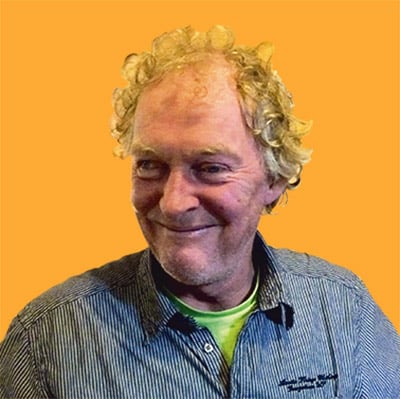
Skip Bandele escaped to the Algarve almost 25 years ago and has been with the Algarve Resident since 2003. His writing reflects views and opinions formed while living in Africa, Germany and England as well as Portugal.