Eastenders
London’s East End is, in many ways, the most diverse, exciting and edgy part of the UK capital. A business appointment there gave your columnist a chance to wander the streets and sample the very different life on this side of town.
Brick Lane is perhaps the heart and is packed full of amazing restaurants serving multi-cultural food from around the world. The famous curry houses proliferate and offer top quality nosh from the Indian sub-continent. An offer of a discount to celebrate their anniversary drew me into Eastern Eye. Their menu is extensive but not bewilderingly so, just a little difficult to make a decision with so much on offer!
After a plate of their own recipe, mixed special starters, a beautiful Manchurian Indo Chinese curry beckoned with a side of Sag Aloo and coconut rice. A sweet, amazingly tasty lunch washed down with a bottle of quality house wine sold at a very non-London price was the icing on the cake!
It was then back to strolling along Brick Lane, glancing at shops selling amazing goods from all over the globe, admiring artistic graffiti everywhere and posters adorning every available square metre of wall space. The street signs are in Bengali and English, and it feels like nowhere else in London.
The famous dapper-dressing artists Gilbert & George have their artwork on display at a beautiful building in Heneage Street, just off Brick Lane and the nearby old Truman Brewery hosts travelling exhibitions from all over the world (currently still showing ‘The Art of the Brick’). Both are worth a visit.
Brick Lane leads to Whitechapel Road, a major arterial route to the East of the City. This part of town is infamous for two main reasons – Jack the Ripper and the Krays. The Victorian murderer of women was, of course, never identified and the Krays ran their empire from here in the 60s with a rod of iron. The Blind Beggar was famously where Ron Kray shot and killed another gangster, George Cornell, and to this day, there is a bullet hole in the ceiling where a second shot was fired to intimidate anyone who witnessed the killing. The Krays lived in nearby Vallance Road and went to school, boxed and owned pubs and clubs both in this area and further afield.
Whitechapel Road has a famous street market selling mostly fresh produce and clothing. Prices are very reasonable and some of the most unusual and, in fact, unknown (to your columnist) fruit and vegetables from every corner of the globe are on offer.
The whole area reflects the melting pot that post-colonial Britain represents. It shows how people of different cultures can happily live, work and get on alongside each other. This is, of course, totally at variance with the recent riots in various British cities, stirred up by extreme right-wing activists.

Reach for the skies
Skyscrapers are still being built in London and the whole city looks vastly different than it did just 20 years ago. The pandemic has had its effect with many companies and businesses downscaling their needs for office space with flexible working models now on offer from most major companies.
In the boom years of the 1980s, much of the development of huge office accommodation took place in the former docklands area. Here there was huge opportunity with large unused former dock buildings and areas of wasteland.
And so, the ‘second City’ of Canary Wharf was born. One of the largest of the new skyscrapers became the worldwide headquarters for banking giant HSBC. Their lease comes to an end in 2027 and the owners, the Qatari Investment Authority, have partnered with Canary Wharf Group to come up with a radical plan for the building, reflecting the realities of the current commercial property market in London.
The future of the 200 metre, 1.1 million square foot (93,000 square metre) structure has been ‘re-imagined’ in what will be the world’s biggest ever conversion of an office block. This will include removing large sections of the rectangular tower and separating the whole building into eight different units which will be easier to let.
The cuts to the tower will carve out new terraces and there are plans for a hotel and serviced apartments in one section. The higher floors will become an entertainment complex with a museum, restaurant and gardens whilst shops and restaurants are planned for the lower floors.
These radical plans have been designed by architects Kohn, Pedersen and Fox with the estimated total cost range is between £400 million to £800 million (€465 million to €929 million).
If the plans go ahead, the new tower will become a destination in itself. The height of the building offers commanding views over the whole capital but also down to the coasts of Essex and Kent on that seemingly rare occurrence in London this year – a clear day!
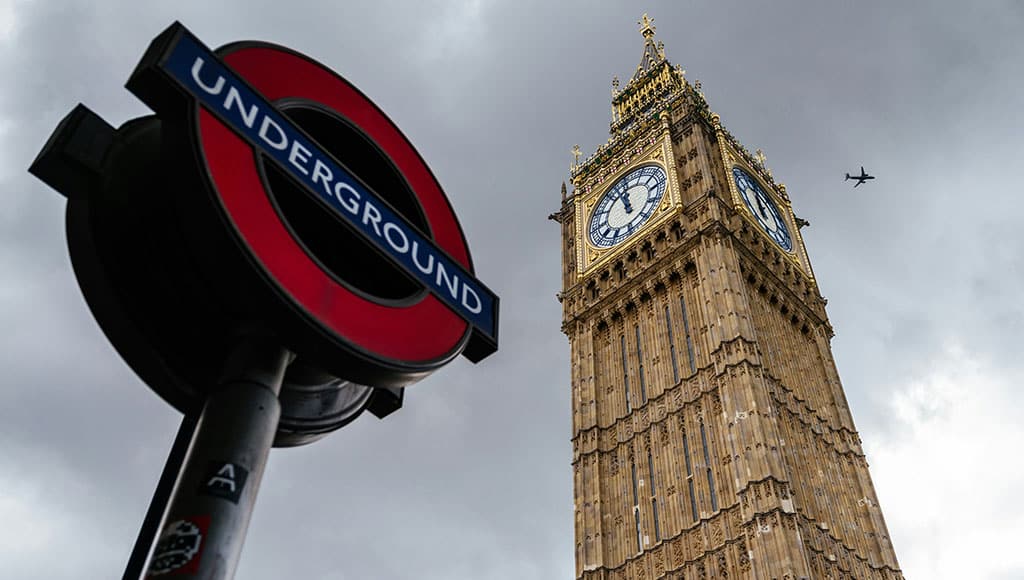
Going underground
Henry Charles Beck (known as ‘Harry’) created one of the most iconic symbols of the capital – the London Underground map.
He was an English technical draughtsman and wanted to create an easy-to-understand map of the famous subterranean rail network, affectionately known by Londoners as ‘The Tube’. Simplicity to understand the system was his aim and he did this by using different colours for each train route, and using straight lines and 45 degree angles.
Harry was inspired by circuit diagrams he drew in his work as an electrical draughtsman and though his ideas were initially rejected, once they were finally accepted, the mapping became instantly popular when first released in 1933.
A map that was quick and easy to understand was deemed more important than one that is strictly geographically accurate, and this can sometimes be a little confusing when planning routes above ground.
Now of course, in the city where if it moves, bring it to the stage is the rule, a play is to open about the man who helped us all to navigate the great city. It will open in the West End, on the 50th anniversary of his death in September 1974.
The Truth About Harry Beck runs from September 14 to November 10 at the London Transport Museum’s Cubic Theatre and mixes stories of Beck and his wife Nora with a number of fictional characters. An unusual night out beckons!
Richard Lamberth leads parallel lives with homes and business interests in London and Portugal. He provides consultancy services to leading businesses in insurance and financial services, property and media sectors. He has four sons, two dogs and enjoys a busy family life. He likes swimming, keeping fit and an outdoor life.
londoncalling@portugalresident.com