Children “dependent on sensitivity of schools and teachers”
Portugal’s first rules for schools in the context of self-determination of gender identity were approved five years ago, but in the wake of a Constitutional Court ruling in 2021, young people who want to be known by a different gender are still dependent for this on the line taken by their teachers.
When, on August 16, 2019, the government statute establishing the measures that schools would henceforth have to adopt in the context of self-determination of gender identity was published, the matter seemed to be closed, writes Lusa.
At the time, schools had been living in a kind of legal vacuum for about a year, following the approval of the 2018 law that established the right to self-determination of gender identity and the protection of each person’s sexual characteristics, and which required the state to guarantee the adoption of measures in the education system.
The problem – the Constitutional Court later said – is that the definition of these measures was not up to the government, but to parliament, and so after this 2021 ruling a loophole opened and children and teens identifying with a sex other than the one with which they were born were once again dependent on the sensitivity of schools and teachers.
At the time, representatives of headteachers assured Lusa that little would change with the Constitutional Court’s rejection of the statute, because the planned measures were “already part of the reality in many schools”.
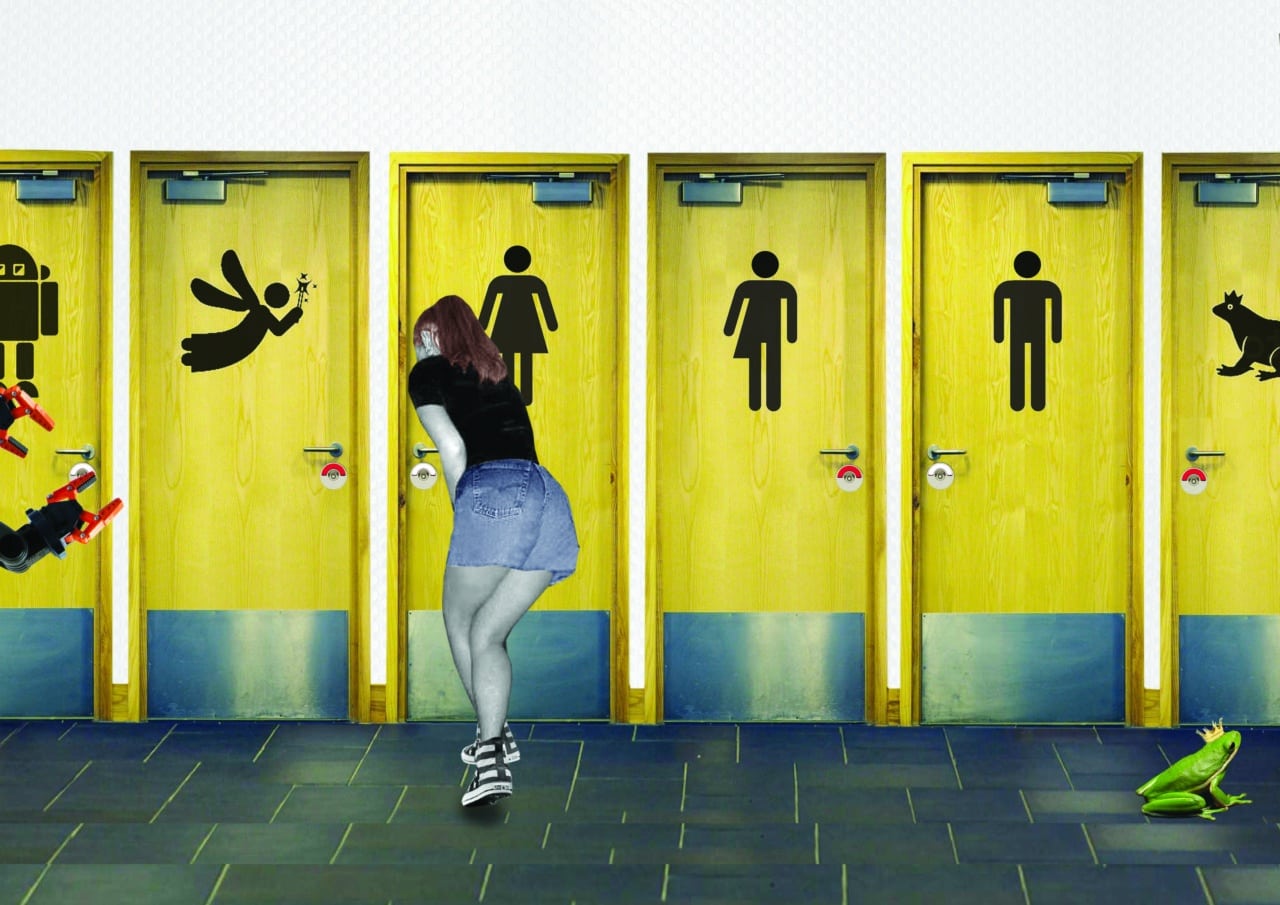
This has been the case, in some schools: there are cases of schools that have even introduced changing rooms and toilets without gender identification, with trans pupils in mind – but there are also stories of pupils being prevented from using the toilet they would like to, and/ or teachers refusing to accept pupils’ chosen names (ie refusing to call ‘Carlos’, ‘Carla’ if Carlos identifies as a girl).
“With the issue now in the hands of Portugal’s parliament, attempts to regulate self-determination of gender identity in schools have been subject to advances and setbacks”, Lusa continues.
In December 2021, just over five months after the Constitutional Court’s decision, the dissolution of parliament following the rejection of the bill for the 2022 State Budget left legislative initiatives by the then governing Socialist Party (PS), the Left Bloc (BE) and People-Animals-Nature (PAN) in the lurch.
It then took more than a year for parliament to approve, in April 2023, new bills from the same three parties on protecting the rights of transgender and homosexual people, with measures applicable in schools.
In less than eight months, the parliamentary committee on Constitutional Affairs, Rights, Freedoms and Guarantees approved the replacement text for the three initiatives and the law was finally approved on December 15, with the PS, BE, PAN and LIVRE voting in favour, the then opposition centre-right Social Democratic Party (PSD), far-right CHEGA and Liberal Initiative (IL) voting against and the Communist Party (PCP) abstaining.
According to the revised legislation, schools should define “communication and detection channels” for cases and, together with parents, assess the situation to “ensure support and monitoring and identify organisational needs and possible forms of action in order to guarantee the well-being and healthy development of the child or young person.”
They would also have to ensure that trans pupils had access to “toilets and changing rooms, ensuring the well-being of all, making any necessary adaptations.”
The relief shared by families of transgender children and young people contrasted with strong opposition from conservative movements, who considered the law “fundamentally ideological”.
Critical voices also emerged among associations representing parents and school headmasters, who saw the measures as placing disproportionate demands on schools, especially when it came to adapting existing toilets and changing rooms.
There was, however, one last step before the new rules could come into force – the green light from the Head of State. And in January this year, two weeks after dissolving parliament for the second time, Marcelo Rebelo de Sousa vetoed the legislation.
His argument was that the law “suffers from an almost total absence (of) the role of parents, carers, legal representatives and associations formed by them.”
Now, with a very different parliament following the elections of March 10 this year, it remains for parliament to lay down rules relating to the self-determination of gender identity in schools – and with the ‘health crisis’/ ‘housing crisis’ and wider international crises, the subject appears to be taking its time to come back up to the top of the pile.
Source material: LUSA