Elderly victim died in hospital in Bragança
The first case of Crimean Congo Haemorrhagic Fever has been detected in Portugal. The victim, an 80-year-old man living in Bragança, has died in hospital, reports SIC Notícias.
In a statement, the Directorate-General for Health (DGS) confirms that “on August 14, 2024, the first laboratory-confirmed case of Crimean-Congo Haemorrhagic Fever (CCHF) was identified in Portugal”.
Health authorities stress, however, that “there is no risk of an outbreak or of transmission from person to person”. This is “a rare and sporadic case”, said the statement, adding that the virus that causes Crimean-Congo Haemorrhagic Fever has so far not been detected in ticks in the REVIVE entomological surveillance network. This suggests that the risk to the population is low.
“The DGS and its partners remain attentive and will continue to monitor the evolution of the situation and update technical guidelines for health professionals at the level of public health units and care services for better detection, diagnosis, therapeutic approach and protection of contacts of suspected cases”, the statement concludes.
So, how does the disease manifest itself?
Congo Crimean Haemorrhagic Fever is a viral disease which begins with fevers, headaches and sudden onset malaise moving on to progressive abdominal pain, a stiff neck, mood swings and agitation followed by tiredness. This is all part of the pre-hemorrhagic phase.
The period between contact with the infecting agents and the appearance of the first symptoms is between three and 12 days, explains a report in executive digest.
The next phase of the disease is characterised by the appearance of small, widespread bleeding points and other signs of haemorrhage.
The disease has a mortality rate of between 20 and 50%.
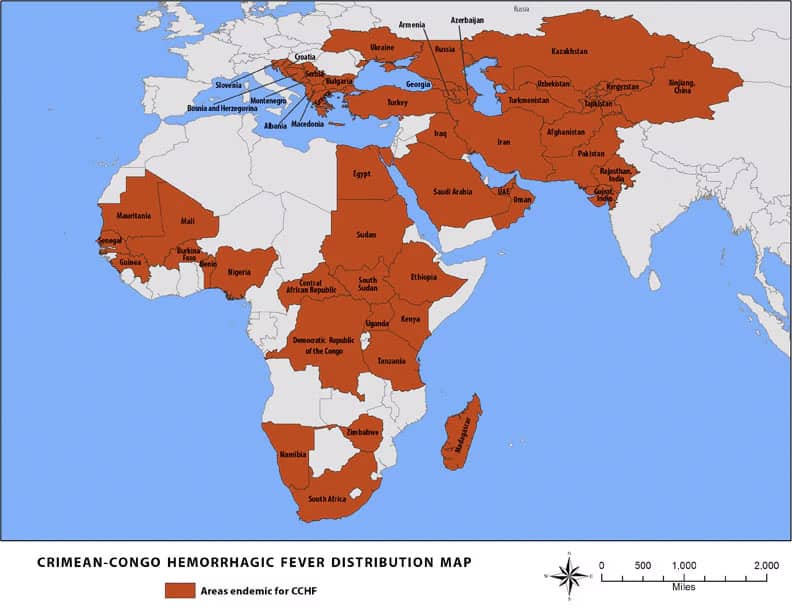
Up until relatively recently, CCHF was most prevalent in countries of Africa, the Middle East and parts of Eastern Europe, but with climate change it appears to be moving west.
Three weeks ago, CNN reported: “Man dies after contracting Ebola-like tick-borne disease in Spain”. Again, the victim was an elderly man.
Spain has already recorded two cases of CCHF this year, and 15 since 2016 – thus the prospect of this disease ‘spreading to Portugal’ has been in sight for some time.
As for the DGS’ advice on transmission, there CAN be person-to-person transmission via bodily fluids.
According to Wikipedia, there are no approved therapeutics for CCHF, and a vaccine is not commercially available (although there is a great deal of research ongoing, and Turkey believes it is very close to achieving a ground-breaking vaccine).
“Prevention involves avoiding tick bites, following safe practices in meat processing plants, and observing universal healthcare precautions”.
Treatment is typically with supportive care, and the medication ribavirin may also help, adds Wikipedia.