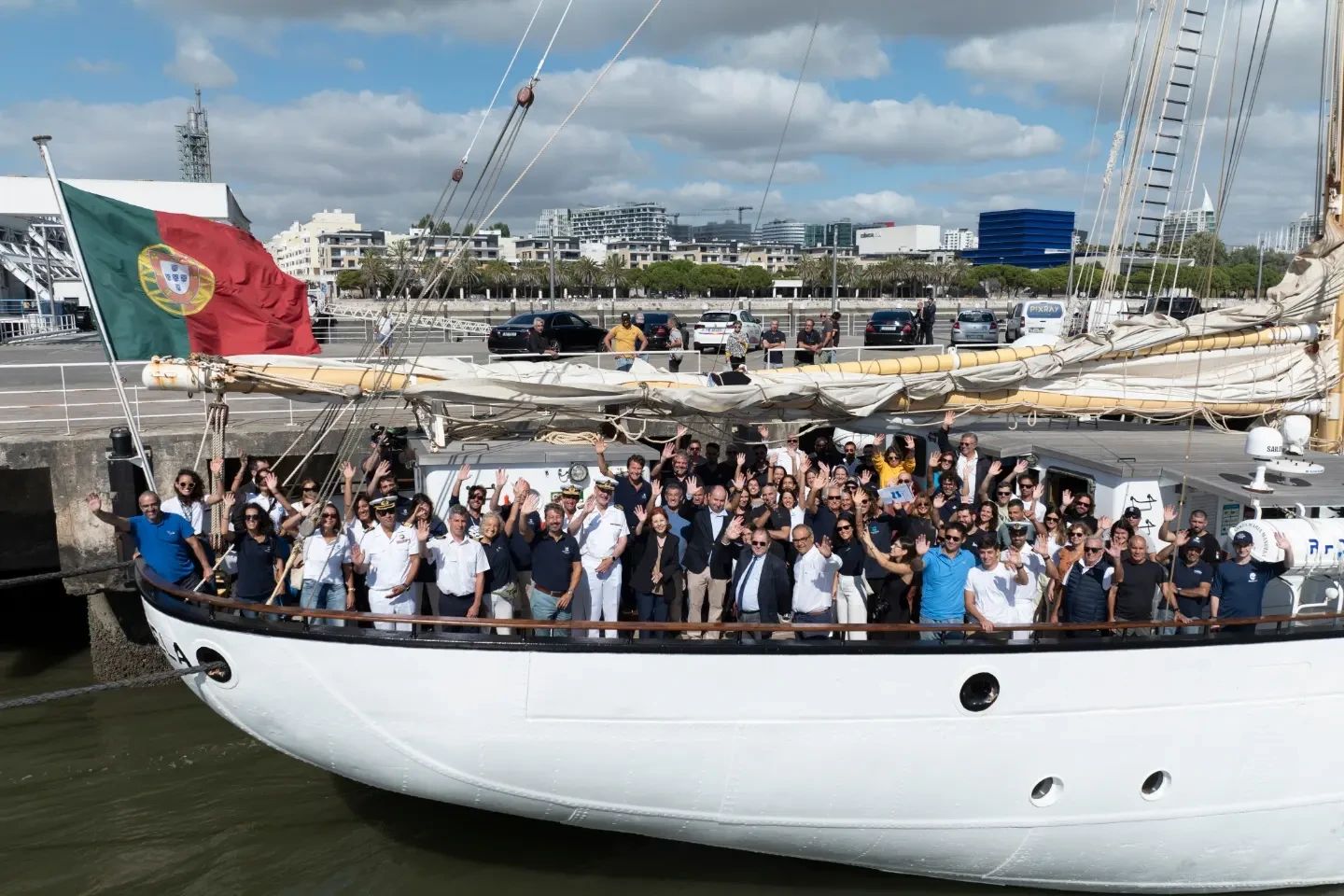
Scientific expedition will study the Gorringe Seamount, the “tallest (underwater) mountain in western Europe”
A team of 26 scientists set off from Lisbon on Saturday (September 7) on an expedition to study the Gorringe Seamount, the “tallest mountain in western Europe,” located underwater in the Atlantic Ocean.
“This marine area is a biodiversity hotspot, featuring a range of habitats from shallow algal forests to deep waters with cold-water corals,” says the Oceano Azul Foundation, which is leading the expedition.
“Recognised for its ecological significance, Gorringe has been designated as an Ecologically or Biologically Significant Marine Area (EBSA) and is the first ecosystem part of the Natura 2000 Network,” it adds.

Working alongside the Lisbon Oceanarium, the Portuguese Government, and ICNF – Institute of Nature and Forest Conservation, the foundation aims to “consolidate existing scientific knowledge about the Gorringe seamount to support its protection.”
In other words, the team of scientists (which includes Portuguese and international scientists from several institutions) will perform a scientific assessment aimed at providing “crucial recommendations for establishing a Marine Protected Area (MPA)” at the Gorringe Seamount, “supporting the global 30×30 target – aiming to protect 30% of the world’s ocean by 2030.”
Located around 160 nautical miles southwest of the Algarve’s Cape St Vincent, the Gorringe Seamount is around 5,000 metres tall and is named after Captain Henry Honychurch Gorringe, who mapped it in 1875.
“Geologically, the Gorringe seamount was formed during the opening of the Atlantic Ocean, as a result of the convergence between the African and Eurasian tectonic plates. It comprises two main peaks: Mount Gettysburg and Mount Ormonde,” the foundation points out. The study area will focus on these two peaks, it adds, as well as ” the area between these, the steep slopes that reach great depths, and the larger pelagic environment around the seamount.”
As to why Gorringe was chosen as the focus of the expedition, Oceano Azul explains that it “acts as a magnet of marine life and hotspot of biodiversity” and is an “oceanic oasis,” supporting a “bustling marine ecosystem teeming with life.” It is also a “crucial stopover for migratory species, offering refuge and sustenance.” Meanwhile, the seamount is home to marine life “typically found only in coastal areas.”

“Gorringe’s rich biodiversity sets it apart as a unique and vital ecosystem. Marine megafauna, the ocean’s great travelers, link various regions and systems, playing a key role in offshore ecosystems. Additionally, seabirds, important indicator species, connect different levels of the marine food chain, underscoring the importance of preserving this underwater oasis,” the foundation states.
The expedition will last three weeks, with teams divided among several vessels: the Santa Maria Manuela, the main vessel of the expedition, equipped with smaller boats and diving equipment, which is described as the “heart of the operation, transporting the team and essential gear”; the Feel Good and Oceanus II catamarans, which will assist in gathering data, with teams focusing on seabirds, marine mammals and deep-sea habitats; and finally the NRP D. Carlos I, a specialised vessel which will conduct seabed mapping and oceanographic assessments, rounding out the comprehensive study of Gorringe.
Updates are due to be posted on the expedition’s website.