Main problems facing country are poverty, housing, health, education
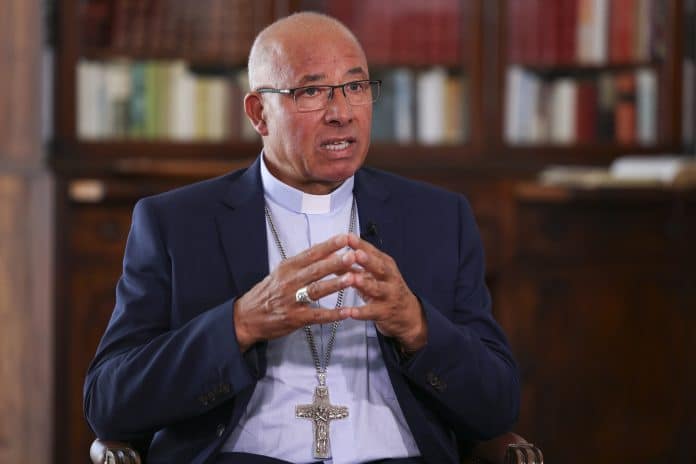
The patriarch of Lisbon has recognised the need for a pact within Portuguese society to resolve the main social problems facing the country, which in many cases have grown over the years.
Faced with difficulties in poverty, housing, health and education, Rui Valério, in an interview with the Lusa news agency, considered that it is time for the Portuguese, “definitively”, to have “the realisation that only with everyone, only together” will they find ways to find a solution.
“We are talking about problems whose genesis is not last week, not last year, perhaps not even in the previous decade,” said the bishop of the diocese of Lisbon.
Rui Valério proposes “an agreement, a communion, respecting each other’s points of view”, involving the different protagonists in society, first and foremost political leaders.
Affirming his belief in the willingness of political leaders to work in favour of the common good, Rui Valério argued that it is necessary to distinguish “what is truly essential and what is relative, what is authentically and absolutely important and what is secondary”.
As a priority, the bishop singled out the problem of poverty, expressing satisfaction at seeing that, on the ground, “many bodies and institutions are involved and concerned about this issue, both within the Church and in the civil sphere, local councils, the government and other institutions of a different nature, including even the armed forces and security forces”.
Acknowledging that the current situation “happened very abruptly”, due to cyclical causes such as the Covid-19 pandemic and the international crisis, Rui Valério recalled that “there was a mobilisation of society at its various levels to respond” to the needs.
“I’m not saying that they have been solved, what I am saying is that there is an interest, there is an involvement of many institutions, of many people, to solve these problems. And this is the fruit, in my opinion, of a level of civilisational and humanist awareness that we have reached,” said the Patriarch of Lisbon.
For the bishop, “at the moment, in Lisbon and in Portugal, no poor person who is hungry, or who might be hungry, goes without food”.
“I can say this, I think I can say this without the danger of being untrue or unauthentic, because there is mobilisation, there is real interest,” he said, stressing, however, that “there is still a lot of work to do”.
And while, on a material level, many institutions linked to the Catholic Church are on the ground supporting the poorest and the homeless, such as the Life and Peace Community and Caritas, on a spiritual level the Patriarchate wants to take the lead and create a parish dedicated to the homeless.
For Rui Valério, the aim is to take a “step forward”, to bring the Church closer to people and to put into practice the idea defended by Pope Francis: “Go out to the peripheries, go out to welcome, go out to be close, go out to listen”.
The patriarch guaranteed that the diocese of Lisbon “is committed to promoting the dignity of every human being”.
“Our wish is that the homeless person, the poor person, feels that there is a reality that translates into a concrete face that goes out to meet them, not only to bring them the food that will satisfy their hunger, or not only to bring them the clothes that will give them some comfort in winter, but also to bring them not only a word, but a willingness to listen to what they have to say, to take in their story, to listen to their laments,” he explained.
Openness to immigrants does justice to our culture
On the subject of immigrants, which is so high these days on the news agenda (and consequently among citizens’ concerns) “in order to do justice” to the identity of the Portuguese people, society should be open to them, says Valério – as whatever nationality one is referring to, they are simply doing today what many Portuguese did in the past.
“Nobody leaves their home, their family, their country, lightly, they are always driven by an urgency”, he stressed, adding “most of the time, (immigrants) come because there are others who depend on their coming and their lives,” he said.
Latching on to the mantra that “there are countries in the West, specifically in Europe, that need labour at the moment”, Rui Valério said that it was necessary for “all those responsible to dialogue and agree on perspectives and alignments”.
“Another point that is not insignificant has a lot to do with the identity, even the cultural and humanist identity, of the West itself, of Europe itself,” he said.
Herein lies so much of the ‘rub’/ the reasons behind concerns. Europe is becoming intensely divided over the issue of ‘mass immigration’, and ‘parties of the disillusioned’ are springing up in almost every country.
The way forwards, in Valério’s eyes, is for” the reality of migration to become an opportunity and not a problem. And for it to be an opportunity, I think it needs this global impetus from the European Union” – the entity currently battling to stop Hungary ‘bussing unwanted immigrants on free one-way tickets to Brussels’.
Source material: Lusa