Rui Abrunhosa Gonçalves drops guards in it as inquiry process conducts interviews
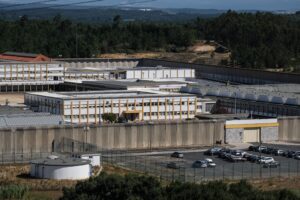
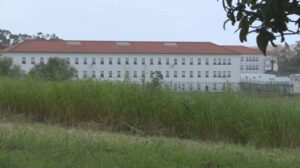
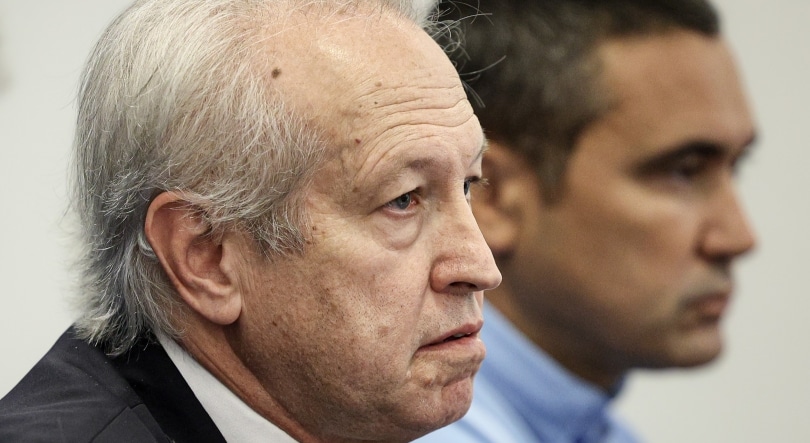
On the day that PJ police appear to be targeting certain guards in the criminal inquiry into security failings that led to last Saturday’s mass jailbreak from Vale de Judeus prison, former prisons boss Rui Abrunhosa Gonçalves has come straight out and said it: security failures that led to the disgrace were down to the guards.
Asked in an interview by state broadcaster RTP “who failed in the escape” that led to his resignation, Gonçalves answered: “The guards”.
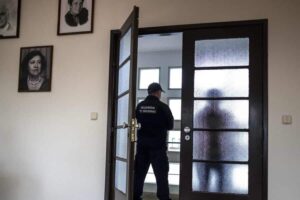
“In prison we have these two large groups, the inmates and the guards, and the guards are there mainly to provide security. So it’s obvious that there were gaps in security that were exploited by the inmates. This is what is being fundamentally investigated,” he said, alluding to the internal investigation process of the Prison Services Audit and Inspection, as well as the criminal inquiry led by the Public Prosecutor’s Office.
In the opinion of the former director of Portugal’s prison services, it is now “necessary to realise whether these failures were sloppy, whether they were deliberate or whether, on the contrary, there is another fortuitous circumstance”.
Rui Abrunhosa Gonçalves explained that in the jail’s video surveillance centre, the guard is relieved every hour and that the case points to the change of shift and the following five minutes.
“The people are there, the cameras are there,” added the former head of Portugal’s prisons, noting that although there were many cameras in the surveillance centre, only a few (the ones overlooking the perimeter of the prison) were of interest to the guard on duty, because on Saturdays workshops and other facilities are closed.
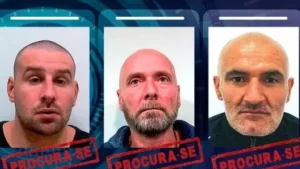
In other words, what Gonçalves meant by fortuitous circumstance was that the six minutes it took for the five escapees to clear prison walls and the area covered by surveillance cameras could have coincided with the five minutes in which guards were ‘changing shift’.
Asked whether he believes there may have been collusion or complicity by a guard or other prison employee in the escape, Rui Abrunhosa Gonçalves responded that “at the moment and in this scenario everything is admissible“, but it is “necessary to wait for the results of the investigations” underway to ascertain “the truth of the facts”.
He did acknowledge that in other situations, however – such as the entry of mobile phones, drugs and other prohibited objects into prisons – there have been links to prison staff, including guards.
In the words of Lusa news agency, Gonçalves stressed that he did not want to “make any kind of hasty judgement” about what really happened last Saturday (having already blamed the security failings on the guards…)
As for his departure from office, Gonçalves said that he was aware that “in these circumstances there are always heads that roll” and since he was the top prison manager at the time, he knew this could happen, especially since “nothing and nobody came forward to make any kind of statement in defence of the managers” of the prisons.
It was then, he said, that he realised future was “probably foretold”.
Rui Abrunhosa Gonçalves added that he had been asking the Ministry of Justice for over a year to increase the number of prison guards (ie he also asked the previous government). However, he reiterated that the 33 guards who were on duty on the morning of the escape were sufficient to ensure security service and other tasks.
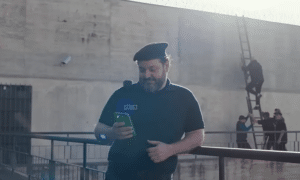
Gonçalves’ statements to RTP will undoubtedly exasperate the national syndicate of prison guards whose leader Frederico Morais has been saying since this jailbreak that it was a direct result of successive governments’ serial neglect of the country’s rundown prison service, and not the fault of guards who, he predicted, would be first in line of fire.
Source material: LUSA