Environmentalists argue ‘there is much more to be discussed, and transparently’
Portugal and Spain have agreed to set minimum daily flows for the Tejo river, and “for the the first time” to establish the same principle for the Guadiana.
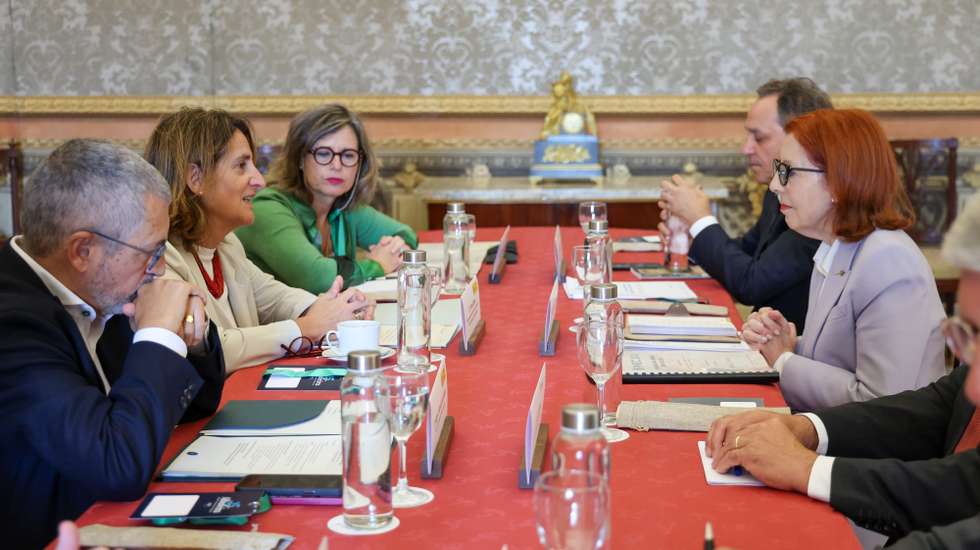
The decision was announced following a meeting between the two countries’ environment ministers yesterday – and opens up the possibility of the (Pomarão) water abstraction project in the lower Alentejo to supply the eastern Algarve.
Twenty-five years after the ‘Albufeira Convention’, which regulates the use of common water resources, Portugal’s Environment Ministry sees Spain’s commitment to comply with daily flows in the Tejo as “the achievement of a long-desired goal”.
Up until now, explain reports “targets were met, but according to Spanish interests, with the flow more compensated, for example, at times when energy production is more favourable”.
With this new understanding, the requirement will now be daily rather than annual, and there will be no more days of ‘zero flow’ on the Portuguese side of the largest Iberian river, writes Lusa.
Another of the main conclusions coming out of the meeting in Aranjuez, near Madrid, was the definition of rules – “equal in volume and price to those in force in Portugal” – for Spanish farmers who harvest water on the left bank of the Alqueva dam – something that has been going on since the dam was created in 1998.
“It’s not possible (for Spain) to pay retrospectively (for water taken over the years) because there has been no accounting; the irrigators are probably no longer the same, over 25 years they will be different. Portugal hasn’t invoiced. There’s no way”, said environment minister Maria da Graça Carvalho. “So it’s about looking to the future (…) It would be impossible to reconstruct the past, because it wasn’t done at the time; it wasn’t even asked for,” she added.
Preferring thus to “look to the future” Carvalho argued that Portuguese farmers in the Alqueva region “have not been harmed” by Spanish counterparts taking the dam’s water. “They have had access to water and have been able to develop their agriculture”.
“From now on we’re going to do it differently, it was impossible to track the history and so we’ve put a stone on the matter and we’re going to start again,” she said.
For her ministry, the big news to come out of this meeting was the establishment of minimum flows for the Guadiana – a decision that could open the door to the Portuguese project to collect water from Pomarão, in Mértola, for the Odeleite dam, in the eastern Algarve – one of the areas in the country with the greatest difficulties in storing water.
If this goes forwards, the eastern Algarve’s ‘water resilience’ would be increased, explains SIC Notícias (making no reference to the multiple doubts, on various levels, about the Pomarão project).
The definitive terms of these new rules regulating water management and sharing will continue to be negotiated between the two countries, with the aim being the signing of a definitive agreement at the next Iberian summit, scheduled to take place in Portugal in October.
Environmental association ZERO has meantime stressed the need for transparency, with public consultation (two aspects various groups complain have been missing from this process), and has picked up on the message given last week by the proTejo group – that “minimum daily flows do not fully reflect ecological needs”.
Accepting that reaching agreement on minimum flows represents an important step forward, ZERO alludes to “issues that deserve greater attention and public debate to ensure that decisions taken reflect the real needs of the populations and natural environments affected”.
As for end of (nonsensical) ‘zero flow days’ on the Tejo, ZERO admits this too is positive for the protection of the river and the ecosystems that depend on it, but returns to the need to establish ‘ecological flows’ based on robust ecological criteria, “from a technical and scientific point of view”, to truly guarantee the health of river ecosystems.
As to the other ‘shared rivers’ between Portugal and Spain (the Douro, Minho and Lima) it is unclear when agreement on their water management will take place.
Source material: LUSA/ SIC Notícias