Interior minister caught in maelstrom
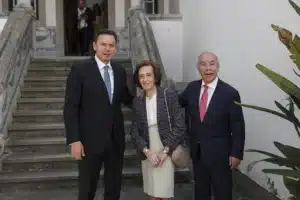
The qualities of Portugal’s minister for interior administration have been queried since her appointment earlier this year – and once again Margarida Blasco is ‘in the soup’, this time for saying that the police’s right to strike would be part of negotiations going ahead in the New Year, and then hours later seeing her own ministry saying actually ‘no, they wouldn’t’.
To be fair, everything looks like Ms Blasco’s willingness to discuss a topic that police syndicates are adamant needs discussing was her own. The retraction that came hours later shows higher powers do not agree with her.
Paulo Santos, president of the ASPP/ PSP police union, believes the retraction came directly as a result of prime minister Luís Montenegro’s feelings on the subject (Montenegro has said in the past that there should be no right to strike within the country’s police forces).
But, as Santos stressed this morning, he has no intention of wasting time on the “apparent incompatibility between the minister and the prime minister.
“The minister’s statements were made as she left the (ASPP/PSP) congress” on Sunday, after attending a panel on the right to strike, with examples of police in other countries that have this possibility, he said.
“The right to strike is not prohibited by the Constitution of the Portuguese Republic and what exists is a restriction in ordinary law,” Santos added, insisting that for his syndicate, “the right to strike and the provision of a security service to the population are compatible”.
Thus, ASPP/PSP is not going to comment directly on the communiqué that hurriedly withdrew the minister’s intentions – in time for evening news bulletins. Instead, it is going to initiate ‘diligencies’ with the Constitutional Court and political parties, to ensure that the ‘right to strike’ for police is indeed discussed – no matter what the opinion of the prime minister.
To Margarida Blasco’s credit, Paulo Santos recognised that “the minister has shown an openness that is to be welcomed”.
He concluded that it is important “for the prime minister to understand that, sooner or later, we (police) will have this right”.