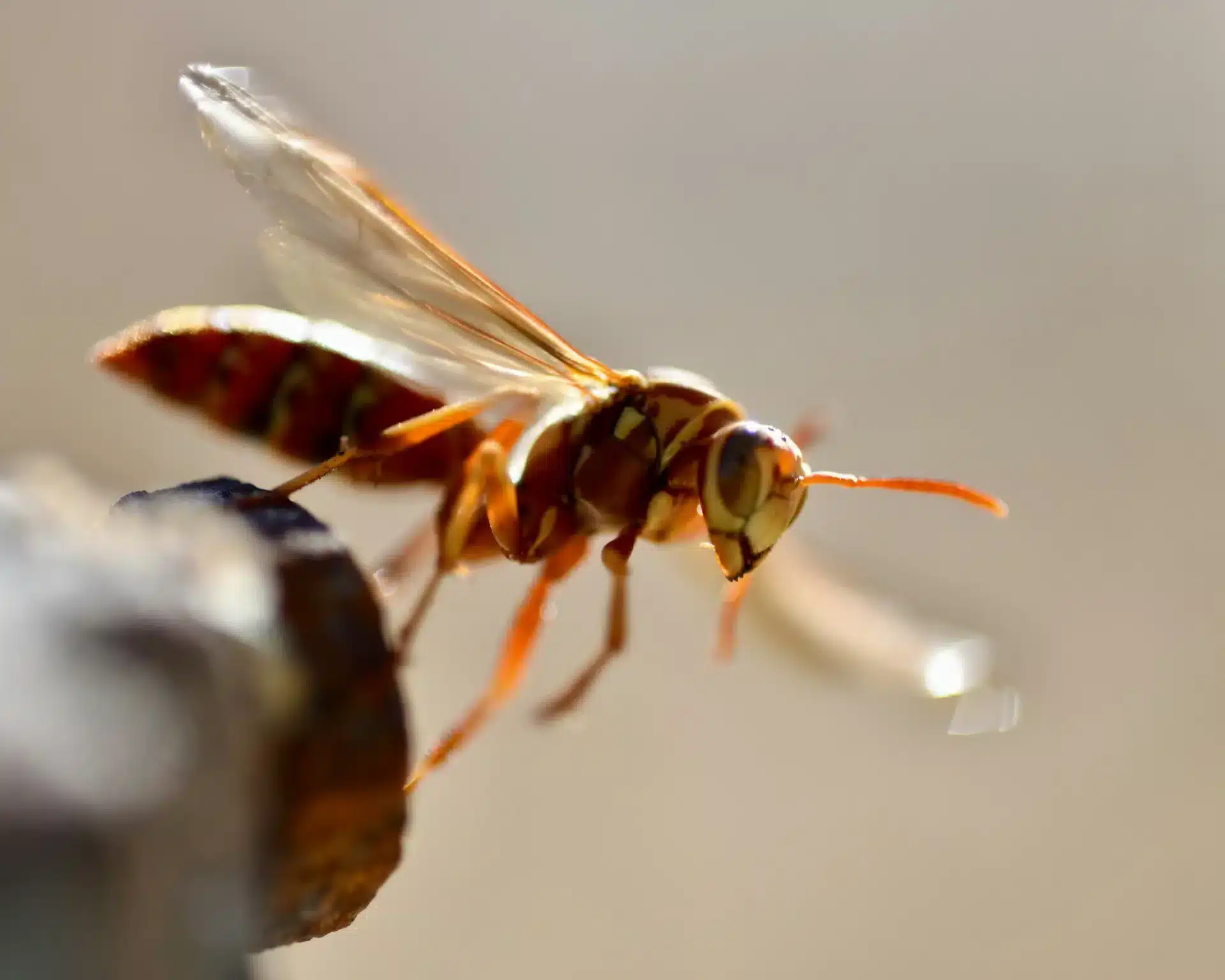
Southern giant hornet “much more dangerous than Asian hornet”
APIMIL, the northern beekeeping association of Entre Minho e Lima is calling on national authorities to take “concrete and well-targeted action” against the threat of a new hornet invasion, much more dangerous than the current scourge of Asian hornets (Vespa velutina).
Speaking to Lusa, APIMIL’s president Alberto Dias, explained that a study by the University of Oviedo, in Asturias, Spain, published earlier this month in the journal Ecology and Evolution, documents for the first time presence of the southern giant hornet (Vespa soror) in the municipality of Siero, Asturias.
According to the study, the hornet “may have been a stowaway during hibernation” in freight transport.
It has “a peculiar coloration”, with “both sexes being tricolored, with black, dark brown, light brown and yellow areas”
The species has an “exceptionally large” head and “is an aggressive predator that hunts invertebrates of various sizes, including butterflies, dragonflies, praying mantises and grasshoppers, as well as other wasps and even small vertebrates such as lizards”.
The southern giant “can cause problems in the health sector, as its sting is very painful and produces long-lasting effects, probably because it has a potent venom”.
Alberto Dias said that there is no record of the presence of the hornet in Portugal, but stressed “the proximity” of Alto Minho to Galicia – where the species has not yet been detected – “should turn on red lights and start alarm bells ringing”, so that the “plague” Portugal has experienced with the Asian hornet is not repeated.
The Asian hornet entered Europe through the port of Bordeaux, France in 2004 – arriving in the Alto Minho seven years later. When APIMIL detected its presence in Viana do Castelo “we were ridiculed and called alarmists (…)”, Dias recalls. Today, the sense behind APIMIL’s warnings has become all too clear.
“Portugal must have a different attitude towards the Vespa soror than it did towards the Vespa velutina”, he said.
“All the entities are aware of the situation and are perfectly aware of the problem in question (…) concrete and well-targeted actions must be planned and launched, based on lessons learned”. If not, the Southern giant hornet will simply bring yet further obstacles for the beekeeping sector which has already suffered millions of euros worth of losses due to the arrival of its Asian ‘cousins’.
“In an impoverished and aging sector (beekeeping), demotivation and the ability to fight against low production and the cost of production factors are seriously pushing people to abandon the activity”, warns Alberto Dias – stressing that at European Union level, “we are seeing an increase in environmental measures, the need for pollinators, green corridors, where beekeeping has a clear role to play”.
For the president of APIMIL, beekeeping is “a daily ecological activity of great environmental value in the recovery and maintenance of ecosystems. If Portugal wants to have more beekeepers, if we want to use them to maintain or increase the monitoring network for current and future invasive species, we must boost beekeeping production straight away, supporting it with concrete measures.”
Source: LUSA