Experts gather in Lagos to discuss solutions to invasive seaweed problem
Can the invasive algae which has been washing ashore at Algarve beaches actually be put to use and turned into an economic opportunity? And can it be collected before it washes ashore and begins to rot, posing major cleanup costs for local councils?
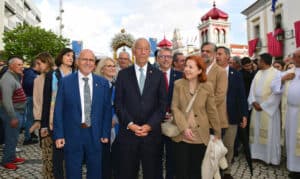
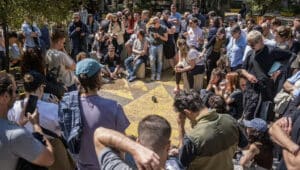
These were some of the questions that were asked and which experts tried to answer at a conference held in Lagos on Wednesday (November 27). Organised by Associação Limpeza Urbana (ALU) with the support of Lagos municipal council, the event brought together local officials, experts and citizens who put their minds together to try to come up with solutions to the scourge of invasive seaweed which has been plaguing beaches across Portugal in the past few years.

The seaweed in question is named Rugulopteryx Okamurae, a brown macroalgae originally from Asia (namely Japan and South Korea) which has reached European waters and has developed as an invasive species.
It can colonise the areas it invades “aggressively and massively”, as has happened along the rocky seabed between Albufeira and Vila do Bispo, explained Conceição Gago, a representative from the Algarve Environmental Agency (APA). On the bright side, this type of algae does not have any impact on seawater quality, she said.
With the data that scientists have at their disposal, can the seaweed be considered a friend or a foe? This is the question that Rui Santos, a professor at University of the Algarve and researcher at the university’s Sea Science Centre (CCMar), was asked to answer – although he insisted he does not believe the matter can be summed up into such a simple question.
This particular species, however, would have to be classified as a “foe”, given its invasive nature: in other words, it multiplies easily, causes harm to other native species and can even be damaging to human activity. In fact, Santos highlighted that the algae can affect human infrastructures, such as the Algarve’s planned desalination plant in Albufeira – which he says will be built in an area which could be impacted by the invasive seaweed.

However, the situation can be addressed with “coordination, investment and willpower,” the researcher believes, offering two ways of dealing with the problem. Firstly, the region must come up with a way of predicting where the algae will appear and mapping where it is located, so that councils can be warned in advance and prepared to act, if necessary. Secondly, effective methods have to be created to collect the seaweed before it washes ashore, and find businesses which are willing to use the collected algae in order to “turn a problem into an opportunity” – such as biorefineries, where the algae can be used for the production of rations and textiles, for example.
One local entrepreneur has seen the seaweed crisis as an opportunity, having launched his own start-up company, Easy Harvest, which provides “monitorisation and management services for macroalgae blooms, while connecting the supply chain to the seaweed industry.” Led by CEO Francisco Machado, who presented his company at the conference, Easy Harvest is already operating in Lagos by removing seaweed through suction directly at sea (20 to 30 tons in six hours), preventing its arrival and accumulation on local beaches where, if left for too long, they can begin to rot, turning the Algarve’s beaches from tourist hotspots to tourist no-gos.
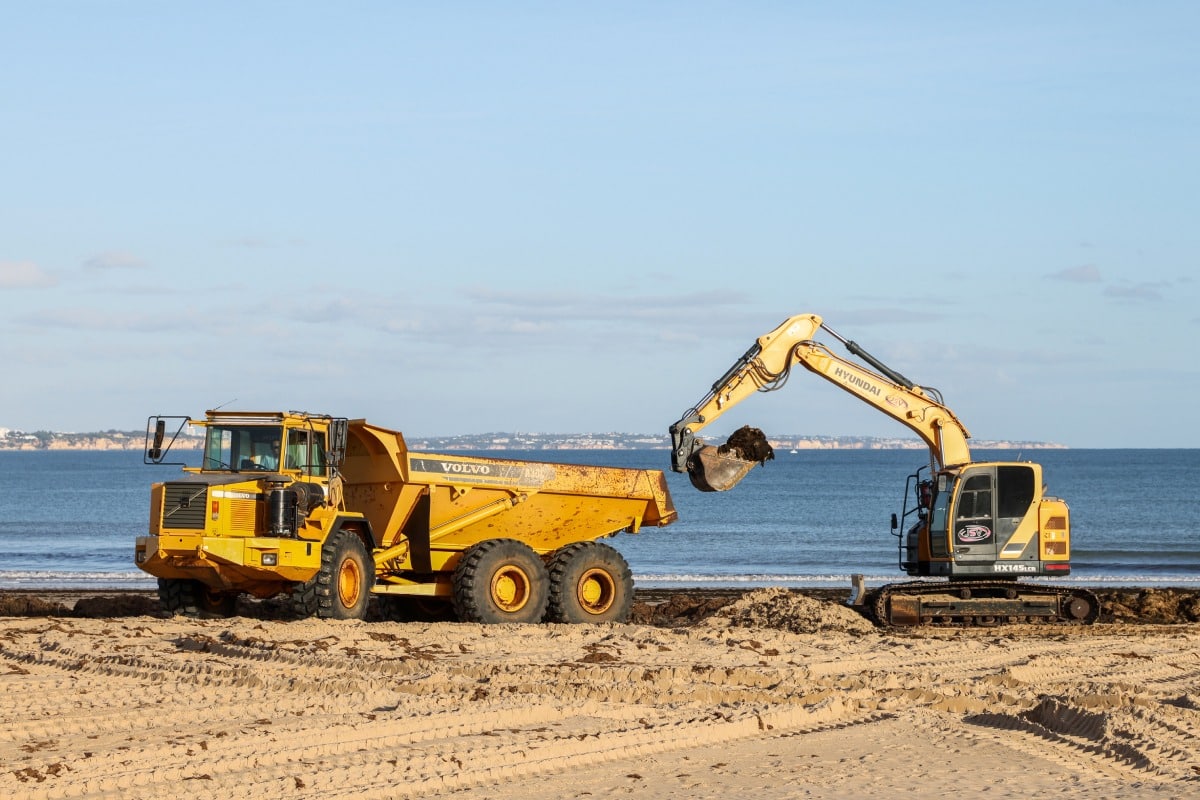
In the last four years, Lagos has already spent around €348,000 on seaweed cleanup operations at local beaches – particularly at Batata, Dona Ana, Luz and most recently Meia Praia. These unexpected costs have required constant budget revisions and have had a worrying economic impact, especially on tourism, explained Lagos councillor Luís Bandarra, in charge of the environment. To deal with this issue more efficiently, Bandarra called for more cooperation between Algarve municipalities and the scientific community, as well as the creation of a government fund to compensate for these unforeseen expenses.
On a more positive note, Bandarra highlighted that all 6,000 tons of collected seaweed have been delivered to farmers in the Vale da Lama and Sargaçal areas, contributing to the development of local agricultural production.
Overall, the conference ended with the conclusion that cooperation is key in dealing with this new issue, which can be turned into an “opportunity” so long as there is investment, coordination and an effort to address it in the short, medium and long-term.