Thousands of new homes, jobs, infrastructure promised
Insisting the country “cannot stop because of the elections”, Luís Montenegro’s government has announced an urban regeneration project for the municipalities of Lisbon, Oeiras, Loures, Almada, Seixal, Montijo and Benavente that includes the construction of thousands of homes (from ‘more than 25,000’ to ‘more than 28,000’) and two new river crossings.
In total, there will be 4,500 hectares of urban intervention and infrastructure, equivalent to 55 times the size of Parque Expo, according to a statement issued by the Ministry of Infrastructure and Housing.
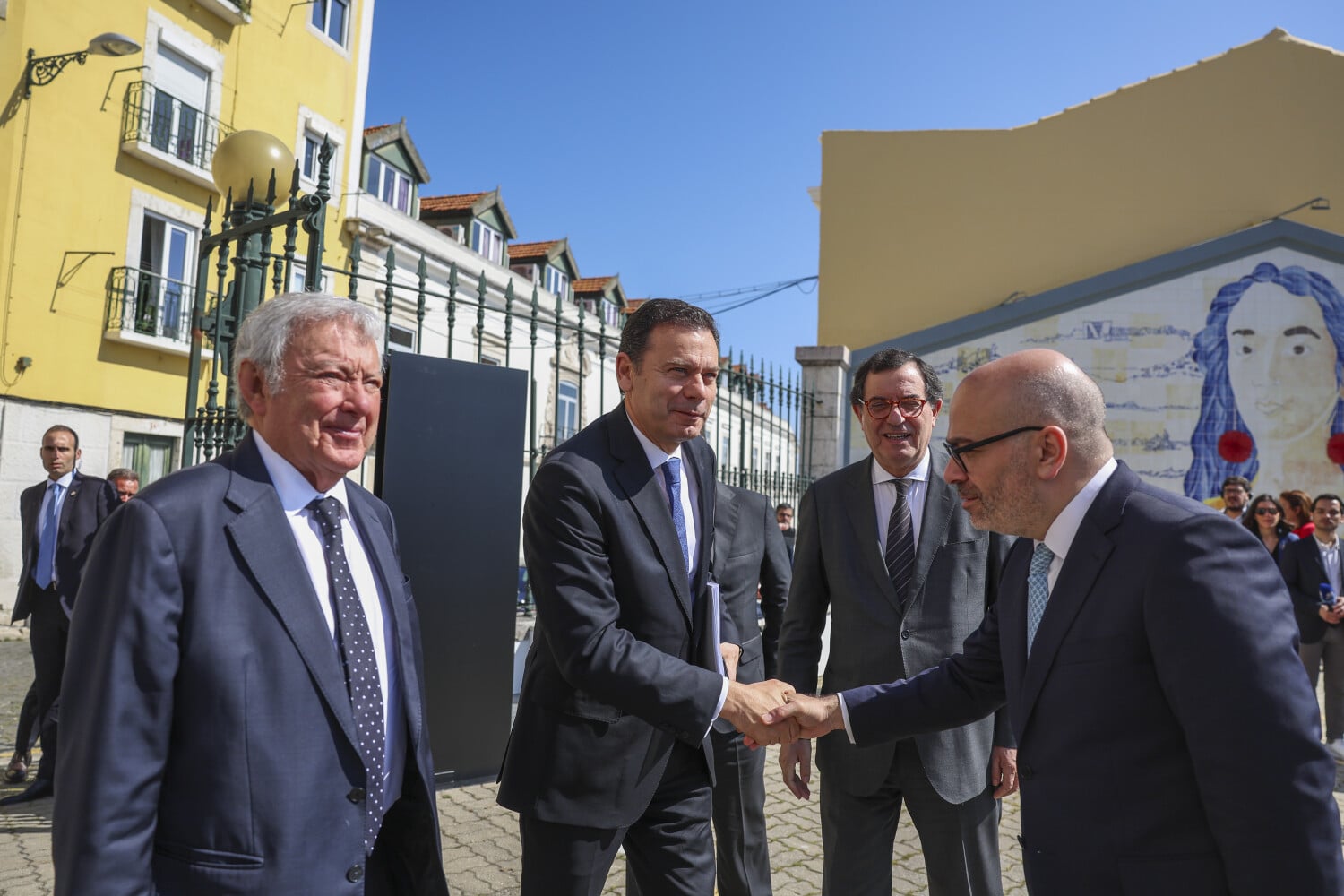
The project was presented today to the 18 mayors of the Lisbon Metropolitan Area and the mayor of Benavente, in the district of Santarém, by the prime minister, Luís Montenegro, who was accompanied by finance minister, Joaquim Miranda Sarmento, minister of territorial cohesion, Manuel Castro Almeida, and minister of infrastructure and housing, Miguel Pinto Luz.
Called “Parque Cidades do Tejo”, the project, beyond the many thousands of homes, will create over 200,000 jobs.
The note from the ministry emphasises that “a project aims to transform the riverside arc into a great metropolis in which the river acts as a link between the territories instead of separating them”.
The project includes leisure, research and cultural spaces, such as “Ópera Tejo”, an international congress centre, and an ‘airport city’.
In terms of infrastructure, plans are to build two new crossings of Tejo, the third road crossing (Chelas-Barreiro) and the Algés-Trafaria tunnel, as well as the new airport and investment in a high-speed railway.
The planned investment in the third Tejo crossing is €3 billion and in the Algés-Trafaria tunnel €1.5 billion.
The project also provides for the expansion of public transport networks, namely the Lisbon Metro, Metro Sul do Tejo and Transtejo/Soflusa, as well as the creation of LIOS-Linha Intermodal Sustentável (Oeiras – Lisboa – Loures) and SATUO (Sistema Automático de Transporte Urbano de Oeiras), which will link the municipality of Oeiras (Paço de Arcos) to Sintra (Massamá).
Regarding the governance model, the government explains that the Sociedade Parque Cidades do Tejo, a company 100% owned by the state, will be created.
“The project will have an initial budget of €26.5 million and management will be based on a joint model between the central state and the municipalities,” said the statement.
According to the minister for infrastructure, the aim of this project “is to “stitch together” the two banks of the Tejo and unite them as one large metropolis” where quality of life for those living in the AML (Lisbon Metropolitan Area) is vastly improved.
AML is currently home to 28% of the Portuguese population, and 48% of the working population. According to projections, the number of inhabitants in the region will increase by 7% by 2080.
Comments over social networks about this ‘grand presentation’ suggest it is all about the elections, and much less about ‘reality’ and/ or a plan that has the finance in place. Indeed, there have always been grandiose plans for the Tejo riverside, but so far, very little has come of them. ND
Source material: Lusa/ Executive Digest