Government admits drought may demand more serious measures in Algarve
Portugal’s government has admitted that it may need to declare a State of Calamity in the Algarve if the region’s drought situation does not improve by June.
In a resolution published in the state gazette Diário da República on Tuesday, the government recognised it may need to implement “additional, more serious measures” to guarantee the minimum reserves needed to supply water for priority uses in the Algarve should the current reserves prove insufficient.
According to the cabinet resolution, the possible additional measures, which provide for a “higher degree of contingency”, may be implemented after a reassessment of the drought situation in the region, which will take place in June.
“The government reserves the right, should the measures adopted now prove insufficient, to declare a situation of calamity under the Civil Protection Framework Law,” the document said.
The Algarve is currently on alert due to the drought, but if a State of Calamity is declared, the government will be able to establish limits and conditions on non-essential water usage, as well as rationalisation measures in public water supply services, it says.
At the same time, it will be able to use “other sources of supply, strictly necessary to carry out the actions aimed at restoring normal living conditions to the population”.
In the same vein, the government may also determine the use of water captures, surface or underground, belonging to public or private entities, by the concession company of the Algarve’s multi-municipal water supply and sanitation system, when necessary, under the terms of the Civil Protection Framework Law in force.
Alternatively, the declaration of a state of environmental emergency may be considered, as stated in the Water Law.
Among the measures planned by the government to preserve the region’s water reserves is the suspension of the supply of water from the public network for the irrigation of golf courses.
On the other hand, between June 1 and September 30, the use of water from the public network for washing vehicles is suspended, except in establishments licensed for commercial activity with water recirculation systems.
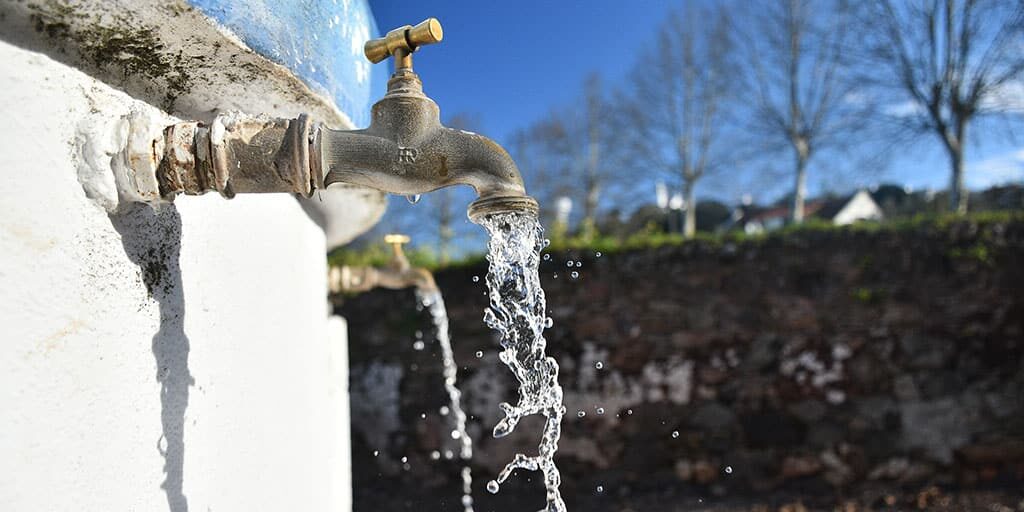
According to the government, the current situation in the Algarve “appears to be particularly critical,” and there could be a possible “effective rupture in public supply systems” – meaning taps could run dry – for human consumption if water use continues at current levels.
“(…) In a scenario in which measures are not adopted and implemented to guarantee the preservation of water reserves and in much less rainfall in the last six years, the supply of water for human consumption in the Algarve region will be severely compromised,” the resolution stated.
The drought alert situation in the Algarve was declared by the Portuguese Environment Agency (APA) in December 2023 and reaffirmed on January 25.
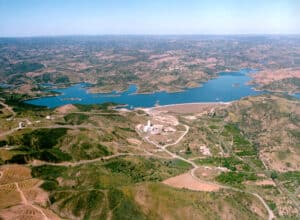
According to the cabinet resolution, water storage levels in the Algarve region’s reservoirs have been below 50% since May 2022.
Currently, groundwater storage levels “are extremely low, with approximately 84% of groundwater bodies showing a stored volume below the 20% mark, and of these, around 48% are in a very critical state”.
The indicators used in the agrometeorological and hydrological monitoring reports indicate that the Algarve’s river basins in both the Barlavento (west) and Sotavento (east) have been in a situation of extreme hydrological drought since June 2023.
“This situation has remained unchanged in the first few months of the 2023/2024 hydrological year, which marks the start of the wet season,” the document says.
The current situation of water reserves in the Algarve region means that “current water uses cannot be adequately met with existing reserves” in surface and groundwater, the government concluded.
Source: LUSA