The project will focus on the Albertine Rift in Uganda
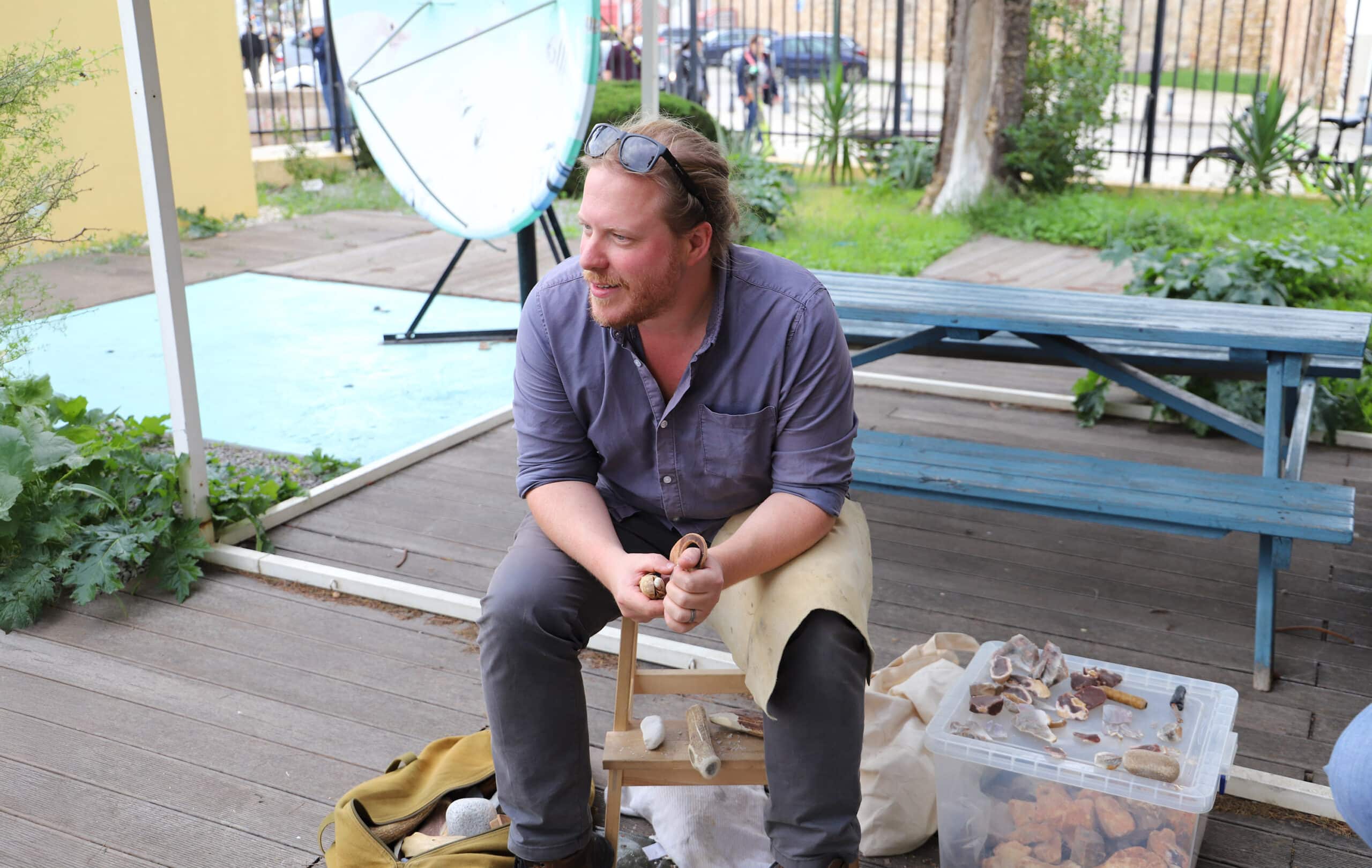
Tomos Proffitt, a British researcher at the University of Algarve (UAlg), has been awarded a €2 million grant to study the first steps of human evolution in Africa.
The researcher, who works at UAlg’s Interdisciplinary Centre for Archaeology and Evolution of Human Behaviour (ICArEHB), received the Consolidator Grant from the European Research Council (ERC). The funding will support his project, “Western Rift Archaeology and Palaeoenvironment Project (WRAP),” which aims to uncover new evidence about early hominins and their ability to adapt and thrive in challenging environments.
Proffitt’s proposal was among 328 selected for funding from 2,313 applications across 43 countries, meaning he was among the lucky few whose bid was successful. He is also one of just three researchers in Portugal to secure ERC funding this year, UAlg says in a statement to the press.
“It is a great honour to receive a Consolidator Grant from the ERC,” Proffitt says in the statement. “It will allow us to deeply study and better understand this potentially crucial region in the history of humanity, as well as establish long-term research in this understudied region.”
As UAlg explains, the project aims to deepen our knowledge of human evolution, focusing on one fundamental question: “how and when did the first humans adapt to the diverse environments of the western section of the Rift, in comparison to the drier landscapes of the eastern section?”.
The Albertine Rift in Uganda – a biodiversity hotspot where Central Africa’s tropical forests meet Eastern Africa’s savannas – provides a “unique setting” to study the “first steps of human evolution”.Traditionally, the success of the first hominids is attributed to the “open savannas,” although “recent research shows a more complex reality of adaptation to several habitats,” the statement explains.
Using state-of-the-art techniques such as remote sensing, systematic surveys and digs, the project will identify and excavate archaeological sites in the Albertine Rift, a region that has received far less attention than the eastern and southern Rift Valleys, UAlg adds.
The goal is to establish “how and when the first hominids lived, and if they adapted and thrived in this ecologically rich region.” If all goes according to plan, the project – which will bring together researchers from Portugal, Spain, the UK, the US and Uganda – will expand the scope of research into human evolution and “challenge old ideas about the environments that shaped human adaptability.”
This is the third project focusing on human evolution in Africa carried out by ICArEHB and the sixth in four years to receive an ERC grant, “showing the capacity of Portuguese and Algarve research institutions to attract national and international talent and contribute to science and innovation on a global level.”