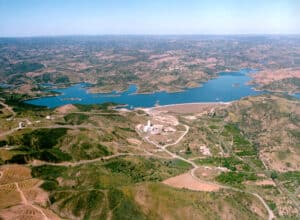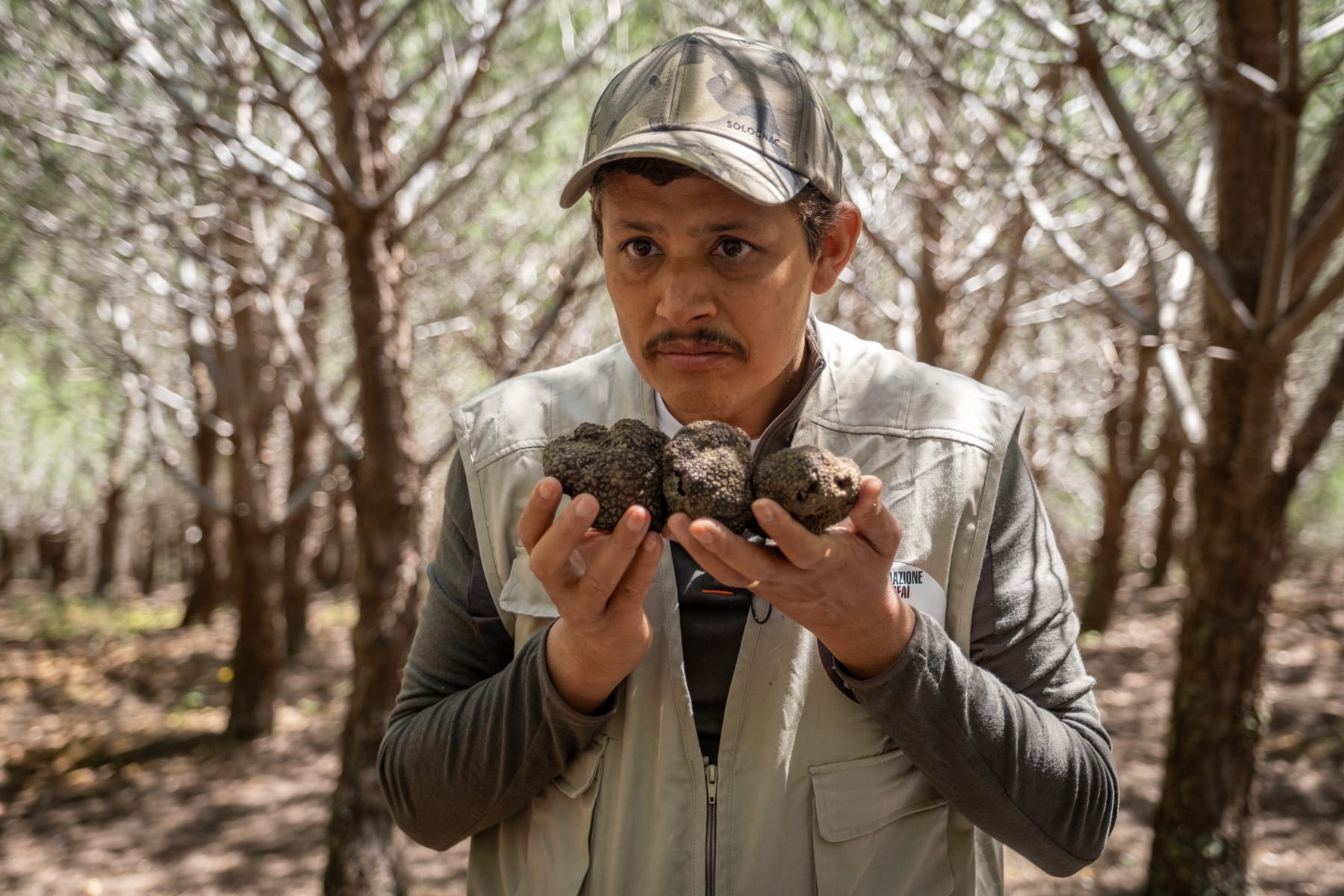
Nepalese Chef Tanka Sapkota made the discovery in the Alenquer region, north of Lisbon.
For the first time in history, a black summer truffle has been found in Portugal. After several studies last year, chef Tanka Sapkota finally presents this delicacy grown on national soil, a discovery confirmed by researchers from the University of Évora, the Higher Institute of Agronomy, and the National Institute of Agricultural and Veterinary Research.
The highly sought-after delicacy favoured by chefs was unearthed in Portugal. After years of believing in the existence of an exceptional quantity of truffle of outstanding quality on national soil – even when this possibility was dismissed by many, including the scientific community – chef Tanka Sapkota now introduces a top-quality black summer truffle.
“So far, we have found around 15 kilos of black truffle in Alenquer and its surrounding areas. It was a surprising discovery that left us quite excited and convinced us that there could be many more in Portugal”, comments Chef Tanka Sapkota, executive chef of the restaurants Come Prima, Forno D’Oro, Il Mercato and Casa Nepalesa in Lisbon.

The discovery of black summer truffles in the Lisbon district could potentially contribute to economic growth, particularly in the regions concerned. “First of all, I think this discovery is important for Portugal. We are accustomed to imported truffles, so this could be of significant economic importance for our country. For the Municipality of Alenquer, specifically, this highlights us on the map once more for positive reasons. It is a product that we can consider indigenous to Alenquer, and if so, it could, in some way, harmonise with our excellent wine. Therefore, we will all benefit from this discovery. For now, we will monitor and understand the size of the truffle in the region to find out whether it is occasional or can be produced continuously. For our part, we are available to support Chef Tanka in this process so that it can become known nationally and internationally”, comments Pedro Folgado, Mayor of Alenquer.
The presentation of the black summer truffle in Portugal is the culmination of work carried out by Chef Tanka Sapkota, who for many years suspected the possibility of finding truffles in Portugal with a “seed” capable of sustainable exploitation. In 2023, the chef conducted a truffle hunting project that spanned several weeks, exploring various key locations across the country. He was joined by two tracking dogs and the Italian truffle hunter Giovanno Lungo. This endeavour was based on scientific and geological data, done in collaboration with the Ministry of Agriculture, Ministry of the Environment, Higher Institute of Agronomy, and the Universities of Évora, Coimbra, and Lisbon.

This year, the Nepalese chef sees his suspicions fulfilled by procuring around 15 kilos of black truffle. “We are still studying this truffle, but there is a possibility that it has characteristics that make it unique to Portuguese soil. Only after this research will we know how to cultivate it in other parts of the country. This would be excellent news for Portugal, with the opportunity to capitalise on this delicacy, placing us on the tourist map for enthusiasts of this wonderful raw material. For my part, I have done everything possible as a citizen; now, it is up to the government entities to continue with the necessary steps to solidify this process. I will be here to monitor and support”, says Tanka Sapkota.
Academic and scientific institutions, such as the University of Évora, the National Institute of Agronomy (ISA), and the National Institute of Agricultural and Veterinary Research (INIAV), were involved in identifying this black summer truffle in the laboratory.
“We analysed several specimens and observed their spores (the reproductive structures that allow the fungus to disperse, a type of fungal seed), and we are convinced that it is a summer truffle (Tuber aestivum). The preliminary identification results using molecular techniques seem to confirm the macro and microscopic observations. However, we still need to process this data to be 100% certain. It was a fantastic find, as it is the first record of this fungus in Portugal”, explains Dr Celeste Santos e Silva, a lecturer in the Department of Biology at the University of Évora.

Truffle hunting is almost a “sport” for many enthusiasts. This species of fungus, which grows underground near the roots of trees, such as oak or chestnut trees, is so difficult to find that trained dogs are needed to detect it by smell. Harvested in temperate climate regions, such as France and Italy, its scarcity and the challenges in harvesting and transporting it result in a high market price, leading some countries to invest in its cultivation. If the presence of resources in Portugal that support broader commercialisation is verified, this could have a significant effect on the local economy. “We are talking about truffles that can be expensive per kilo. Which could, without a doubt, bring some dynamism to the regions involved”, explains the chef.
Known for his deep appreciation of this valuable fungus, chef Tanka Sapkota presented Portugal with a 1,153 kg white truffle in 2018, recognised as the largest of the decade worldwide. The rarest and most appreciated truffle, the Alba white truffle, harvested in the Piedmont region of Italy, is served every year in November in a special menu at the Come Prima restaurant in Lisbon, prepared by Tanka Sapkota, where great connoisseurs come to taste this delicate and scarce delicacy.
Specialising in Italian cuisine, chef Tanka Sapkota has been working with this product since 1992, becoming a reference for white truffles in Portugal. In 2018, he was honoured with the title “Knight of the White Truffles of Alba” by the Order of the Knights of the Truffle of Alba. He is the only recipient of this recognition in Portugal from the wine and gastronomic brotherhood established in 1967.