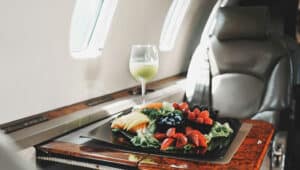
Last time, we started the conversation about inflight dining and discussed the way the airplane environment affects our experience of flavour. We have established that low humidity and high altitude numb the olfactory receptors and, as a result, food no longer tastes exciting.
Continuing on the subject, the next biggest contributor to the lack of food sensation is noise. Using noise-cancelling headphones can help deal with the noise levels, and many airlines supply them, but many also take the solutions one step further.
The research shows that music can help fool the palate into perceiving flavours more flavourful, therefore, in order to soften the hum and drum of the cabin, airlines create special playlists and use them as ‘sonic seasoning’ during dining.
For example, the “Sound Bite” by British Airways deploys Louis Armstrong as a trusted partner for savoury dishes, Debussy for hearty roasts and Placido Domingo, apparently, goes very well with the coffee.
Interestingly, together with the lack of humidity and high altitude, the airplane noise contributes towards heightening perception of umami, probably the only flavour that gets a boost in the skies.

Ironically, umami is a subtle, deep, savoury rich flavour that makes our tastebuds buzz with satisfaction. It is a flavour of melted parmesan, rich meat broth or golden, fried mushrooms.
In flight, the search for umami is probably what drives the popularity of tomato juice or Bloody Mary, even amongst those who never consume them in daily lives.
With their salty and peppery nature, the drinks stand out better than the sweeter counterparts, and they are a perfect partner for combating the otherwise flavourless environment of the airplane.
To help excite our palates, airlines also resort to using language. Undoubtedly, “Chicken Pasta with Peruvian Green Sauce” sounds better than “pasta”, or “Guava Egg Noodle Salad with Tofu” feels more wholesome that just “salad”. It is also quite obvious that meals with more exotic and stand-out spices and flavourings fit better than those that require delicate savouring.
In addition to food, airlines take their beverages seriously too. To make it compatible with high altitudes, Cathay Pacific created its own beer. It carries the name of “Betsy Beer”, after the company’s first aircraft, and features sweet and aromatic citrus notes and an increased carbonation, all of which help reinvigorate taste receptors.

On top of the reduced sensory processing powers, there are also other factors like broken circadian rhythms as well as the lack of company that also affect the poor perception of flavours onboard. Eating is inherently social, and dining in company and in good spirits is a large contributor to the pleasures of dining.
The airlines’ effort in making our trips pleasurable do work. During the time of the Covid pandemic, a Glasgow-based frequent traveller named Nik Sennhauser missed his flying so much that he decided to recreate the style and kind of airplane food to satisfy his cravings.
Ever since he was a child, aviation was a part of his story, and when it suddenly came to a halt, the only way forward was to ‘do it yourself’. Using trays, miniature dishes and napkin-wrapped cutlery, he strove to relive the performance and entertainment of the airplane meals.
I think Nik has a point. There is something magical about being served a delicious spread somewhere high in the sky whilst watching your favourite show on the inflight channel.
It resembles a cosy snug that we as kids sought to create when building tree houses or under-table shelters. It is this feeling of safety and comfort that an airplane meal should aim to create. Its history has some interesting chapters that we shall cover in our next conversation. To be continued …