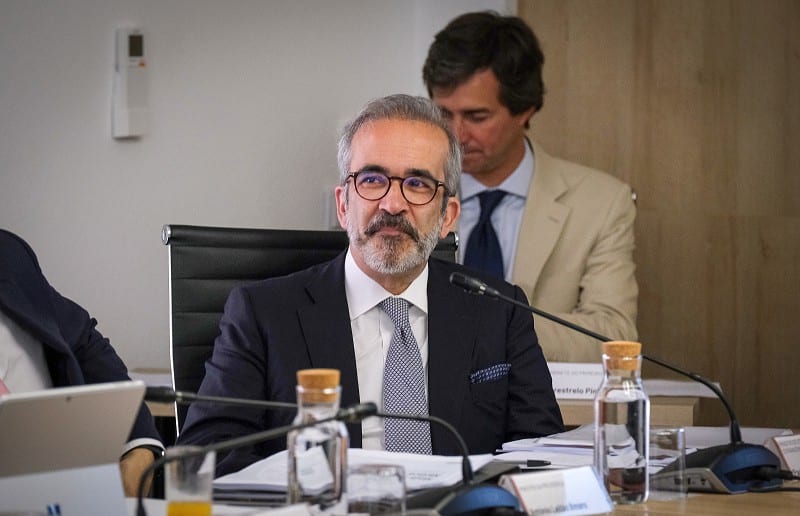
“There’s no boycott here”, says minister Paulo Rangel
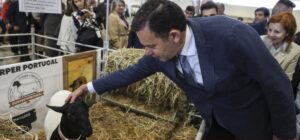
Days after the international press announced that “Top EU officials (have decided) to boycott meetings held by Hungary” in the context of its current tenure of the rotating presidency of the Council of the European Union, Portugal’s minister for foreign affairs has refuted the terms, saying specifically “there is no political boycott here”.
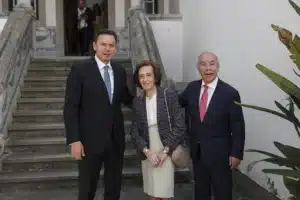
Talking to journalists in Brussels Rangel stressed: “What I am about to say is subject to permanent review. We (Portugal) will have political representation (at the informal meetings), but not at ministerial level (…). It has a political meaning, but there is no political boycott here”.
And this ‘meaning’ will continue, it appears, until either Hungary’s prime minister Viktor Orbán changes his tune, or the rotating presidency comes to an end (at the end of December).
The end of December, in the current geopolitical climate, is a very long way away. And when one considers the reasons for the (non) boycott (Orbán’s perceived cosying up to Russia and China, as well as US presidential candidate Donald Trump, trying to broker a peace deal in Ukraine), the expression ‘keep friends close and enemies closer’ comes to mind.
For now, Mr Orbán is clearly enjoying this moment in the EU ‘driving seat’ (even if he is carrying very few passengers).
He told his regular Friday morning interview with Hungarian state radio last week that Ursula von der Leyen (president of the European Commission) should not be seen as a political opponent to his country (which is being kept waiting for billions of euros in EU funding), “she is our employee.
“Von der Leyen’s task is to implement the line outlined by the prime ministers”, he said. “Since she receives her salary from member states, she is in a relationship of dependence,” Orbán went on, insisting that it is his intention to continue with his ‘peace mission’ (in spite of what the European Commission hierarchy says), as he is quite sure Donald Trump will win the United States presidency in November, and “why do we (meaning Europe) want to be left behind?”
A second term of President Trump “will also change the Europeans’ situation”, Orbán told his listeners, adding: “The essence of politics is to know where the epicentre of events will be”.
For now, it is unclear which EU countries (besides Portugal) are supporting the Commission’s ‘boycott’. Even today foreign ministers were said to be discussing upping the ante over Orbán’s stance. But Luxembourg’s foreign minister said, in his opinion, it is important to keep dialogue open with Budapest. “Ignoring or not choosing dialogue would be an error,” he said. ND
Source material: LUSA/ rferl.org/ Reuters