The PSD/CDS minority executive has survived one motion of censure and faces another today (presented by PCP communists)
With the wider world on tenterhooks – as the United States under Donald Trump makes unprecedented statements and decisions – Portugal has once again floundered into a damaging political crisis.
A situation that could so easily have been ‘properly explained’ at the outset has become a bone of contention: the prime minister’s family business (Spinumviva) and the income it (ergo he) receives from private enterprise.
The survival last week of a motion of censure presented by CHEGA was not enough. Questions remained – and these have simply amplified through the last few days, with the media making the most of every nuance to suggest the PM has not been entirely honest.
He, on the other hand, insists he has always been straight and above board, and has even said he will be asking the Entity for Transparency to audit compliance of all his declarative obligations as prime minister to prove it.
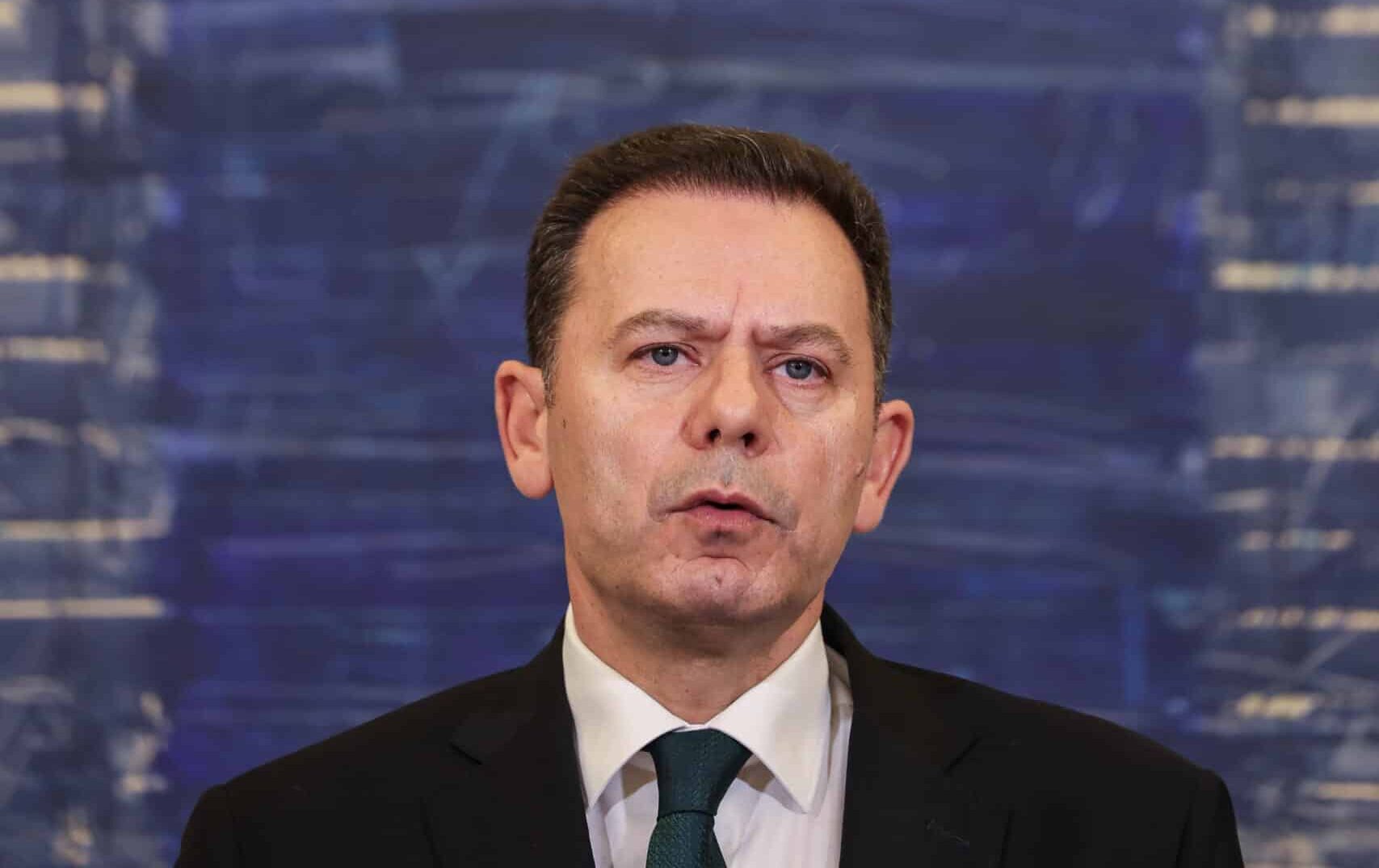
The one thing, however, that Luís Montenegro has refused to do, until time of writing, is make an announcement and then take questions from the floor.
And this has been his undoing.
Whether the PM has acted in good faith or not is not the issue: it is that he has acted without consideration for the questions swirling. It is as if he believes his word should be enough to diffuse the situation. Indeed, even his ‘declaration to the country’ last Saturday was done ‘arbitrarily’, eschewing a suggestion by President Marcelo, to hear Marcelo’s own opinion on the PM’s strategy.
As it is, the strategy fell like a lead balloon – and according to reports, the PM only then opted to telephone the president. The president, at this point, did not answer the phone. And this is where everything went downhill very fast.
So, where are we now? The PSD/CDS minority executive has survived one motion of censure and faces another today (presented by PCP communists).
On Saturday, the PM ‘challenged’ parties to show they supported the government, or he would table a motion of confidence (effectively meaning, parties would get to vote on whether they supported the executive, or not – the latter option requiring another costly round of legislative elections).
Within minutes, it was clear that all parties would vote against a motion of confidence, at which point the finance minister was rolled onto television (by this time, after 10pm on a Saturday) to say, “if the government survives the PCP motion of censure, it will take this as a sign that parties have confidence in its continuity, and the PM would not feel the need to present a motion of confidence…”
Unsurprisingly, everyone has seen through this monumental U-turn, and just views the government as vastly fragilised.
Whether it ‘survives’ another few months is really no longer the question: its days are seen as numbered. The LIVRE party, for example, has requested an audience with President Marcelo because it considers the regular functioning of institutions is at stake, with a “government that is neither alive nor dead”.

In the meantime, PS Socialists, led by Pedro Nuno Santos, have taken stock. They have consulted President Marcelo over how they are planning to react/what they intend to do. And what they intend to do, say commentators, is essentially ‘slow-cook the prime minister, in his own stew’, until such time that they can turn up the heat and finish him (and his government) off.
The strategy is a ‘commission of inquiry’. Yes, this may send readers’ eyes rolling to the backs of their heads, as these commissions of inquiry tend to go on for months, but it is an ignominy for a prime minister to be the subject of one, particularly as this particular inquiry will be focussed on the PS contention that the prime minister is “actively contributing to the degradation of the institutions of the democratic regime”.
“Our duty is to do everything we can to protect the regime and that means doing everything we can to find out the truth,” the PS leader told reporters on Monday, stressing he has not come to this conclusion “with any pleasure (…) Unfortunately the prime minister gives us no other alternative (…) The prime minister makes a statement to the country and doesn’t make himself available to answer questions, but then he sends five ministers to five television stations. The prime minister has closed off any chance of further clarification and, at the moment, there is no political mechanism available to us to find out the truth.
“The worst thing that can happen to our democracy is for us to go through this process without finding out everything that happened,” Pedro Nuno Santos added, questioning again “how it has been possible for a prime minister not to have been in an exclusive position and to have continued to receive payments from companies” for the 10 months of his tenure.
After months in which PS Socialists have appeared to be ‘on the back foot’, they have suddenly started emerging as the party “with a sense of state” (Pedro Nuno Santos’ own words), “with responsibility (…) We did not create this political crisis. We are not a factor of instability”, he insists.
And this is the crux of the crisis: instability at a time when no sane politician could relish such a situation. Europe is in crisis; Portugal is approaching municipal elections (which mean a great deal for the political direction of the country) and it must elect a new president, after 10 years with Marcelo, in January.

Here we arrive at the cherry-on-the-cake of this homemade tragedy: throughout his tenure, Marcelo Rebelo de Sousa’s raison d’être has been ‘maintaining stability’. He will be beyond irritated that he is nearing the end of his era with stability lying in the mud of party-political bickering. This is not a ‘serious crisis’, admit pundits: it is one that has been manufactured by parliamentarians desperate for power (or more power), without any thoughts about the good of ‘the people’.
One of the candidates in the presidential ‘race’, former politician and political commentator Luís Marques Mendes, has said that if this crisis develops into the ‘ultimate’ call for new elections, Portugal would enter the Guinness (Book of Records) for irresponsibility. “The country needs stability – at least until the end of the Plan for Recovery and Resilience,” he said on Monday, very much echoing the refrains of President Marcelo.
But another feature of this home-grown crisis is the machinations of politicians altogether. Marques Mendes, for example, insists that Portugal needs someone with political experience as the next head of state. Voters may decide that it doesn’t.