In the fight against cancer, all weapons count. It was with this in mind that the Hyperthermia Centre was installed at the Gambelas Hospital, the second of its kind in Portugal.
What should we know about hyperthermia?
How does hyperthermia act physiologically on cancer?
Loco-Regional Hyperthermia by Radiofrequency and Whole-Body Infrared Hyperthermia are both treatment methods that on their own or together with chemotherapy and/or radiotherapy aim at the destruction of tumour cells. Both methods are performed as outpatient treatment, not requiring hospitalisation.
Basically, hyperthermia stimulates the fever mechanism, which, as we know, is a physiological defence mechanism, provoking the release of regulatory substances with the effect of protecting the diseased organism, increasing the body’s immunity response.
Tumour cells have an altered membrane and, by inducing heat, we can provoke their death, interfering in their mitotic cycle through apoptosis (programmed cell death). Cancer cells then become more sensitive to other types of treatments, chemotherapy and/or radiotherapy.
What are the differences between the two types of hyperthermia?
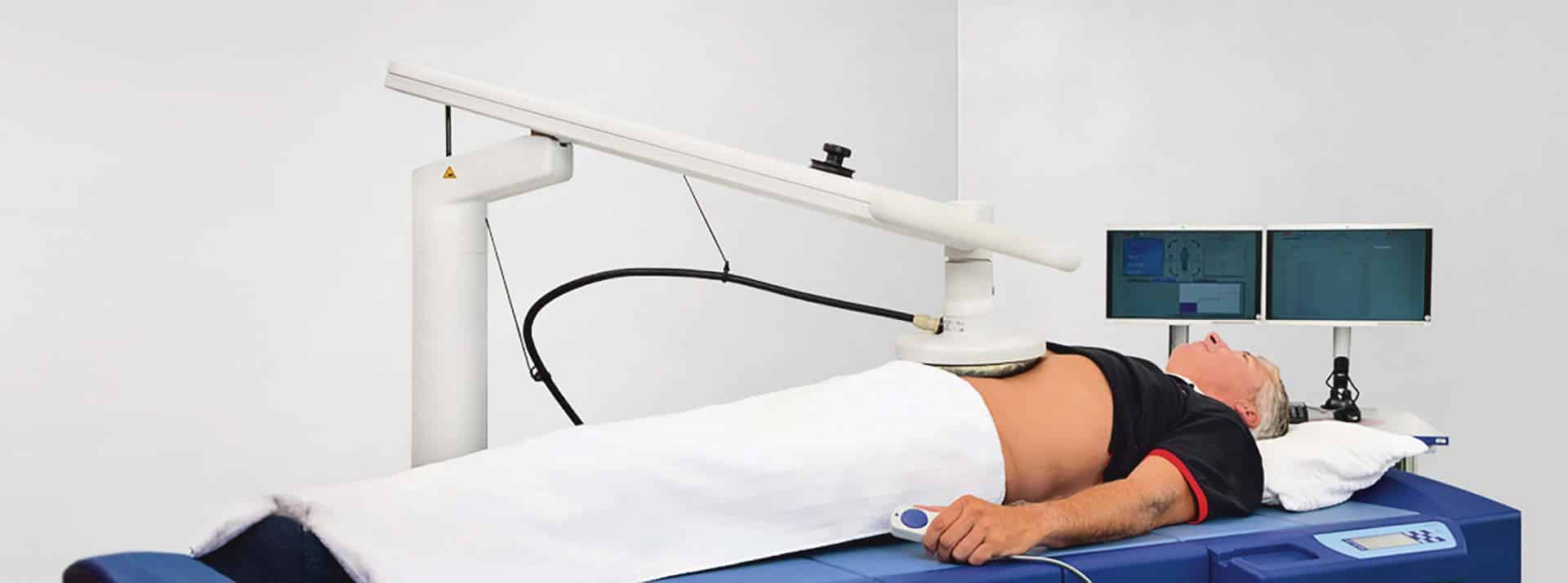
The goal of Loco-Regional Hyperthermia by Radiofrequency is to reach optimum heat in the tumour, be it a superficial or deep tumour, without exceeding the tolerance limits of the normal surrounding tissue. Local hyperthermia is applied externally and is not invasive. Two active electrodes emitting an electromagnetic energy aimed at the site of the treatment are applied, leading to the destruction of the cancerous cells in a selective, focused way. This method, which has the duration of approximately 60 minutes per session, is indicated for tumours in the cervix, head and neck, lung, breast, pancreas, melanoma, bladder, rectum, prostate, oesophagus, soft tissue sarcomas and of the central nervous system. Contraindicated for patients with pacemakers as the treatment interferes with the electromagnetic field of the programming of the pacemaker.
Whole-body Infrared Hyperthermia produces irradiation throughout the body in sessions lasting approximately 180 minutes. Indications are similar to Loco-Regional Hyperthermia by Radiofrequency. Contraindicated for patients with acute infections, heart failure, myocardial infarction, hyperthyroidism, pregnancy or epilepsy. This treatment also stimulates the immune system.
Can hyperthermia be used during any phase of the disease?
Yes, together with other treatments. Furthermore, studies show that this is one of the best auxiliary treatments for radiotherapy and chemotherapy as it increases their efficiency.
Recent clinical studies have also demonstrated evidence in relation to non-cancerous diseases, such as various types of chronic inflammatory process (bronchitis, asthma, prostatitis, ulcerated colitis, Crohn’s disease), fibromyalgia, degenerative diseases of the locomotor system and in select chronic and recurrent viral processes.
There are also studies and centres which effectively use it in anti-aging treatment in conjunction with other methods.
Is the efficiency of this treatment the same for the different types of cancer? And in cases where the disease has already spread (metastasised)?
The above-mentioned oncological situations are those where the results have shown more evidence as, generally speaking, they are patients who have “exhausted” the weapons of treatment or for which the efficiency is no longer the same. As for metastasis, yes, this treatment can and should be used, namely in situations where it has spread to other organs (e.g.: liver, lung and bone) or recurrent breast cancer (chest wall).
How does hyperthermia act in combination with chemotherapy and radiotherapy?
Hyperthermia increases the temperature in the affected organs, promoting greater sensitivity in the respective tumour cells, therefore optimising the desired benefits of these treatments. In the specific case of chemotherapy, fostering the increase of the flux of the drugs in the part of the body where they are most needed. In radiotherapy, favouring the tissues with more oxygen, where radiotherapy is more efficient and lessening some of the side effects produced by the accumulation of free radicals generated in the sessions.
Is hypothermia contraindicated for any tumours? What about the side effects?
It is contraindicated for people with pacemakers, in the case of Loco-Regional Hyperthermia, and in cases of cardiac interventions such as a coronary bypass or when there are metal prostheses near the area of the tumour or the area of irradiation.
Besides not being invasive, these methods do not cause risks for the patient, nor do they cause any significant additional side effects. At the end of a session of hypothermia, the majority of patients mention that they feel better with the heat, although some show signs of tiredness. In isolated cases, the destruction of cancer cells can result in a slight fever. However, both side effects are considered to be a favourable response to the treatment.
|| features@algarveresident.com
Article submitted by the Oncology Unit at Hospital Particular, Gambelas – Faro