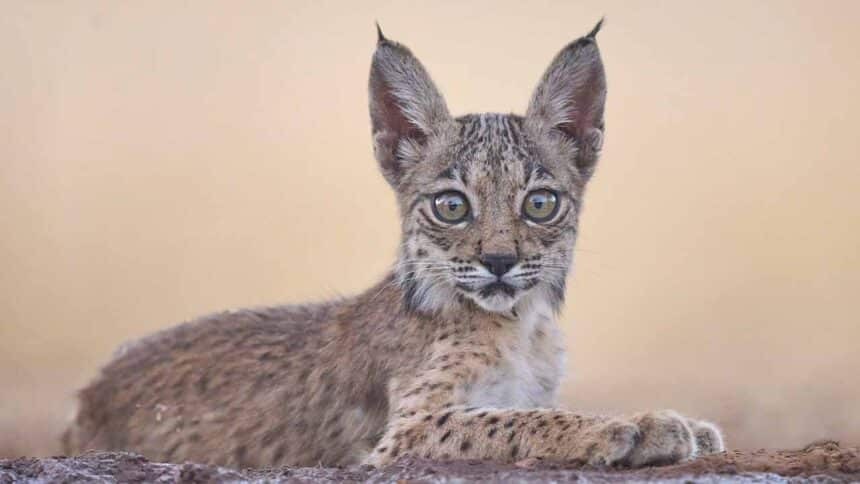
The Iberian lynx has exceeded the 2,000-species barrier, showing a 21% increase compared to the last census.
The ANP|WWF has announced that the Iberian lynx (Lynx pardinus) has been downgraded from “endangered” to “vulnerable” on the Red List of Threatened Species of the International Union for Conservation of Nature (IUCN); a global conservation success that the organisation celebrates as a historic milestone resulting from more than two decades of work by more than 20 organisations, including WWF itself.
The most recent census, published by the Iberian Lynx Working Group, which coordinates this issue within the scope of the Spanish Ministry for Ecological Transition and Demographic Challenge (MITECO) and includes representatives from the Spanish autonomous communities and the Portuguese Institute for Nature Conservation and Forests (ICNF), concluded that the species had exceeded 2,000 individuals.
This is a new record since detailed and coordinated monitoring of its populations has been carried out, thus recording a population growth of 21% compared to the data from the last census in 2022.

This is the first species to remove two categories of threat from the IUCN list in just 21 years; news that shows the collaborative efforts of numerous organisations are paying off and moving this species closer to the target of reaching 750 females and 3,000-3,500 specimens for the lynx to be classified as “recovered.”
Vasco da Silva, Forests and Biodiversity coordinator at ANP|WWF, believes that “this is excellent news for all the people and organisations that have been part of this global conservation success. At ANP|WWF, we are proud to have supported the Iberian lynx in cooperation with WWF Spain when fewer than 100 specimens were left on the Iberian Peninsula. This collaboration demonstrates that it is possible to recover endangered species through joint, multidisciplinary, peer-to-peer, and intergovernmental efforts, along with courage and political will.
In addition to captive breeding, conservation efforts for this feline have focused on increasing the abundance of its prey, the wild rabbit, which is currently listed as “vulnerable” due to a 70% reduction in its population.

On the other hand, as the Iberian lynx is still facing various threats from human activities like poaching, efforts have been made to prevent such crimes. Additionally, measures have been implemented to reduce motor accidents on roads that pass through its habitats.
The recovery of the countryside through nature-based solutions, with improvements in vegetation cover, creating a mosaic of forest, scrubland, and open pasture areas, has also been essential to guaranteeing habitat for this animal and has been one of the major investments made by ANP|WWF in Portugal over the last few years.
“However, we know that we are only halfway there, and we will continue working to ensure its definitive recovery: we must focus on restoring nature, increasing the availability of food, ending illegal hunting, and expanding and connecting territories and populations to ensure that the species continues to recover,” concludes Vasco da Silva.
Photos: Antonio Liébana and Sergio Marijuan.