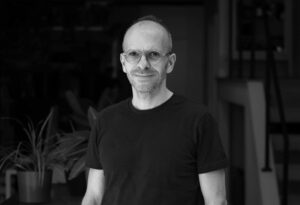
President of Oceano Azul Foundation highlights importance of protecting seas
Tiago Pitta e Cunha, the president of Fundação Oceano Azul (Blue Ocean Foundation) has warned today of the importance of halting the loss of biodiversity and biomass in the oceans, because humanity’s survival could be at stake.
He stressed that time to reverse the biological decline of our oceans is finite. There are scientists who say we only have until 2030/50.
The idea, therefore, is for a ‘reserve’ of 30% of marine protected areas, so that we can maintain ‘a minimum of the nature of the oceans’ and so that the planet reaches the end of the century with the capacity ‘to keep alive the life support systems on the planet without which much of life would disappear’.
Tiago Pitta e Cunha’s warnings come in the run-up to the next world summit on biodiversity, COP16, which begins next week in Cali, Colombia – and which will spend 10 days developing mechanisms to preserve 30% of the planet by 2030.
The summit is taking place almost two years after the meeting held in Canada (COP15), at which a global agreement to protect biodiversity was adopted – the so-called Kunming-Montreal Global Biodiversity Framework (QGBK-M) – signed by 190 countries and which envisages the efficient management of 30% of the world’s terrestrial, inland, coastal and marine areas by 2030.
Currently only around 17% of terrestrial areas and 08% of marine areas are legally protected. Even worse, “there is the consensus that marine areas in particular are often only protected on paper”.
Thus people like Tiago Pitta e Cunha want to see this sloth tackled, and objectives ‘complied with’ rapidly.
Says Lusa, “in what he considered a realistic analysis, (Pitta e Cunha) said that he would like the 08% to rise to 15% in 2026, and that in 2028 it should be more than 20%, up to 25%.
If it’s not 30% by 2030 but there’s a “very rigorous approach, we’re already heading in the right direction”, he admitted – but for that to happen, the Cali meeting needs to produce “a roadmap, a map” for the next few years.
The world has heard endless pledges and warnings from various COPs (while military conflicts do nothing to help any of the climate ambitions), but Pitta e Cunha stresses the turning point at which we have arrived: in order not to make life on Earth unfeasible at the end of the century, “at least for humanity”, 30% of the planet must be protected (…) “A roadmap must be defined at the next summits” as without this model, and without a monitoring mechanism, objectives may not be achieved”.
The Oceano Azul Foundation has been working with a French institute on how this mechanism should work – and how it should have interim targets between 2024 and 2030 – and has sought to have this issue discussed in Cali next week, he said.
President of environmental association ZERO, and university professor (Universidade Nova), Francisco Ferreira, adds another point: at COP16, when it comes to implementation, one of the crucial aspects is also monitoring and mobilising resources.
Recalling that two more ‘COPs’ are taking place this year, one on climate and the other on desertification, all linked to the current global crisis, Francisco Ferreira said that in Cali it is essential to start working on the 23 global goals decided at the last summit two years ago in Montreal, to be achieved by 2030.
“Each country needs to submit its biodiversity strategy and action plan. Portugal is still in the process of doing so,” he told Lusa.
And as Tiago Pitta e Cunha warns: “Biodiversity is currently a truly dramatic planetary crisis. We are losing biodiversity, we have a growing population, we are also facing the threat of climate change to biodiversity itself’.
That’s also why COP16 needs to raise the ‘30 by 30’ objective, or … quite frankly, no one can say we have not been warned.

Source material: LUSA