António Barroso explains buildings in council’s name – but he still has to pay for them
The absolute shambles of a “supersonic expropriation process” to supposedly construct a new mosque in Lisbon’s Mouraria district has once again come to the fore, with the previous owner of the two buildings seized by Lisbon city council stressing the whole experience has “destroyed” his life.
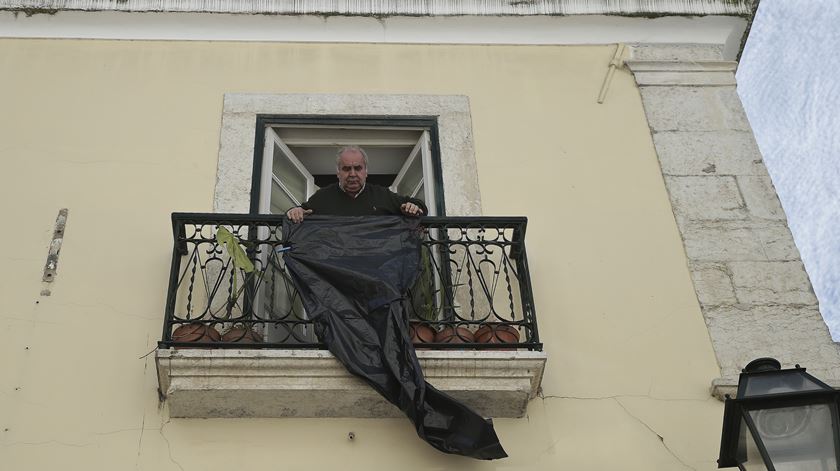
António Barroso was forced to give up his rights to two buildings in Rua Benformoso in 2016.
At the time the city council was being run by former Socialist prime minister António Costa (now the president of the European Council) and his deputy Fernando Medina (who went on to be Lisbon mayor after Costa, and then minister of finance, in Costa’s last government).
António Barroso told a meeting of Lisbon Municipal Assembly this week that the whole process had been “badly handled” by the two men: since 2017, the buildings have been in the name of the city council, but Mr Barroso still has to go on paying for them ‘every month’.
“I wanted to keep living there”, he told the meeting during the time for public speaking – but instead he was left with debts to the tax office and social security. He said he has even been threatened by the council that he would end up living on the streets.
As Lusa news agency explains, the project to build a new mosque in Mouraria dates back to 2012. Initially it was planned to demolish buildings to create a square that would allow access to the mosque via a pedestrianised passage between Rua da Palma and Rua do Benformoso.
It was in this context that António Barroso’s properties were expropriated: he claims for a value very much below what he should have been offered. But what adds to the agony, is that nothing, but nothing, has ever moved forwards.
IL councillor Angélique da Teresa stresses that the mosque project dates so far back, that it probably now is “out of date” (as so many more Muslims have since begun living in the area, and requiring a mosque in which to worship).
“How can a city council that allows so much of its property to be occupied illegally; that has vacant properties, that accumulates debts due to non-collection of rents; that had a drainage plan in the drawer for decades on end, despite successive floods; that hasn’t yet finalised the decentralisation process in the riverside area; which has the Tapada das Necessidades, a royal garden, in total decay; which hasn’t resolved the Braço de Prata Factory and which operates without the minimum safety conditions, then manage to implement an expropriation process so quickly?” She queried.
Agreeing with the need to build a mosque in order to have a ‘dignified and safe’ place for people to pray, IL defended the implementation of the project in a space ‘where there is no need to expropriate anyone’, pointing out that Lisbon has empty plots of land where the mosque could be built.
“We don’t have to condemn anyone to being left without their home, and even more so an elderly person over the age of 70,” she said (referring to António Barroso).
Referring the council’s position to the vice-president, Filipe Anacoreta Correia (CDS-PP), the councillor for Municipal Works, Filipa Roseta (PSD), said that the current executive decided, two months after taking office in October 2021, to suspend the compulsory works to demolish the house of Mr Barroso.
It now remains to be seen whether the whole project will be shunted sideways, to an area where no residents are required to lose their homes, or their lifetime’s assets.
Source: LUSA