First choice wanted to retain €15,000 Bank of Portugal pay packet
After all the unpleasantness of their first choice for the top job, Portugal’s government has picked its Secretary General – Portugal’s answer in many ways to the new job description of Elon Musk.
While Musk is to be charged with reducing public expenditure in the United States, Carlos Costa Neves’ brief is to make public administration management “more efficient” in Portugal.
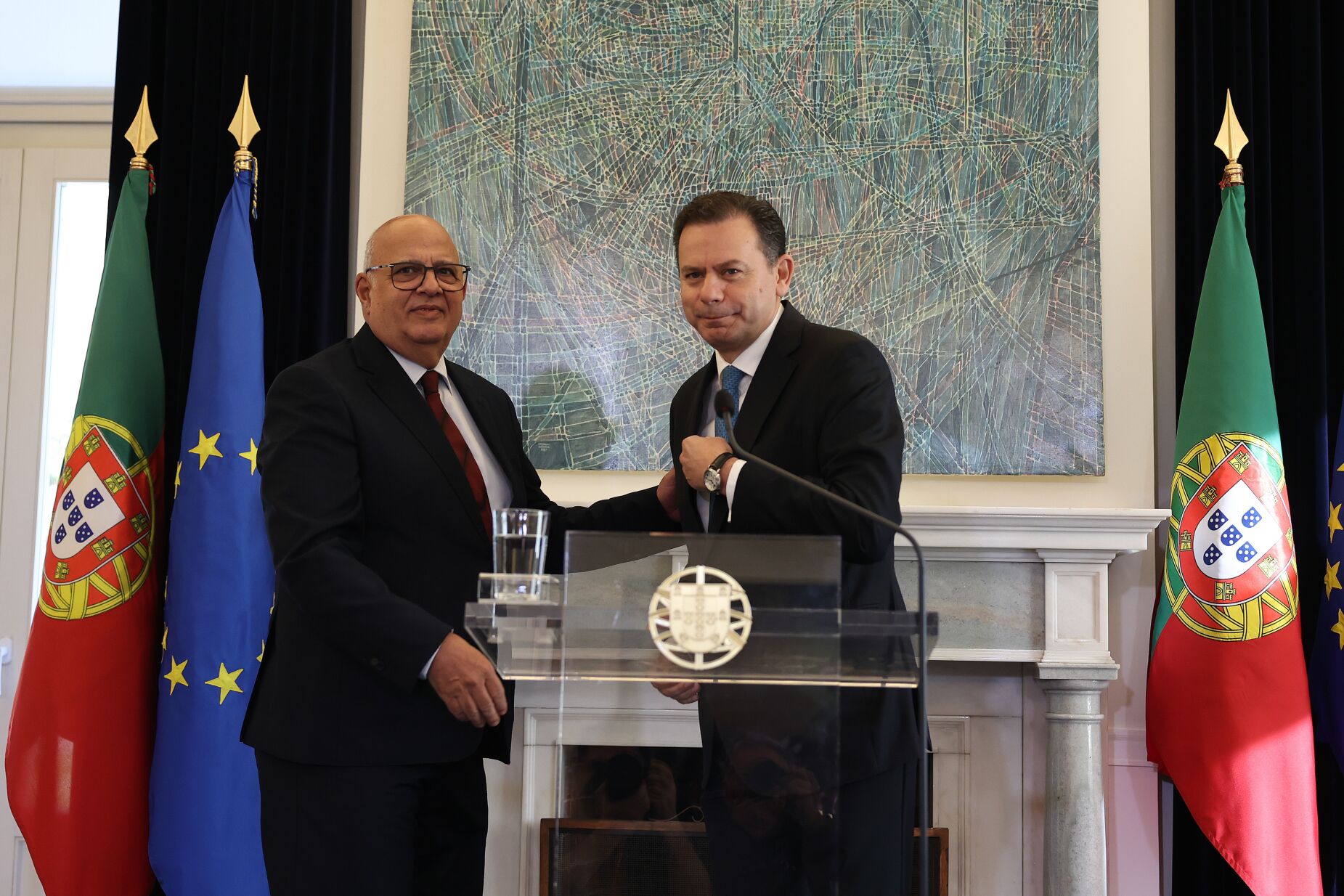
Prime minister Luís Montenegro outlined what he’s hoping for when Costa Neves was sworn in earlier today: a workforce who feel that a career in the Civil Service is ‘worthwhile’, not that it is a “stronghold of stability” (safe job, in other words), nor “a collection of labour privileges” (the ‘perk’ of the job often cited by those who claim they have landed ‘a job for life, followed by a Civil Service pension’…)
And in weeding out the malingerers, and poor management, Mr Montenegro actually said his new super manager will be “paying to work (…) since he will have a lower income in this role than he would have if he were not here”.
Not for him the €15,000 a month requested by the government’s first choice. Costa Neves will be taking roughly the same salary as the prime minister (around €6,000), which, according to Mr Montenegro, is less than his previous monthly pension.
The 70-year-old has been persuaded out of retirement after a career as a centre-right MP, Euro MP and former minister in the short-lived government of Pedro Santana Lopes, and the longer-running government of Pedro Passos Coelho.
The technical niceties of his new role involve leading the new General Secretariat that will provide “technical, administrative and logistical support to the Council of Ministers and members of the Government, support meetings and administrative and legislative processes, support the adoption of the Government’s code of conduct and administer the Prime Minister’s Official Residence and Campus XXI, where it will be housed.
“This change has been postponed for too many years and has not been implemented for too long”, said Luís Montenegro at today’s official swearing in ceremony. “And this government’s stance is not one of adventurism, but neither is it one of contemplation.
‘We’re not taking a bigger step than can and should be taken, but we’re also not looking at the problem and fuelling reasons to delay its solution. We are moving forward. We are carrying out this change that merges organisations, reduces structures, reduces management positions, but, I repeat, this is not the end of the reform. This is a consequence of improvements in the management and operation of the services”.
“The aim really is to gain efficiency, to gain capacity, to gain predictability, to gain organisation, to gain responsiveness,” he stressed.
Luís Montenegro came into the premiership when so many predicted he would never make it. Since taking control of the government, the impression is one of a man committed to following a strategy, and ignoring ‘any unnecessary noise” – a characteristic which infuriates opposition parties, whose role, in the end, is to create noise.
Accepting his new challenge today, Carlos Costa Neves praised the PM’s courage in this endeavour to ‘pull public administration into shape’ and create “effective efficient institutions that are transparent, sustainable, inclusive and closer to citizens and businesses”.
“It will be no small feat”, he added. And no doubt there will be howls of resistance as reforms get underway.
The government’s General Secretariat started on January 1, 2025 and is the result of the implementation of the first phase of public administration reform.
This first phase will see “the extinction of nine entities by merging them into the general secretariat of the government – and will cut the number of management positions by 25%, generating savings of around €4.1 million per year for the state”, writes Lusa.