Curry Cabral performed surgery on patient with cirrhosis now “recovering well”
On 5 February, Portugal’s Curry Cabral Hospital performed the first robotic liver transplant in Europe on a patient with cirrhosis, who is now at home and “recovering well”, the institution announced today.
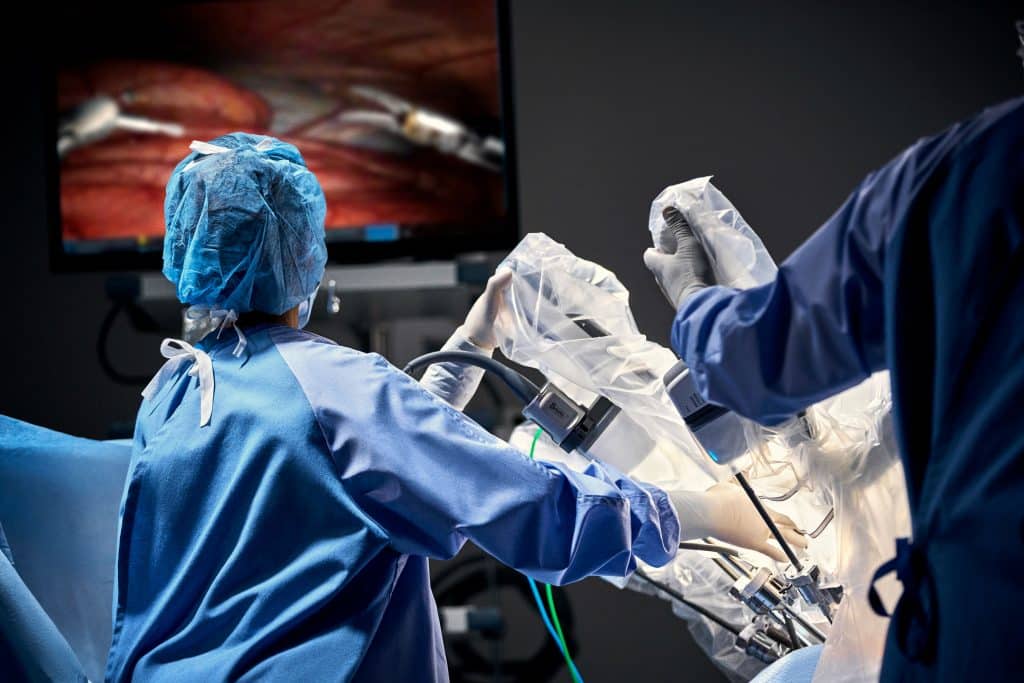
“The historic surgical intervention” lasted nine hours and was led by director of General Surgery and the Hepato-Bilio-Pancreatic Unit Hugo Pinto Marques, using a fourth-generation system – the da Vinci XI – which is part of the first Robotic Surgery Centre in Portugal.
“The patient, a 51-year-old Portuguese citizen diagnosed with cirrhosis of the liver, has been discharged and is convalescing at home and recovering well,” said the Unidade Local de Saúde (ULS) São José, formerly the Centro Hospitalar Universitário Lisboa Central (CHULC).
Surgeon Hugo Pinto Marques told a press conference that the surgery went without “any problems” and the patient, who received the organ from a deceased donor, was discharged from hospital 11 days after the operation.
According to Marques, the robot was used from the start of the operation and enabled the removal of the patient’s liver and the replacement with a new liver.
He explained this intervention is traditionally carried out using a conventional approach, with a large incision, and takes an average of five to six hours but can last much longer depending on the difficulty of the case.
Robotic surgery allows the intervention to be carried out with small incisions (between seven and 10 centimetres), one of which is the minimum size to remove the diseased organ and insert a new one.
“The great advantage is that it’s a much less aggressive surgery, it allows for an easier recovery, and at the same time it uses this robot, which is a very precise instrument, with a very increased vision, with great detail and therefore allows the most delicate phases of the operation to be carried out very safely,” he explained
Hugo Pinto Marques said that the first liver transplant performed by a robot with a partial liver took place in Asia in 2021, and since then, there have been 10 transplants of this kind in South Korea, India and Saudi Arabia.
The first whole liver transplant was carried out in Saint Louis Hospital in the United States in May 2021.
The surgeon said that preparation for the liver transplant at Curry Cabral involved long months of planning and training the teams in the critical steps of the intervention.
“This is not just an isolated step and a demonstration of technique, but the start of a robotic transplant programme that can be of great benefit to patients,” he said.
Director of Surgery Luís Campos Pinheiro agreed it was “a very important day (…) because of the benefits this surgery brings to the patient.”
The president of ULS São José, Rosa Valente de Matos, added that the Robotics Centre has performed 1,500 surgeries in nine different areas and, in 2023, it performed 533 transplants in the various areas.
She also said that there are dozens of professionals from other hospitals, not just national ones, receiving training at the centre.
“We want to continue paving the way and innovating in the area of robotics and others (because) this is a way of attracting and motivating professionals to the SNS national health service and beyond. It is essentially about providing better quality care and great innovation to our population,” she said.
In 2023, 118 liver transplants were carried out at ULS São José, and since the end of 1992, 2,700 have been performed.
Robotic surgery in Portugal’s health service began at the end of 2019.
In 2023, a second system was acquired, allowing the ULS to be a pioneer in setting up a Robotic Surgery Centre in Portugal, installed at Curry Cabral, one of the seven hospitals that make up the ULS São José.
Source material: LUSA