Socialists accused of “desperation”, promising everything – and doing nothing for housing crisis
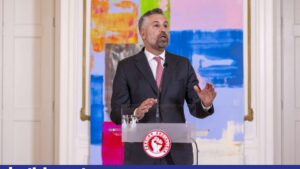
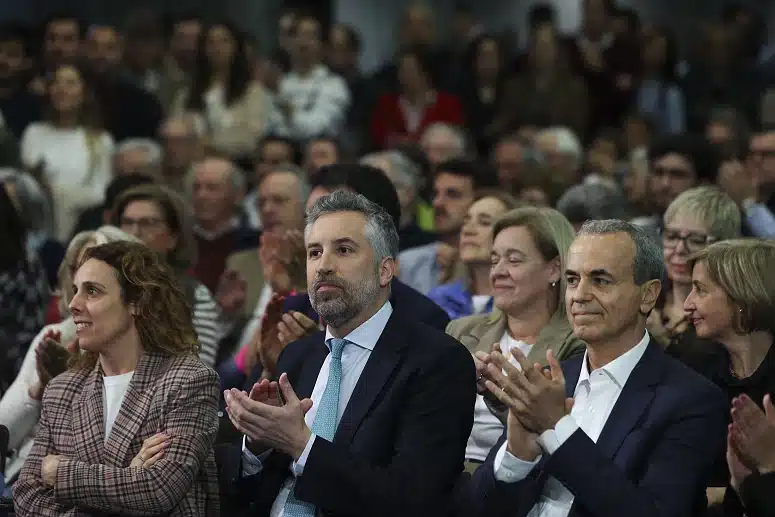
It is proving ‘one of those weekends’ we will all have to become used to in the run-up to new elections on May 18: yesterday, PS Socialists presented their electoral programme, which was summarily slammed for “promising everything to everyone” and destined to lead the country into a new financial quagmire.
The most interesting aspect of the criticism is that it did not just come from the centre-right. Bloco de Esquerda (the more radical left and a former ‘partner’ of the first Socialist government of António Costa) stressed that there is nothing to fix the housing crisis in the short (even medium) term, recalling that pledges to build new homes have been in Socialist programmes since 2017, and have amounted to very little.
BE also criticised the plans to extend rental support to the middle classes, while LIVRE claims the PS has stolen one of its ideas, and been mean about it at the same time.
But first, to the nuts and bolts of “A new impulse for Portugal”, presented by Socialist leader Pedro Nuno Santos, for the first time accompanied to such an occasion by his wife (who has previously kept right out of the political spotlight):
- A permanent return to the policy of Zero IVA (value added tax) on basic foodstuffs (introduced temporarily during the inflationary crisis in 2023, and including meat, fish, eggs, olive oil, fruit and vegetables), and reduction of tax to 6% on electricity up to 6.9 KVA, which will benefit roughly half the country (5.3 million consumers) instead of the 3.4 million covered right now.
- €500 in government savings certificates for all children born since January 1 this year (LIVRE maintains their idea was to give newborns €5,000 in government savings certificates).
- A 50% increase in child support for families of children aged between three and six years old.
- A fixed price for bottled gas.
- Reduction of 20% in the IUC (road fund tax) on vehicles registered after July 1 2007.
- Increases in the minimum salary of €60 per year, so that the national minimum wage increases to €1,110 by 2029.
- A gradual reduction in the working week.
- Expansion of services provided by the SNS (public health service) to include dentistry and mental health support. Detailing this, the PS programme says: “We are going to create 350 dentist’s offices in every municipality in the country, benefiting from the Recovery and Resilience Plan (PRR) measure and, after creating a dentist’s career in the SNS, hire dentists and oral hygienists to provide a full public health response”. Regarding mental health, the plan is to “integrate mental health into the basic care package of the SNS, enhancing the teams and human resources in this area by hiring psychiatrists and child psychiatrists, psychologists, nurses, social workers and occupational therapists’. In particular, the PS wants to create “community mental health teams and employ 300 psychologists by the end of 2026, guaranteeing their integration into the career of senior health technician and ensuring the mental health dimension also in emergency responses”.
- Extending rental support to middle class families that are already spending a large part of their income on housing costs.
- Use of part of profits from state bank CGD to finance municipalities in the construction of housing (This measure has already been announced, but is now within the electoral programme as one of the “permanent instruments for financing the construction of public housing, especially aimed at the middle class, young people, displaced workers and higher education students”.
- Progressive reduction of tuition fees at universities, to the point where bachelor’s degrees will become “free within a decade”, and master’s degrees will also become more accessible.
- Free nursery school education (for children from the age of 3)
- New financial incentives for teachers – the idea being to make the profession more attractive.
- “An additional channel for integration into the labour market for foreign workers who are already in national territory in a regular situation, through the granting of a new residence permit to holders of some categories of short-term visas” – and the pledge that immigrants with work-seeking visas (which do not yet exist) are “assisted at the Institute for Employment and Professional Training (IEFP) within 30 days of entering national territory”.
- Investment in defence to increase, but “without any target in terms of the amount of GDP invested in the sector”, and without “weakening the Social State”. The party promises to “adopt a new Strategic Concept for National Defence’ and “launch a Mobilising Agenda to stimulate Portugal’s industrial capacity in the field of Defence, involving industry, universities, research centres and business associations”. The PS equally promises to “continue to contribute, bilaterally and multilaterally, to the defence of Ukraine” and to “start the process of immediate recognition of the State of Palestine”.
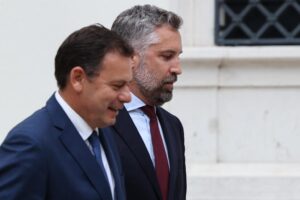
Prime minister Luís Montenegro addressed these sweeping ambitions yesterday, saying they were reminiscent of the policies of José Sócrates (which led the country to bankruptcy, and the need for a financially-crippling €79 billion bailout). Today that interpretation has been reinforced by minister for territorial cohesion Manuel Castro Almeida who dubbed the PS programme “a recipe for disaster” that would lead to the end of budgetary balance that has been so hard to recover.
“These times call for prudence, a lot of prudence. What the PS is proposing is irresponsible. It is zero political and financial responsibility,” he said, questioning how much each measure costs and “where the PS is going to come up with the money”?
The necessary sums will no doubt come shortly, as should the PSD-CDS-PP coalition’s own electoral programme. But for the time being, as the world overheats in tariff turmoil, Portuguese political figures will be trying to beguile the electorate with a future over which they will ultimately have little control.