In the space of a few weeks, Portugal has been assailed by two massive investigations alleging ‘installed corruption’ within the corridors of power, affecting both parties trying desperately to win the elections.
A few days before the tsunami of Operation Influencer swept António Costa’s government into an uncomfortable corner, Jornal Sol carried a damning interview with the president of the Supreme Court of Justice, Henrique Araújo. What he had to say will have been missed by most people who have since been following every lurid detail of corruption investigations that appear to show Portugal’s leading political parties as “rotten from the inside”. But, looking back, Henrique Araújo was possibly warning the country’s erring movers and shakers that Justice was on their heels.
Fast forward to this week, and we have both PS Socialists (who have been running the country for the last eight years) and PSD social democrats (who want to take over) fighting an acrimonious election campaign in which both are now tainted by the stench of corruption (and neither can boast any kind of ‘strong lead’ in the polls).
As Henrique Araújo told Sol the weekend before public prosecutors descended on the prime minister’s official residence in São Bento (to find, among other things, over €75,000 in cash hidden in the office of his top aide): “Corruption is installed in this country (…) I do not see any will on the part of politicians to change anything (…) Corruption is rife in Portugal, with a very strong expression in public administration (…) This is not just a perception, it’s a certainty.”
The president of the country’s top court let drop that the current justice minister ‘meant well’ in terms of solving this endemic problem, but he felt there was “something that transcends her that may be preventing her from carrying out some of the things she would like to…”
It was an interview that received only passing mention in the wider press – and was quickly obliterated by the ‘shock news’ of Operation Influencer, the fall of the PS government and the resignation of ‘the legendary António Costa’.
Even international media focused on the apparent scourge of corruption corroding political power in Portugal. In Strasbourg, president of the European People’s Party Manfred Weber, referred to “Portugal’s corrupt Socialist government” declaring “our friends” (i.e. the social democrats) were ready to ‘seize the day’, and “Luís Montenegro will become the next prime minister”.
Luís Montenegro, for his part, began the PSD’s pre-election campaign on a ‘zero tolerance’ of corruption platform, saying he wanted to form a government that is “demanding in ethics and uncompromising in integrity”.
If only he could have seen what was coming.
Last Wednesday, two air force jets carrying around 300 public prosecutors, investigators, judges and sundry fiscal experts touched down in Madeira and changed everything.
Today, it would be very hard to find anyone in Portugal who believes one party is less corrupt than the other – and this threatens to further complicate what has already been described as the “strangest election campaign” in the country’s history.
What has happened in Madeira?
In many ways, ‘the case’ has been painted along the same lines as ‘Operation Influencer’ – a web of influence trafficking/greasing palms/passing business to chosen companies.
Like ‘Influencer’, planning rules seem to have been bypassed – to enable lavish development(s) on protected land – a large quantity of undeclared cash has been found among the 130 or so official searches. The complexities of the process have also seen to it that even as we write, three people arrested last Wednesday are still ‘behind bars’ waiting to answer questions before a judge.
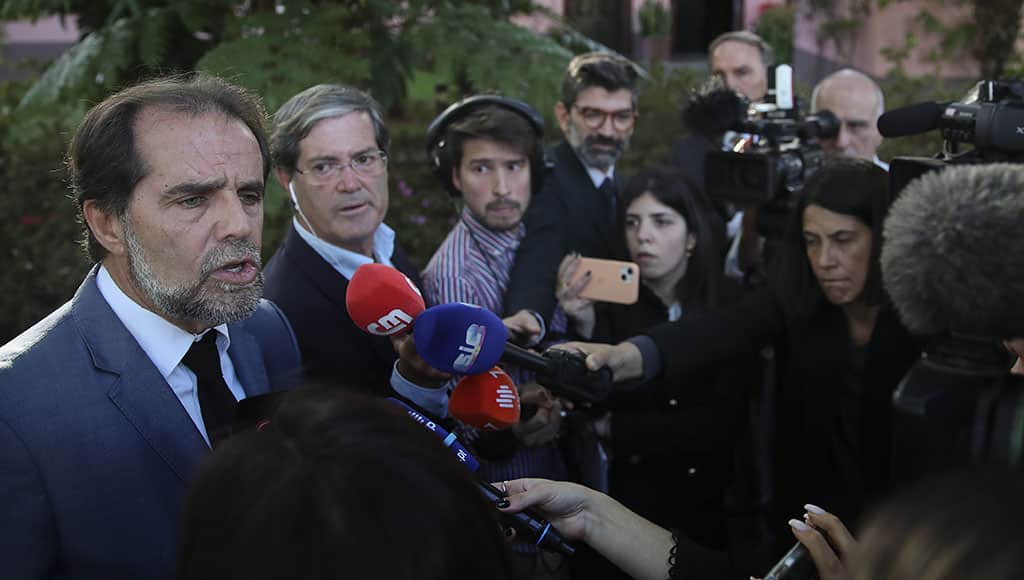
Equally, like ‘Influencer’, the ‘man at the top’ – Madeira’s long-term PSD leader Miguel Albuquerque – has been seen to be involved. In fact, in this case, he is seen to be potentially more implicated than António Costa may be in ‘Influencer’. Media reports have said were it not for political immunity (which Albuquerque enjoys), he would be behind bars with the others (one of which is the former mayor of Funchal, Pedro Calado).
Notwithstanding all the whys and wherefores, this crisis has pushed Madeira into absolute turmoil: numerous building projects will now have to be ‘halted’, affecting businesses/people – but, most instantly, the government has ‘collapsed’. Buoyed up as it is by PAN/CDS-PP, the two have made all the noises to show they want none of this: it’s time for elections. That, bizarrely, is impossible, as the government only took over in September, and has to run for six months before it can be ‘dissolved’.
President Marcelo has already intimated that he won’t accept a replacement for Albuquerque who might be ‘too close’ to what has gone on, and he has, therefore, already vetoed Albuquerque’s choice for his replacement.
That last part may surprise readers: Albuquerque has resigned as regional governor, but he has stayed on as leader of the PSD in Madeira … And this is where a faraway regional archipelago has shown how easy it is to affect the whole country: how can someone facing charges of corruption still be in charge of a political party?
It is a fundamental question as the nation goes to the polls – and it has played superbly into the hands of CHEGA (Portugal’s third political force, constantly described as ‘far right’).
CHEGA has no truck with corruption: its campaign posters blame everything on corruption – and it is ‘squeaky clean’ in as much as it has never held any power.
And that is why Portugal’s national election campaign is in such a terrible bind: the main parties cannot hold their heads high – and minority parties need to attach themselves to one or other of them to cling to some sort of power.
A picture of stability this ain’t: the Azores are having elections on Sunday after a catastrophic stab at another PSD-led government floundered; the mainland is having elections in five weeks’ time as a result of alleged cronyism and influence peddling by PS Socialists, and Madeira is sure to find itself set for elections as soon as President Marcelo works out a coherent path.
What happens to the ‘suspects’ at this point, and all the allegations “involving millions of euros” whether in Influencer, Madeira, Tutti Frutti, or any of the other cases stacked up in public prosecutors’ offices, is irrelevant: it is what this does to a nation’s psyche at a moment when the wider world is also at sixes and sevens.
Will anyone ever believe a word they are told by politicians ever again? And where could the answer to that loaded question lead us?
By NATASHA DONN