Lack of water in region “the worst ever”
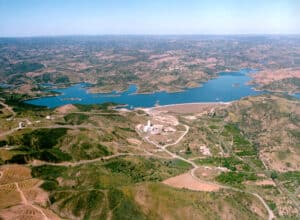
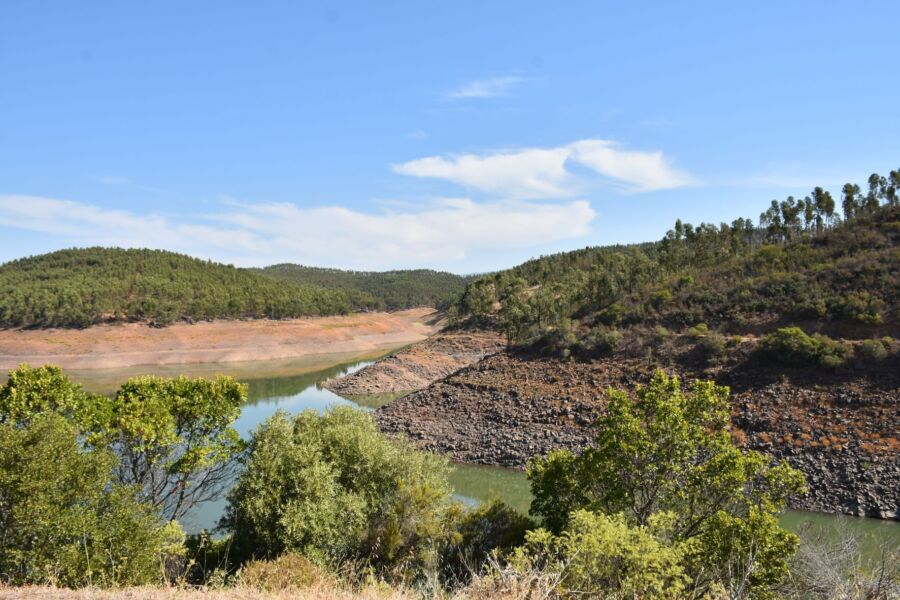
Even after the rains of the first few months of this year, the Algarve is in “the worst situation ever” in terms of water shortages.
This dismal message has been conveyed by APA vice president José Pimenta Machado.
Speaking at the inauguration of an exhibition dedicated to World Water Day in Albergaria-a-Velha, the vice-president of the Portuguese environmental agency, said: “”It’s true that the rains in January and February brought some water to the Algarve’s reservoirs and that is good news. But we are worse off than in the past and we are in the worst situation ever in the region.”
Although nationally the country’s reservoirs are now at an average of 87% capacity, problems persist on the coastal Alentejo (proliferated with greenhouse-based agricultural explorations) and in the Algarve – and “in the future there is expected to be less water” available to those areas, he warned.
First and foremost, action is needed to ensure more efficient water management, without prejudice to making progress with new dams, he said. “It doesn’t make any sense to have a network in which 50% or 60% of the water is lost (…) the first priority should be to make the systems more efficient“.
But it is equally not enough to construct more dams ‘if they don’t have water’: “we have to increase water reserves, but today we have three dams that are still at less than 20% capacity, two in the Algarve and one in the Alentejo”.
Thus, the arguments, in Pimenta Machado’s mindset, in favour of desalination plants: “We’re going to build the first large desalination plant in the Algarve, in Albufeira (Faro district), and it is so important for the region,” he said.
APA’s vice-president referred to Portugal having been the first European country to have a desalination plant, on the island of Porto Santo, in Madeira, which “works well” and is “very important” for the island.
The Algarve has been on alert due to the drought since February 5. The government has approved a set of measures to restrict consumption, namely a 15% reduction in the urban sector, including tourism, and a 25% reduction in agriculture.
In addition to these measures, there are others such as combating losses in the supply networks, using treated water to irrigate green spaces, streets and golf courses and suspending the granting of licences for boreholes/ use of water resources.
The outgoing government warned back in February that there could be the need to raise current restrictions, by declaring a state of environmental emergency or calamity, if measures do not adequately reduce consumption/ save water .
At the same time, there is enormous local opposition to the desalination plan, whether due to its location, or to the fact that it will send hundreds of thousands of litres of untreated brine back into the sea every single day.
An online petition against the desalination plant has been gathering signatures on the public petitions site, while PAS (the Platform for Sustainable Water) has been busy lobbying support from politicians both in Portugal and Europe.
Source material: LUSA