Residents on Faro Island’s Ancão Peninsula call for same rights granted to fishing communities on Culatra Island
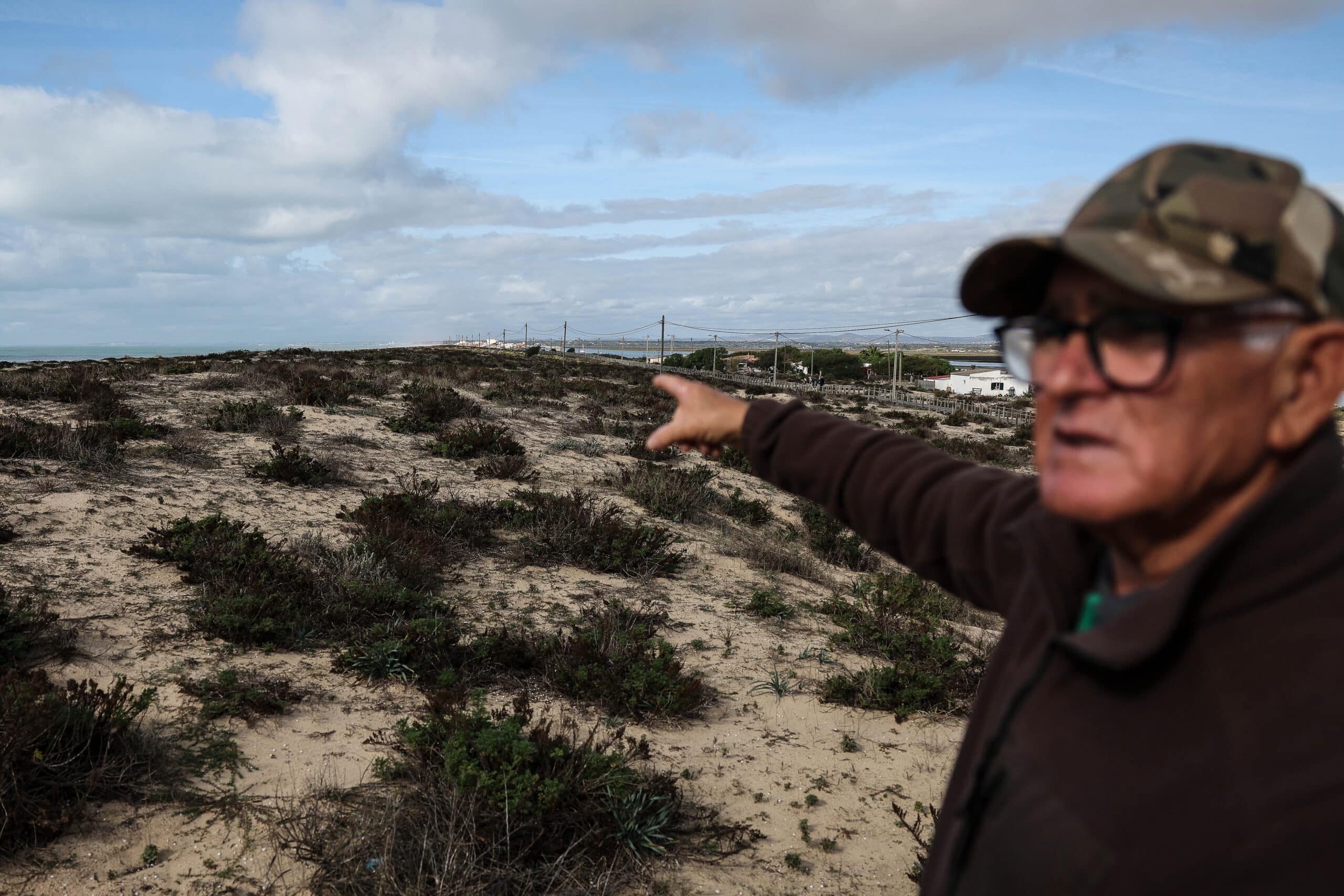
Tensions are rising on Faro Island (known as Praia or Ilha de Faro in Portuguese) as the government plans to demolish 49 constructions in a €1 million “renaturalisation” effort on the Ancão Peninsula. While some residents have agreed to relocate, others are refusing to leave their homes, calling for the same rights granted to fishing communities on nearby Culatra Island.
Among the 49 buildings targeted for demolition, 41 are occupied by families, with the remaining eight uninhabited. The relocation process, managed by the municipal council of Faro, aims to house these residents in newly built apartments in Montenegro, near Faro Airport, by April. However, resistance is mounting among those who say they cannot accept being uprooted after decades of living on the beach.
Gilberto Silva, 73, is among the residents who refuses to leave his home behind. His family has lived on the beach for three generations, initially in a wooden house where Faro’s municipal campsite is now located.
“The problem began with the first demolitions in 1956 when the municipality took administrative control of the central beach area, where fishermen lived, and built the road,” he said.
Many residents displaced from the central beach at that time were “pushed” to the eastern and western edges, where they began building homes, he told Lusa news agency.
In 1987, the creation of the Ria Formosa Natural Park brought more demolitions to the island, where 204 homes at the eastern end were torn down under the authority of Algarve’s then-Secretary of State for the Environment, Macário Correia.
The process resumed 20 years later with the establishment of Polis Litoral Ria Formosa, which began surveying illegal constructions in Faro and Olhão in 2010. The survey identified over 700 illegal structures in the barrier islands.
“They claim the beach’s edges are the problem, but the central area is the most dangerous – that’s where the sea breaches the road,” Silva argued, vowing not to leave, especially “not to an apartment in Montenegro where I’d have to pay rent.”

Luis Marmelete, 52, another resident and president of the Association for the Defence and Development of Faro Beach (APRAFA), shares the same sentiment. “There is no guarantee of a future for people who built their homes through hard work. In those apartments, if you can’t pay (the rent), you’re evicted. Under these conditions, most people don’t want to leave,” he said.
Marmelete advocates for residents to be relocated to homes they can own, asserting that their current houses also have value. He suggests a possible “adjustment” in valuations to reach a fair resolution.
He also believes that residents of Faro Beach are being treated unfairly compared to those on Culatra Island, where the local fishing community was allowed to stay and granted property rights. “There, fishermen have property rights, and they’re recognized. Give us a title (of property) for 20 or 30 years, allowing us to live here, and if we don’t have descendants, it ends there. That would be fair,” he argued.
A 2010 Polis survey identified 100 families requiring relocation, but according to Gilberto Silva, some have since passed away, leaving a current estimate of no more than 80 families across both ends of the beach.
The renaturalisation project is a cornerstone of the government’s €20.2 million investment in what it calls “coastal protection measures”, which also include dune restoration and improved resilience against rising sea levels.
Approximately 62% of the project’s budget will go toward demolition and debris removal, while the remainder will focus on ecological restoration.
The 49 constructions slated for demolition include 37 at the western end and 12 at the eastern end of the beach. Once removed, 38 legal residences will remain.
The start of the works will begin on a date that will be agreed upon with the municipal council of Faro, a source from the Ministry of Environment and Energy told Lusa.
The demolitions, part of the Coastal Zone Management Plan (POOC) Vilamoura – Vila Real de Santo António, began in 2014 with the dismantling of illegal constructions on islets. In 2015, demolitions began on Faro Beach, followed by Farol and Hangares on Culatra Island from 2017, amid strong public resistance. The cycle of demolitions on the Ria Formosa barrier islands concluded in 2018.
Source: LUSA