I am writing this as I am setting off for a three-week Scottish Highlands adventure. I am looking forward to its culture, the lochs, the castles, nature, and definitely its culinary staples such as salmon, kippers, haggis and so on.
Undoubtedly, the list will grow longer as I progress through my travels, but as I am about to leave, I would like to make a quick stop and pay homage to a very special Scottish delight that triumphed my heart and comforted my stomach ever since I tried it. The scone.
I must begin by saying that there is actually a bit of uncertainty as to whether scones really come from Scotland. There are several contenders for its provenance. In this way, scones can be viewed as related to the Welsh tradition of cooking small round yeast cakes on bakestone. Or possibly they might have come from the Gaelic “sgonn”, a shapeless mass or large mouthful; or the Dutch “schoonbrot”, fine white bread; or even the closely-related German “sconbrot”, fine or beautiful bread.
Yet there is a Scottish tradition of “quick breads”, called bannocks too. One of the beliefs is that scones were named for the Stone of Destiny, a stone upon which Scottish kings once sat when they were crowned. The Abbey of Scone still proudly stands up the river from Perth, and the Stone of Destiny is now housed at the Perth Museum, having returned from the Westminster Abbey.
A tangential connection can also be detected between scones and the poet Robert Burns. In late 1700s, he got smitten with a woman called Agnes Maclehose whom he addressed in his letters as Agnes ‘Clarinda’, the inspiration for Clarinda’s Tearoom in Edinburgh that has been serving scones for decades.
Last but not least, the first known print reference to scones dates back to 1513 and is from a Scottish poet, Gavin Douglas.

Oftentimes, scones are the centrepiece of an Afternoon Tea tradition. This tradition originated with the help of one peckish Duchess – Anna, the 7th Duchess of Bedford, who, on a regular occasion, would find herself in a need of a snack around 4pm in the afternoon. To keep hunger at bay, she would request an afternoon tea with a spread of treats, scones included. Very quickly, she started to invite others to join her. In this way, the Earl of Sandwich would frequent the festivities, honouring the audience not only with his presence, but also with his creations, the sandwiches.
Originally, scones were made with oats, shaped into a large round loaf, scored into four or six wedges (triangles) and griddle-baked over an open fire. With the invention of oven baking, the round loaf would be cut into wedges that led to individually baked scones.
Today, scones are made with self-raising flour, baking powder, butter, milk, eggs and sugar as basic ingredients. These basics can be complemented with numerous inclusions. For instance, some recipes add raisins or dried fruits; others citrus zest and candied citrus wedges; some prefer a spoon of a mixed spice (aka a gingerbread mix or speculaas mix), or a little bit of the black treacle, molasses or maple syrup.
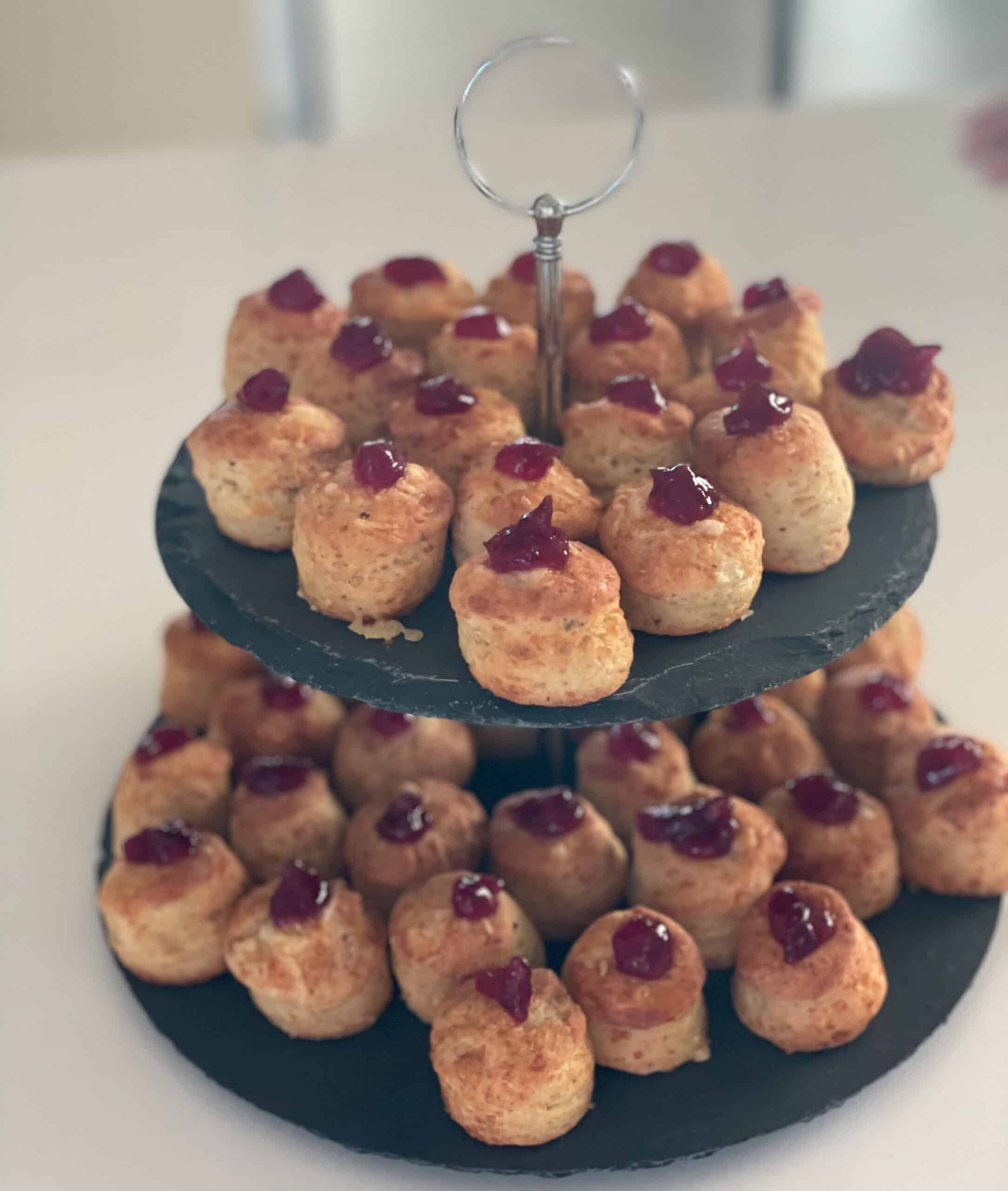
The less typical inclusion are the savoury ones. For instance, there is the combination of cheese and cranberry, or cheese and sage; some might also use sun-dried tomatoes or even bits of bacon.
Most commonly, the sweet scones are served with the clotted cream and strawberry jam, and the order of appearance is important. In Cornwall, jam goes first; but if in Devon, then it is definitely the cream. Navigating through the minefield of rules can be tricky, but presumably the most serious etiquette faux pas would not be in the order of application, but rather in not asking for seconds. After all, “if there is one universal truth in the human experience, it is that a finely honed scone-eating palate does not just develop overnight” – Jennifer Lynn Barnes.
By Dr. Irina Mikhailava
|| features@algarveresident.com
Dr. Irina Mikhailava, a chef and a good food champion, happily residing in the Algarve and eating all over the world with an appetite for learning, sharing and writing. Instagram: incompanyoffood