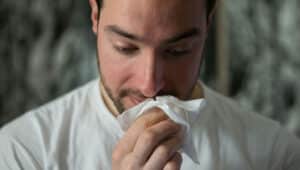
Allergic rhinitis is a chronic inflammatory disease of the internal lining of the nose. It is caused by an exaggerated response of our immune system to harmless microscopic particles present in the air, called allergens.
The most common symptoms of allergic rhinitis are sneezing, an itchy, runny nose, and nasal congestion. Often, excess nasal secretions that run into the throat (post-nasal drip) also cause coughing or discomfort when swallowing.
Rhinitis is often associated with other respiratory diseases such as allergic sinusitis, conjunctivitis and asthma. It is estimated that about 40% of patients with rhinitis also suffer from asthma.
Rhinitis is the most common chronic airway disease. In Portugal, it is thought that between 16%-26% of the population suffers from this condition. Children are particularly affected as it interferes with sleep quality and concentration.
In Portugal, the main allergens responsible for the symptoms of rhinitis are house dust mites and pollens.
House mites
House mites are arthropods of the Arachnidae family, together with spiders and scorpions. Mites live on all continents and their prevalence depends mainly on the humidity and temperature of the region. Among the main mite species identified for their allergenic potential are the Dermatophagoides and Lepidoglyphus families.
They mainly live in domestic dust. Our homes are ideal habitats, as they generally provide stable temperatures, relatively high humidity and a food source in the form of keratin which sheds from our dead skin cells.
They are found mainly in places where contact with human skin is frequent, such as mattresses, cushions, blankets and sofas, as well as objects that accumulate dust easily, such as books, cuddly toys, carpets and drapes.
Due to the amount of time we spend in the bedroom, this is usually the most important room in which to intervene. Thick carpets, rugs and heavy curtains should be avoided. Floors, mattresses and cushions should be vacuumed regularly, ideally with a HEPA (high-efficiency particulate air) filter.
Flannel sheets, wool blankets, and feather duvets usually accumulate more dust mites than linen or cotton. To eliminate mites, washing with a hot water programme (over 55°C) is advisable. Remember that music systems, TVs, computers, game consoles, books, ornaments, toys and cuddly toys accumulate dust easily. Stuffed toys that cannot be washed can be placed in a bag in the freezer for 24 hours.
Pollen
Pollen consists of a set of tiny grains produced by plants, usually invisible to the naked eye, whose aim is to fertilise other plants at a distance.
Not all pollen causes allergies. Pollens responsible for allergic reactions usually belong to species that pollinate with the help of the wind (a process called anemophily), rather than species that depend on insect fertilisation (entomophily). Pollens produced by grasses, trees like olive and birch and weeds like mug wort and pellitory-of-the-wall are responsible for most of the cases of seasonal allergy in Portugal.
The concentration of pollen in the atmosphere depends on the pollination season of each species and the geographic and atmospheric conditions throughout the day.
The total amount of pollen in the air is higher on windy, hot and sunny days and its peak is usually reached around noon or early afternoon. The amount of pollen is lower on rainy days as the water drags them to the ground. There are also lower concentrations in the early morning, late afternoon and evening. At sea level, pollen concentration is lower than inland.
It is not possible to completely avoid pollens in the atmosphere. However, some protective measures can be taken to minimise symptoms.
Avoid intense physical activity, especially on hot windy days during periods of high pollen concentration. Sunglasses can also help to prevent symptoms and keeping windows closed when travelling by car or train is recommended. When riding a motorcycle, an integral helmet is better to protect both the nose and the eyes.
When arriving home, it may help to change clothes and brush hair, or, ideally, to take a shower. Windows should be kept closed on days with higher pollen concentration and opened at night or in the early hours of the morning. Finally, clothes that are left out to dry may also carry pollen into the house.
By Dr Pedro Morais Silva
|| features@algarveresident.com
Dr Pedro Morais Silva is an allergist/immunologist at the HPA Health Group: Hospital Particular do Algarve in Alvor, Clínica Particular in AlgarveShopping (Guia) and Clínica Particular SIIPEMOR (São Brás de Alportel).