The legacy of this ‘George Floyd moment’ for Portugal will live on
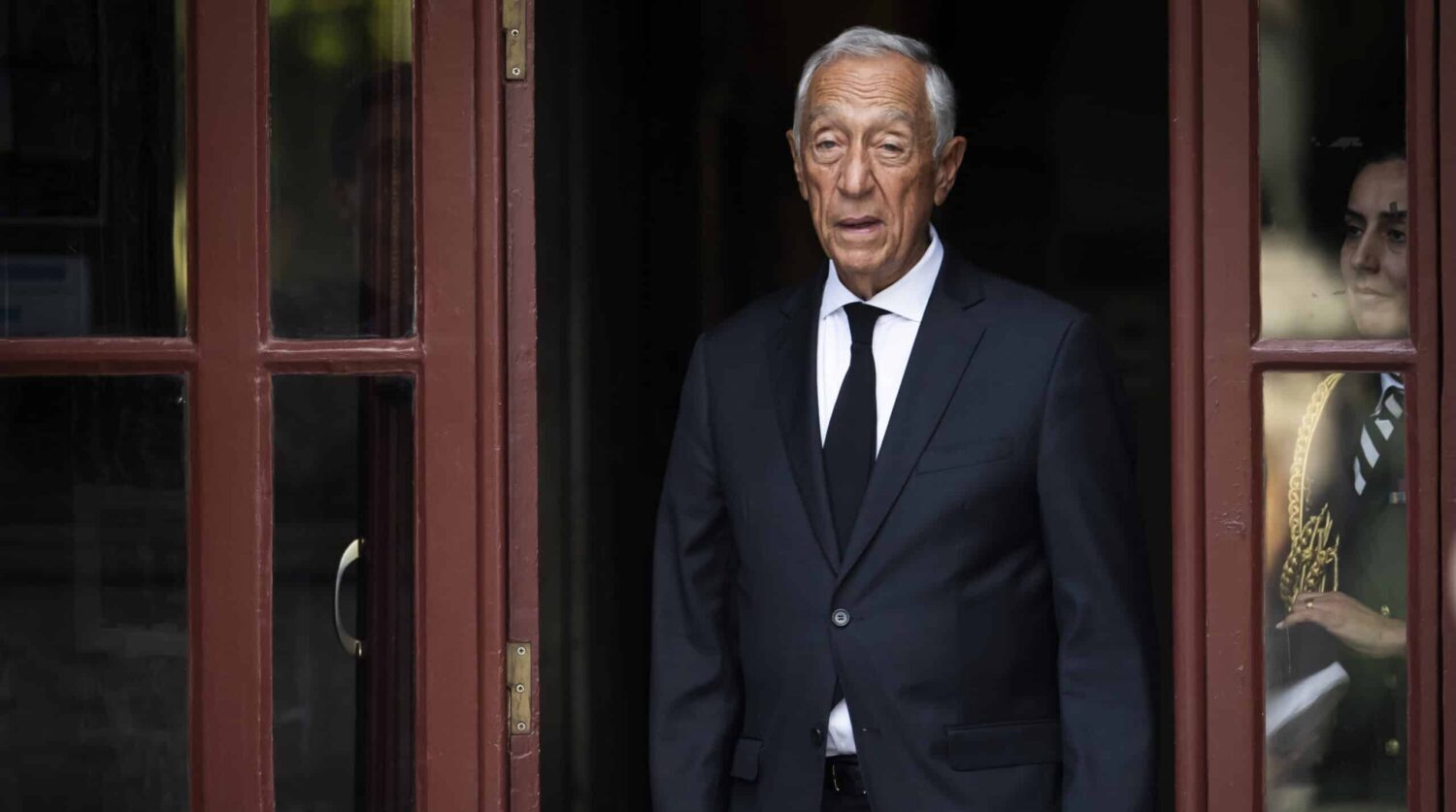
The exhausted face of President Marcelo encapsulates the events of last week in Lisbon. Over six consecutive nights of violence, more than 150 ‘incidents’ projected the capital onto the nation’s front pages – and beyond.
Portugal’s image as a safe, gentle country where nothing too awful ever happens has been tarnished.
Political commentator Luís Marques Mendes – himself a potential candidate for the presidency when Marcelo Rebelo de Sousa finally steps down next year – admits “the public perception is that the state failed” last week.
It failed when a young PSP agent shot dead a black father-of-three in an incident that has seen multiple narratives; it failed when the initial PSP statement into what happened appears not to have been ‘the whole truth’; it failed when authorities were then incapable of quelling the days of unrest that followed; it failed when multiple vehicles were torched and left gutted in residential streets; it failed when all those arrested were almost immediately ‘set free’ with nothing more than an effective slap on the wrist.
‘Penalties’ ranged from orders to report periodically to police, to – for those suspected of having caused some of the multiple arson attacks – being prohibited from using a lighter: a judicial order so banal that it has been widely seen as idiotic.

Almost 10 days on from the gunning down of Cape Verdean Odair Moniz in Cova da Moura in the early hours of Monday, October 21, the nighttime outbreaks of violence appear to have come to an end. But the legacy of this ‘George Floyd moment’ for Portugal will live on: there are two inquiries underway to try and get to the bottom of what exactly happened – and whether or not the young PSP agent who shot Moniz acted appropriately.
The official narrative from PSP hierarchy – that Moniz ‘resisted arrest’ and ‘threatened police with a bladed weapon’ – has apparently been denied by the shooter himself. Witnesses too have given very conflicting reports.
In short, the question remains, even if Moniz was threatening police, why did they have to kill him? Surely, a shot (even two) to the legs would have stopped him in his tracks?
But while Moniz has now been buried, the reality is that his killing ‘did not come out of a vacuum’: Cova da Moura has been the scene of numerous incidents where black men have come off worst in altercations with police. It is just that this time locals could not take any more.
Residents of the Bairro de Zambujal where Moniz lived and died told reporters that they are “tired of the racial discrimination and prejudices” they suffer at the hands of police. “If we allow this to pass, in a month or a year, there will be another situation of police abuse,” said one.
Ergo, the state has failed… Human mobility expert Jorge Malheiros said as much as the riots were taking hold last Tuesday, describing them as a “spatial expression of inequality and disadvantage” in response to “a police force infiltrated by xenophobic discourse, which uses violence as a first resort”.
Thousands live “in a situation of territorialised disadvantage” in outer Lisbon boroughs, he told SIC Notícias, “which is why we talk about neighbourhoods”.
By the third night of disturbances, members of government started making statements, and appeals for calm – but by then, the lack of leadership was somehow ‘embedded’. Few appeared to take notice.
As Luís Marques Mendes stressed at the weekend, the lack of meaningful input from the Minister for Internal Administration has been another Achilles’ heel of this dismal chapter in 2024.
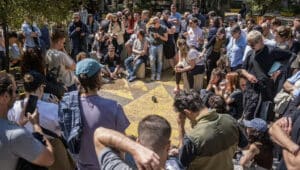
Every now and then through the week, President Marcelo did his best to say “violence can never be the solution”, but it nonetheless ran its course until a large (but peaceful) demonstration, calling for Justice for Odair Moniz, took place on Saturday in central Lisbon, followed by his funeral the next day.

In between all the emotion, right-wing party CHEGA managed to disgrace itself with statements so grotesque that thousands signed a petition calling for the three men who made the comments to be prosecuted for hate speech – and police trade union ASP/PSP criticised what it called the “political, journalistic and media exploitation” of the killing in general.
All in all, in less than seven days, this habitually ‘calm’ country turned into a sack of rattlesnakes attacking each other: tourism entities even bemoaning the possible contamination of the country’s ‘main attraction’.
To be fair, tourism is almost certainly unlikely to suffer. Indeed, problems elsewhere in the world continue to project Portugal as a ‘good alternative’. But the damage this incident has done nationally is incalculable.
Saturday’s demonstration saw eloquent calls for the dismissal of the current PSP hierarchy: whatever happens, the current status quo will have to change.
Second victim of shooting remains in hospital
Arguably, the second victim of last week’s shooting is a 41-year-old bus driver identified so far only as ‘Tiago’ who suffered devastating third-degree burns after a molotov cocktail was thrown into his bus on the third night of rioting.
This particular episode is so harrowing one cannot believe it took place in Portugal: a group of hooded men “attacked the last night bus” in Santo António dos Cavaleiros, in Loures – allowing the passengers to disembark, but not allowing the driver to get out. They then threw incendiary devices into the vehicle: Tiago found himself surrounded by flames.
“Images taken by local people show Tiago trying to run down the street still with his clothes on fire,” wrote Correio da Manhã some days later. The bus driver ‘escaped the flaming bus’ with burns to his face, arms and trunk as well as serious internal injuries. Initial treatment involved putting him into an induced coma. He is now in a situation considered “stationary but serious”.
The few visitors he has had can only see him through a glass as he needs to be protected from possible infections that could hinder his recovery. No one can tell when, or even if, Tiago will be able to return to work.
The men who torched his bus, and refused to let him leave it before they did so, have not been caught. Police are not treating this incident as one of the 155 cases of vandalism last week. It is being treated as attempted murder.
By NATASHA DONN