“Just don’t mention the Iberian Blackout!”
Renewable energy sources accounted for more than 83.3% of electricity generation in April, with hydro and wind power leading the way, according to figures released by the Portuguese Renewable Energy Association (Apren) today, making no reference to the Iberian Blackout that caused chaos on April 28 and was, initially, put down to the instability of too much reliance on renewable energies.
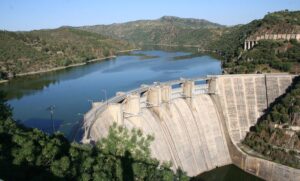
“During April, 83.3% of the electricity produced in mainland Portugal came from renewable sources, with hydro (41.1%) and wind (27.3%) leading the way,” according to Apren’s “Renewable Electricity Bulletin.”
According to the association, renewables avoided the emission of four million tonnes of carbon dioxide equivalent (MtCO2eq) in the first four months of the year, with the electricity production sector emitting only 0.74 MtCO₂eq.
“With this result, in the first four months of the year, Portugal remained the third European country with the highest incorporation of renewables in electricity generation among the markets analysed, with 82.2%, behind only Norway (97.2%) and Denmark (83.3%)”, says Apren.
With regard to prices, from 1 January to 30 April, the average hourly price recorded on the Iberian Electricity Market (Mibel) in Portugal (€70.27/megawatt-hour (€/MWhd)) increased by 91.1% compared to the same period last year (this may well have something to do with nationwide power outage, which led grid operator REN uncouple from Spain’s cheap energy for several days… but again, no mention of the Iberian Blackout).
In the same period, renewable generation was sufficient to meet mainland Portugal’s electricity consumption for 997 non-consecutive hours (except of course for during the Iberian Blackout).
By the end of April, renewables had enabled economic savings of €878 million in energy imports, divided between natural gas (€439 million) and electricity (€439 million).
“These figures demonstrate the strategic impact of renewables in reducing energy dependence on foreign sources and in strengthening the national economy,” Apren forges on.
The press release quotes the association’s CEO Pedro Amaral Jorge as saying that “these figures prove that renewables are not only an environmental pillar but also an economic one, bringing savings to consumers and reducing CO₂ (carbon dioxide) emissions (…) The sector is ready to do more, but it needs a market model that recognises and values this strategic contribution,” says Amaral Jorge, in what may have been an oblique reference to the need to reinforce the system so as to reduce the risks of another Iberian Blackout.
As we have explained previously, the ‘multiple and painstaking investigations’ into what caused the April 28 blackout have been given deadlines far into the future, while those who spoke out against the frailties of a system heavy on renewables have fallen strangely silent.
Source material: LUSA