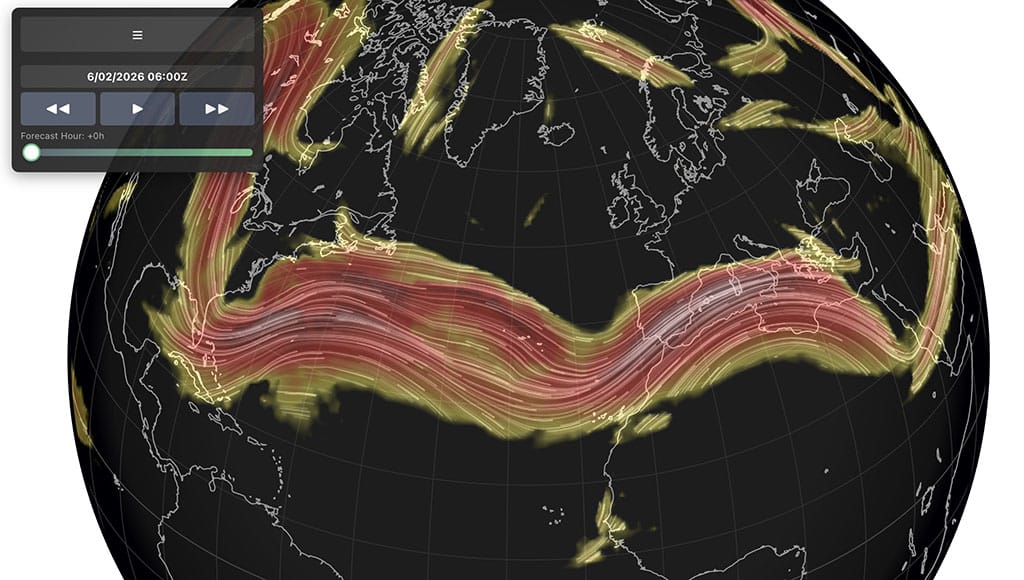
Having said that, we’ve weathered all the weather 2026 has sent us so far with all the lights on – and there’s certainly no shortage of water.
It also makes us think more about wind power in our continuing search for the best bang-for-your-buck wind turbine.
We’ve always told ourselves never to complain about how much water was being delivered from the sky, because even if the tanks are full (as they were by early January), it’s an investment in our boreholes as the water soaks into the ground.
But sometimes it’s just too much, and I think all of us felt the stormy start to the year has been quite enough already.
Ingrid, Joseph, Kristin… oh Kristin… Leonardo, Marta… and a little bit of Frances, Goretti, Harry, Chandra, Patricia, Nils, Oriana, Pedro – all named storms which have hammered western and southern Europe this winter. It’s more names than the song ‘Mambo No. 5’, and it’s been more than enough weather for Portugal.
I have organised my life very carefully around avoiding British weather for the best part of 25 years, so you can imagine my current disappointment (even if it was warm enough for me not to change out of my shorts).
My geography degree and years of watching weather patterns to understand when to expect trouble in our off-grid home have been augmented by chatting to a couple of meteorology professors and following Weather Watcher.
The YouTube channel forecaster originally from the US and now living in Portugal summed up the impact of the Kristin’s “bomb cyclone” – a depression which forms quickly and deepens rapidly to produce higher winds and stormier weather.
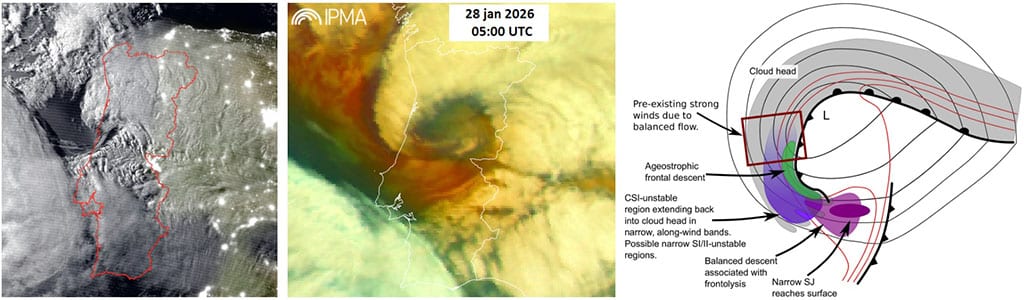
“I could only watch in shock as one of the most sharp and well defined sting jets I had ever seen approached the coast,” Weather Watcher said, predicting that storm would hit Leiria.
“The recorded wind gusts completely pulverised the previous record, which was set by Hurricane Leslie in 2018, making Kristin the most powerful storm ever recorded in Portugal.”
As we probably all know by now, sting jets take their name from the scorpion’s tail formation seen on satellite imagery, and that’s what brought the 200km/hr gusts to the Silver Coast.
You might not know that this is also what caused the Great October Storm of 1987 in the UK – famously not predicted by weather forecaster Michael Fish the day before, but forgivable as the phenomenon wasn’t discovered until years later.
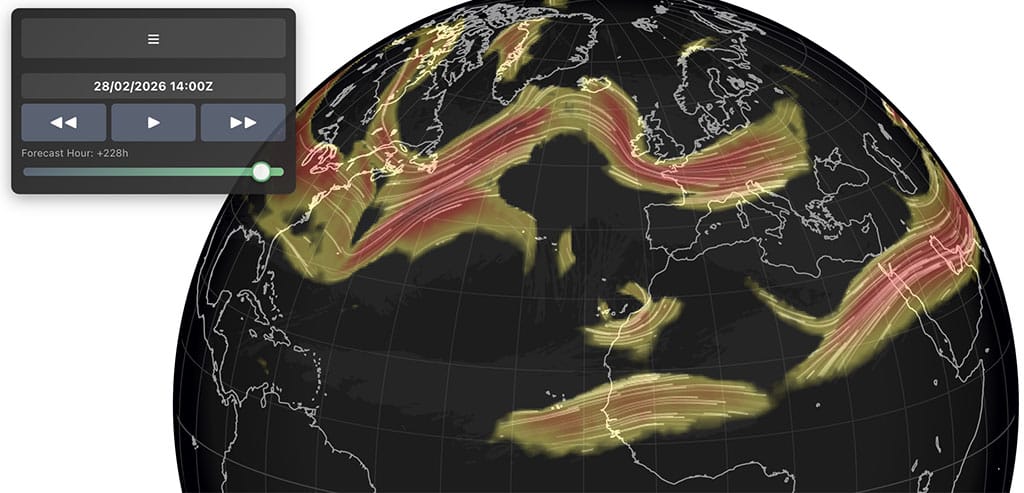
I’ve learned a lot more about the west-to-east jet stream and how it’s movements 30,000 feet up speeds aircraft from America to Europe and affects our weather. Thankfully, the jet stream forecast places it further north where it usually belongs.
And then there are two “policemen” – to quote Professor Carlos DaCamara from the University of Lisbon – the Icelandic Low pressure area and the Azores High – which direct the traffic of storms in between them.
It’s great to see the Azores High strengthening again and moving further north to protect us from more madness… for now.
After finally emerging from the conveyor belt of storms, we have emerged into the light a little more enlightened by the experience of entertaining guests in extreme weather.
Our dirt road has taken a battering, but it’s amazing the difference a clear day can make.
While we suggested some guests who live in Portugal postpone their trip for better days, it’s been wonderfully cosy in our Clubhouse with a roaring fire and some warming Alentejo red wines.
We were very lucky here in the valley – the worst was the departure of a large section of protective glass from its moorings next to the pool, which somehow didn’t break in the fall.
A few sections of plastic roof have been relocated and retrieved from the forest, the solar panels deep in the valley flipped over onto the pillow tanks, which have so far avoided puncture despitea metal pumphouse roof sprouting wings and taking flight.
One gigantic eucalyptus tree has been uprooted and is still being desperately supported by one of its neighbouring trees, slowing its journey to the forest floor – we’re already eyeing that one up to make a bench.
Many of the tall dead eucalyptus trees on our neighbour’s land that were sheltering in place amid the new growth, following a fire a few years ago, have taken a tumble making the wood look more like a giant game of Pick-Up Sticks.
Being on the top of the hill is more exposed to the wind but less to the flooding which affected a lot of our neighbours in the surrounding area, who live in the valleys or who could no longer cross the small ford to the road but instead found themselves trapped by a raging river.
We’re always told there are 300 days of sunshine a year in Portugal. I think we’ve almost cashed in the 65 days without – or at least here’s hoping.
Read Alastair Leithead’s last article: Off-Grid and Entertaining in Portugal – Wino-neers: creating a credible antidote to the wine crisis