Says death resulted from INEM’s incapacity to respond
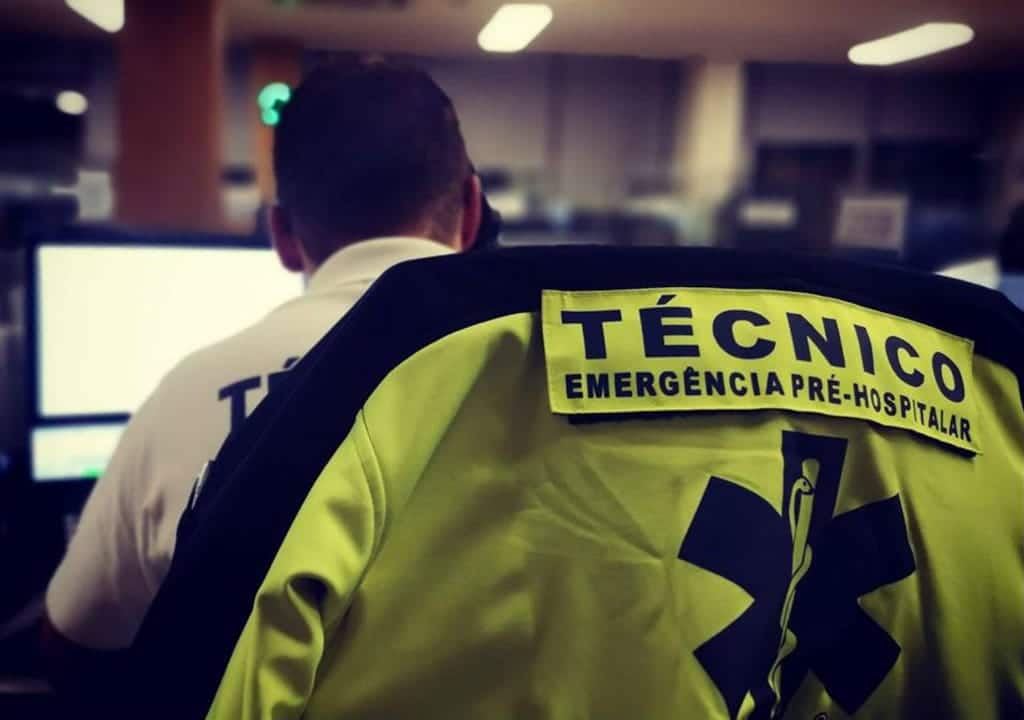
STEPH – the syndicate representing pre-hospital emergency technicians – rejects “any attempt to blame the professionals involved” in the case of one of the people who died during the chaos of last November’s strike, insisting that the outcome was entirely due to INEM’s inability to respond.
This was a day when it was widely reported that INEM switchboards were overwhelmed by incoming emergency calls.
According to Expresso, “nobody was answering the phones on the strike day” – November 4, a date where 11 deaths were attributed to the strike, but only one appears to have ‘satisfied’ investigators as being avoidable.
As media sources reported yesterday, the report by IGAS puts the blame on the technicians involved, saying they lacked “zealousness, care and diligence”.
STEPH roundly rejects this conclusion, insisting it was INEM’s ‘poor management’ of the “absolutely historic and unprecedented levels” of 112 calls on the day in which its technicians were striking, along with public sector workers.
As CNN Portugal has confirmed, the IGAS report does refer to ‘more than half the 7,326 calls made to INEM on November 4’ being ‘abandoned’, as callers realised they were simply not getting through.
Expresso today has suggested as many as 5,000 calls were left unanswered.
The IGAS report acknowledges some of the reasons for the ‘chaos’: strike notices were sent to the Ministry of Health offices in good time, but “they were not brought to INEM’s attention” until the absolute 11th hour.
CNN also traces the contours of the death of the man that IGAS is blaming on pre-hospital emergency technicians. The victim ended up driving/ being driven towards a hospital after several failed attempts to speak to INEM (the calls were answered by 112, but not by INEM).
“Alerted by a colleague from the 112 operational centre to a potential myocardial infarction (heart attack), one of the technicians – who is being blamed by IGAS for the delay in help – tried unsuccessfully to call the patient”, says CNN.
“She then contacted the 112 operational centre to see if any of her colleagues had another telephone number that might be related to the same incident. On a second attempt, she managed to speak to a relative, who informed her that the victim had already gone to a hospital in his own vehicle, that he and his wife had both left their mobile phones at home. The relative stressed that he did not know which route they were taking.
“At this point, the technician informs the doctor in charge, who confirms that it is impossible to send emergency services as they do not know the victim’s location”.
Various sources contacted by Lusa have also explained that firefighters later received a direct call from a local man (not the victim but someone made aware of the drama. Expresso suggests it was a man who will have crossed paths with the couple as they tried to get to hospital). On hearing the situation, they sent an ambulance.
On arrival at the scene, they found the victim already in cardiac arrest, contacted the CODU (the centre for the orientation of urgent patients), which sent the Emergency and Resuscitation Medical Vehicle (VMER) from Leiria and an Immediate Life Support ambulance from Pombal – both to no avail.
Wife receives call from INEM 24 hours later
Impounding the agony, the victim’s wife (now widow) received a call from INEM 24 hours after her husband’s death, to check whether the emergency was still current.
An INEM source has told CNN that this is because “the automatic system did not associate the wife’s number with the case of her husband…”
How this shambles is eventually concluded is anyone’s guess, but the technicians being blamed for it have at least the full support of their syndicate which says they are being made “scapegoats” for INEM’s shortcomings.
In its note pinning the blame on the technicians, IGAS said the man’s death “could have been avoided if there had been help, in a minimum and reasonable time, which would have made it possible to evacuate the victim via a Coronary Green Lane to one of the nearest hospitals, where he could have undergone coronary angioplasty in one of the respective Haemodynamic Units.” ND