It’s said that moving home is one of life’s most stressful events. However, perhaps it’s what, or who, you are moving for that really matters.
My first home after leaving the nest was an Edwardian house in England, which my father used to call ‘The money pit’. My second home was a country cottage in Wales, where my beloved sister Carole enjoyed visiting. My third home a farmhouse in Portugal, where my late brother, Tony, loved to explore the land. Looking back on this journey of ‘Home to home’, I now realise that each place represents different stages in my life.
I wonder what your journey of ‘Home to home’ has been on the path that led you to where you live now. Also, do those places represent different stages in your life? If so, reflecting on those times, how would you describe each of them?
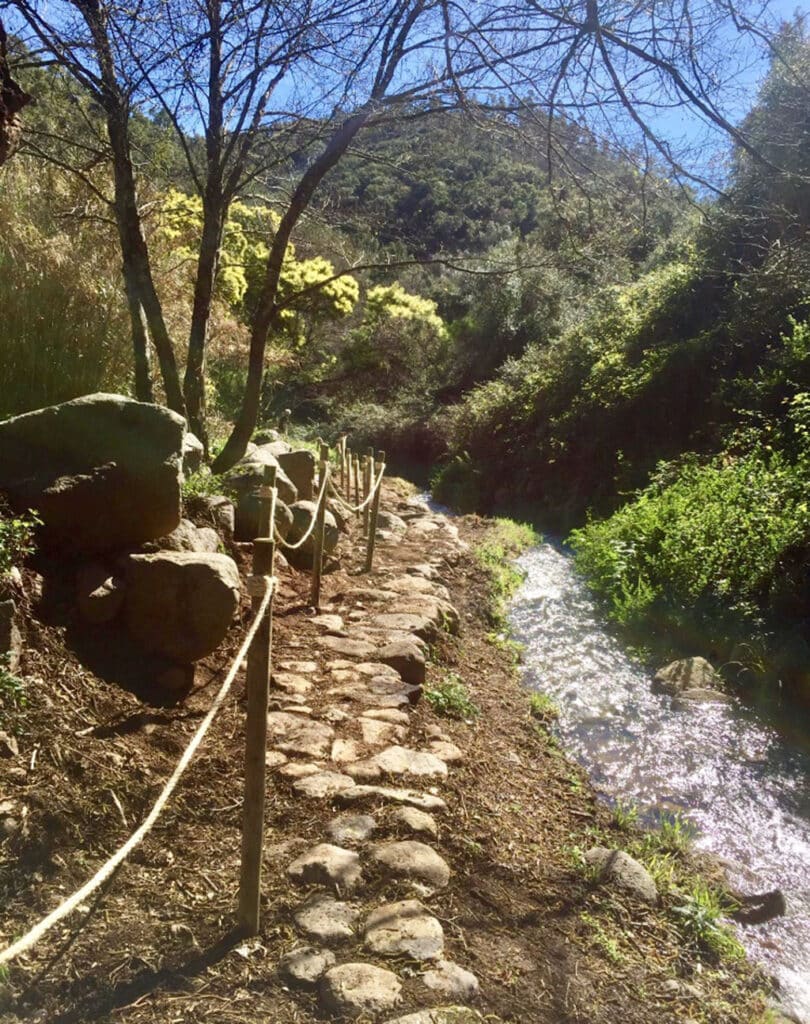
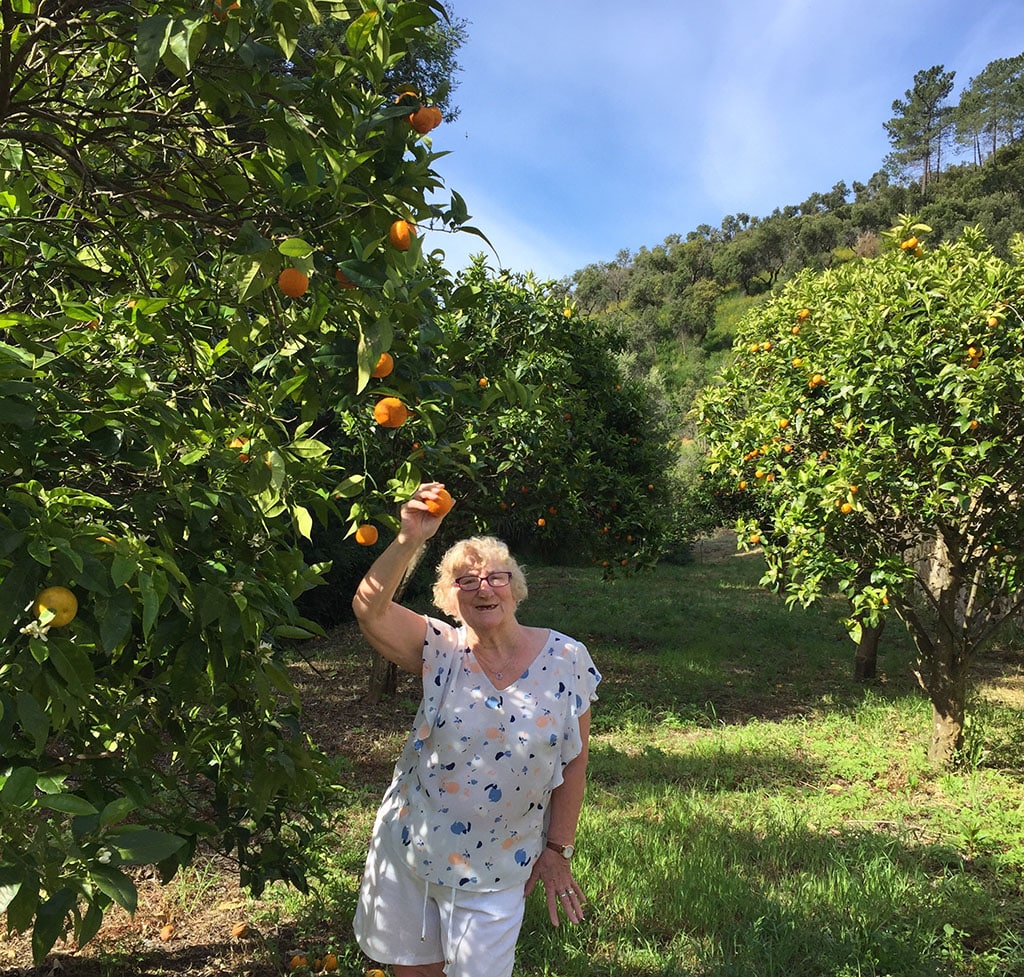
When I decided to make the farmhouse my home, I hadn’t considered the surrounding land and work involved in maintaining it. Let me paint a picture for you: the land has multiple terraces of orange groves and other terraces that, in the past, had been used for arable and cattle farming. The land is bordered by two streams that join on the southern border and, from that point, a river starts that leads into the Atlantic Ocean.
I’m going to tell you a secret – sometimes I do the most unfathomable things. As my sister-in-law, Janet, once said, “Derek, you don’t do things by halves!”
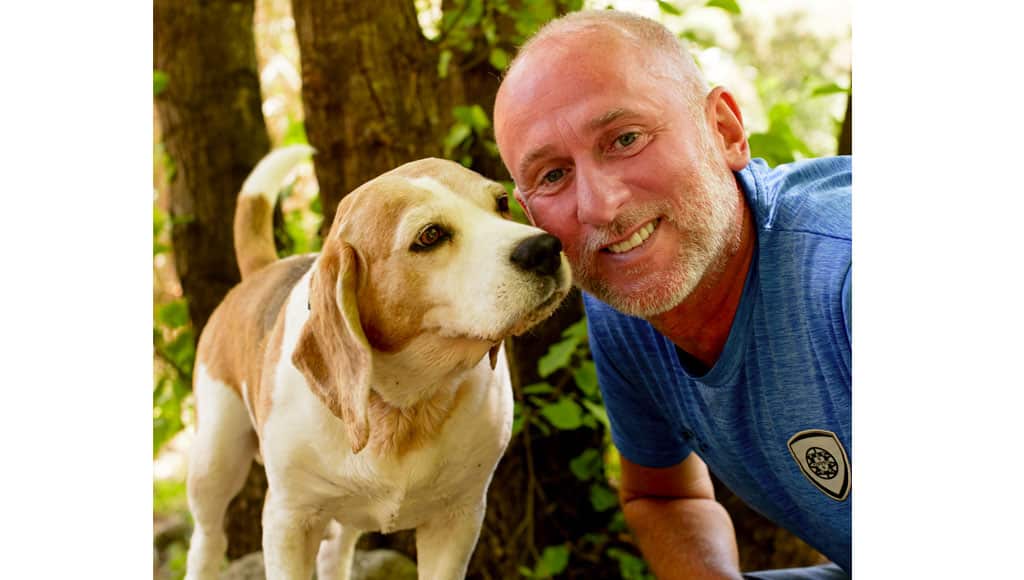
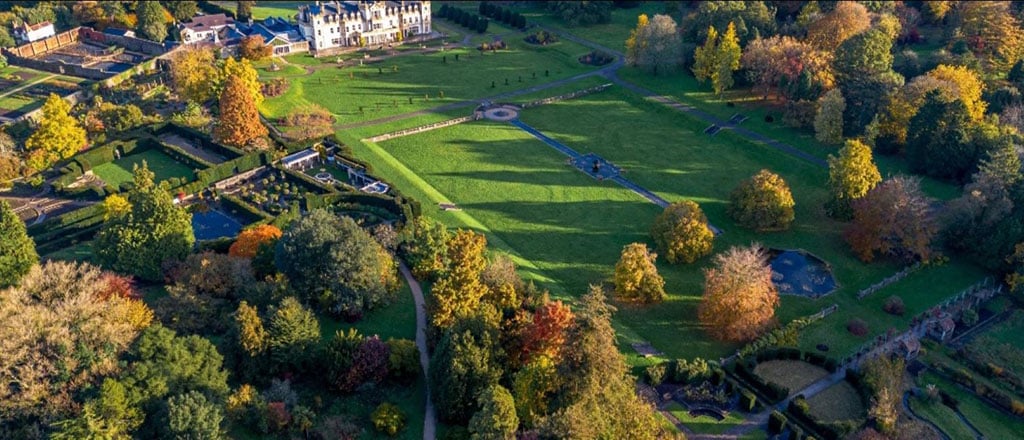
In Wales, there is a National Trust property, Dyffryn Gardens, a walk down the lane from the cottage where I lived. The grounds feature themed gardens, including Italian, Mediterranean, and Pompeian gardens. Each weekend, Beagle Ben and I would spend our happiest moments visiting the grounds.
Back to Portugal, I woke up excited about my latest idea for the land, so I called my mother to share the plan. I said, “Mother, I have fabulous news! I’m going to create themed gardens on each terrace that represent different countries from around the world.” After an uncomfortable silence, my mother finally said, “You mean like Dyffryn Gardens, don’t you?” I replied, “Well, yes, how did you know?” My mother kindly but succinctly added, “You are hardly the country squire.” Then said, “I have a better idea.” Intrigued, I said, “Do tell.” She continued, “I think you should plant a vegetable garden to help cut down on your food bills.” In that moment of epiphany, I decided I would become a farmer, and ‘Operation Market Garden’ was born!
Later that day, I let my Portuguese neighbour, Paulo, know about the project. He was equally enthusiastic and offered to help without payment, provided he could share in the fruits (and vegetables) of his labour. Paulo knew a Portuguese man from Monchique, Miguel, who owned a rotavator and charged by the hour.
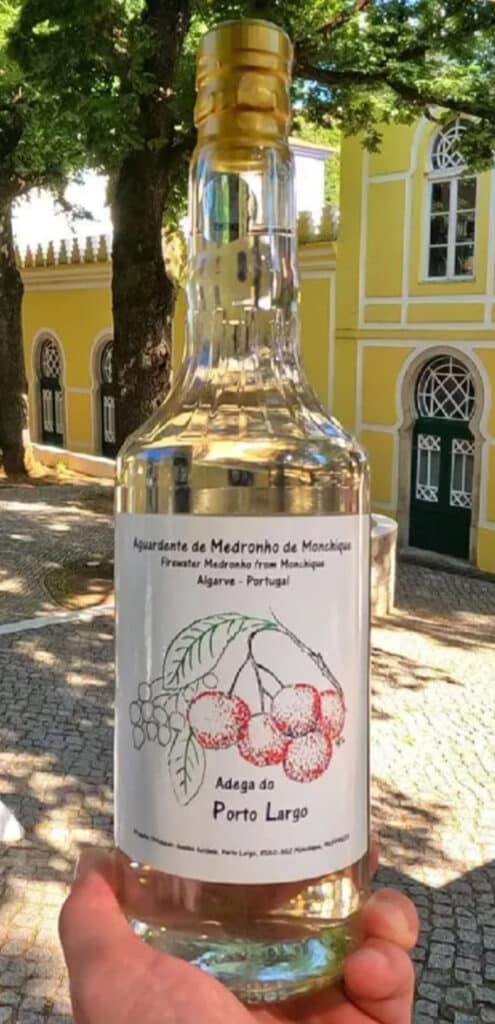
The next day, Miguel arrived at the farmhouse. The original plan was to clear just one terrace. After completing that task, Miguel went to his van and re-emerged holding a bottle of what I would later learn was ‘Medronho’. For those who may not know, ‘Medronho’ is a (very) strong spirit; a traditional liquor made from medronho berries that are grown in the inner Algarve.
After enjoying the ‘Medronho’, Miguel asked, “Would you like me to rotavate another terrace?” I thought, ‘Why not?’ So, I replied, “Absolutely!” Once the second terrace was rotavated, Miguel asked, “Do you want another?” I thought, ‘It would be rude to refuse’, so I raised my glass and motioned for a refill. However, he actually meant whether I wanted him to rotavate another terrace. At this point, my judgment started to blur, and I agreed to a third terrace being rotavated.
After indulging in more Medronho, Miguel asked, “Why not rotavate all the terraces?” (A reminder note for readers: Miguel was charging by the hour.) As we continued to enjoy Medronho, the events began to feel almost hallucinogenic! Paulo wisely intervened and asked, “But what will you grow on all these terraces?” At that moment, I had another moment of epiphany and replied, “I will plant vines and develop a vineyard!”
Paulo then sarcastically inquired, “What exactly are you going to call this wine?” Since I planned to name the farmhouse ‘Casa do Beagle’, it was clear that there was only one logical option. So, I answered, “Château do Beagle”. After that, everything went blank!
The next morning, I woke up with a hangover from hell, and my mouth felt like it had more fur than Beagle Ben’s coat. After two days of recovery and drinking copious amounts of Monchique water, I felt better, and it was time for ‘Operation Market Garden’ to rise like a phoenix!
Paulo and I set off to purchase plants from the ‘Cooperativa’ in Monchique. For those who may not know, ‘Cooperativas’ are rural agricultural shops. Paulo was enthusiastic (for me) to buy every species of vegetable, and fruit, that the planet Earth has to offer. We also needed to acquire a fully integrated irrigation system to support the operation. Upon our return, Paulo and I began planting.
Honestly, I started to feel bored with the entire process after the first row of potatoes. I won’t lie to you; the venture felt tedious, exhausting, and seemingly never-ending. At that point, I had already decided I would rather go to the local shop to buy fresh vegetables!
The next day, Paulo arrived at the farmhouse. He told me that he would take charge of installing the fully integrated irrigation system. If there’s one thing I can’t stand is people telling me what to do, especially those people who know exactly what they are talking about. So, I took control.
The following week, Paulo returned to the farmhouse and exclaimed, “You need to visit the terraces!” So, I followed him to see what he meant. To sum up, every vegetable plant was near death, while the weeds were thriving as if it were “The Day of the Triffids”. It turned out that I had positioned the fully integrated irrigation system too far away from the vegetable plants to survive. But perfectly placed for the weeds to flourish. Paulo said, “You need to remove all the weeds, one by one.” I thought to myself, ‘I’ve got better things to do!’ However, I replied, “I’ll set the alarm clock for the morning.”
The next day, I made my way to the terraces and was shocked to discover total destruction! During the night, javali (wild boars) had visited and dug up the ground, and destroyed the historic stonewall terraces. I had seen these animals roaming the mountain at night, but I had never witnessed the extent of their power.
I wasn’t too worried about the plants; after all, there was no need to weed now! However, seeing the stone walls shattered on the ground was deeply upsetting. All the hard work that a Portuguese person had once put into building the walls was now lost forever. It transpired that I should have installed electric fencing around the area to keep the javali away – who knew?
That night, it was time for the evening ritual. Beagle Ben and I sat on the patio, gazing at the stars and the moon. However, the life changes were becoming overwhelming. I was grappling with the reality that the funds for legalising the property were dwindling. For the first time, I wondered if this move of ‘home to home’ had been one step too far. I needed to start earning money again to keep my dream alive. One thing was certain: I would never be able to make a living as ‘Farmer Giles!’