Containers are appropriate for all types of plants: flowers, vegetables, herbs, and even trees. They allow for gardening in small spaces, with greater control of soil conditions. Plants that don’t do well in our climate when planted in dirt can thrive in a well-tended pot.
You can move pots around to take advantage of which plants are at their best, while moving those that are past their peak to the back. And plants that are thuggish — they spread too easily everywhere, like mint — can be, well, contained.
You can use terracotta or plastic pots, coir hanging baskets — anything at all, really, as long as you provide adequate drainage. A uniquely Portuguese option is the alegrete, a common feature of traditional homes: a built-in planter or raised box that is often found along walls or in courtyards. They’re usually made of stone or bricks, often covered with stucco.
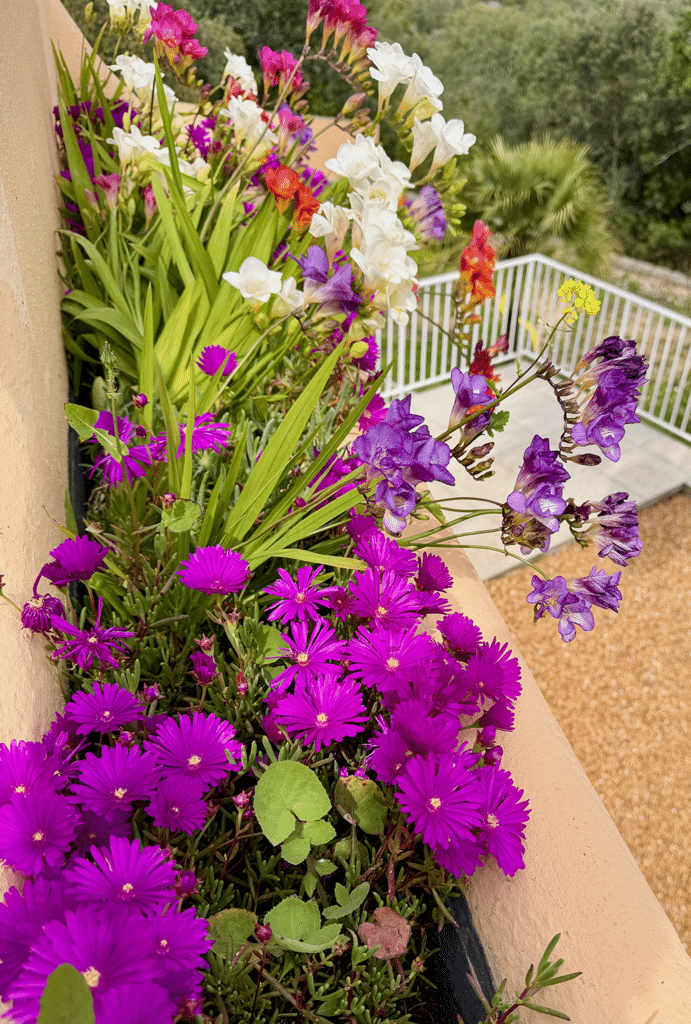
The name alegrete comes from alegria — happiness! And container gardening definitely increases happiness. This is how my alegrete looks now, with magenta lampranthus (ice plant) and sweet-smelling freesias in a riot of bloom.
So, let’s get started. First, choose your container. Terracotta pots are readily available everywhere in Portugal, and can be plain, glazed or decorated. Plastic pots can be stylish and used by themselves, or put inside something else like a basket. Metal can be attractive but may become fiendishly hot in the summer.
If you choose a large container, plan ahead for when you have to move it, as it will be very heavy when filled with soil, and you might risk injuring your back. Open trays with wheels are available for this purpose. Just make sure there’s a good hole in the bottom of your pot, so your plants don’t become waterlogged.
You’ve chosen your plants — let’s focus on flowers. Buy a high quality potting soil; if you dig up dirt to use it will be too heavy and not breathe well, and may introduce weeds and pests. Weeds will find their way into your pot no matter what, but let’s not give them a helping hand! Choose the right soil for your plants — succulents or acid-loving, for example.
Cover the hole at the bottom of the pot with a shard of broken pot or a scrap of landscape fabric, just don’t occlude the opening. I like to next put a layer of blown clay balls, which are readily available at garden shops. This helps drainage and makes the pot lighter. Just make sure the amount of soil is adequate for root growth.
Put in your plants and tuck them in with potting mix, ending enough below the edge of the pot to allow water to settle in without gushing over. Finish off with mulch to maintain optimal temperature and humidity, and make things look tidy. Pebbles or stones look nice and won’t promote rotting due to excess water retention.
Put your pot on a couple of bricks, leaving space for the drainage hole to drain. Or get fancy and use terracotta pot feet!
A fun phrase to remember for pot styling is “thrill, fill and spill.” Thrill is usually a vertical interest, a tall plant for the center. Then fill, like a ground cover to surround, and spill: plants that cascade over the edge. This isn’t ironclad, of course, plant it the way you like it!
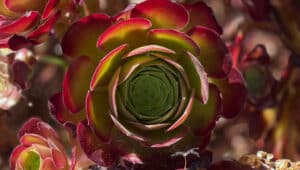
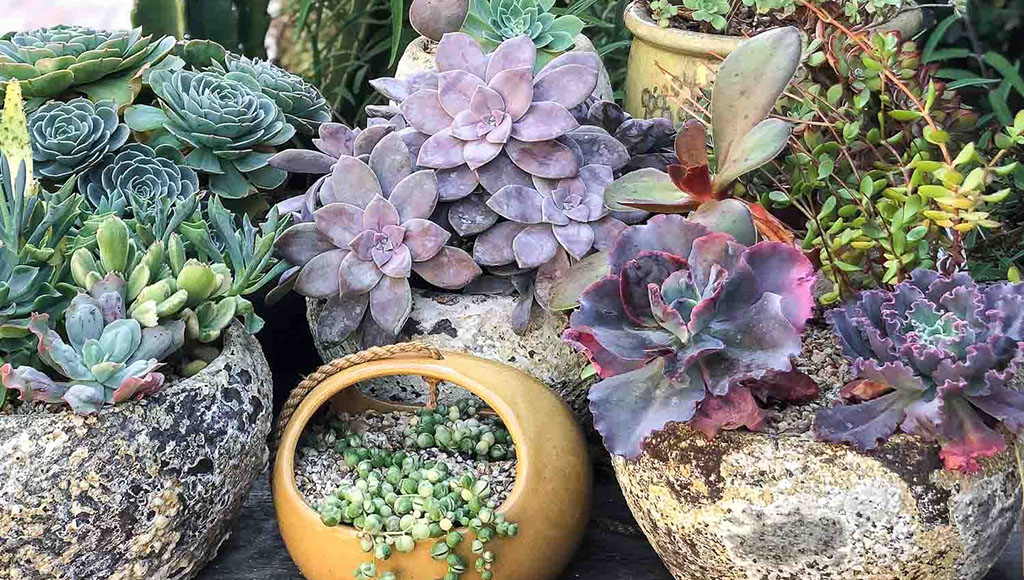
Succulent pots can be lovely when planted closely together in a low profile.
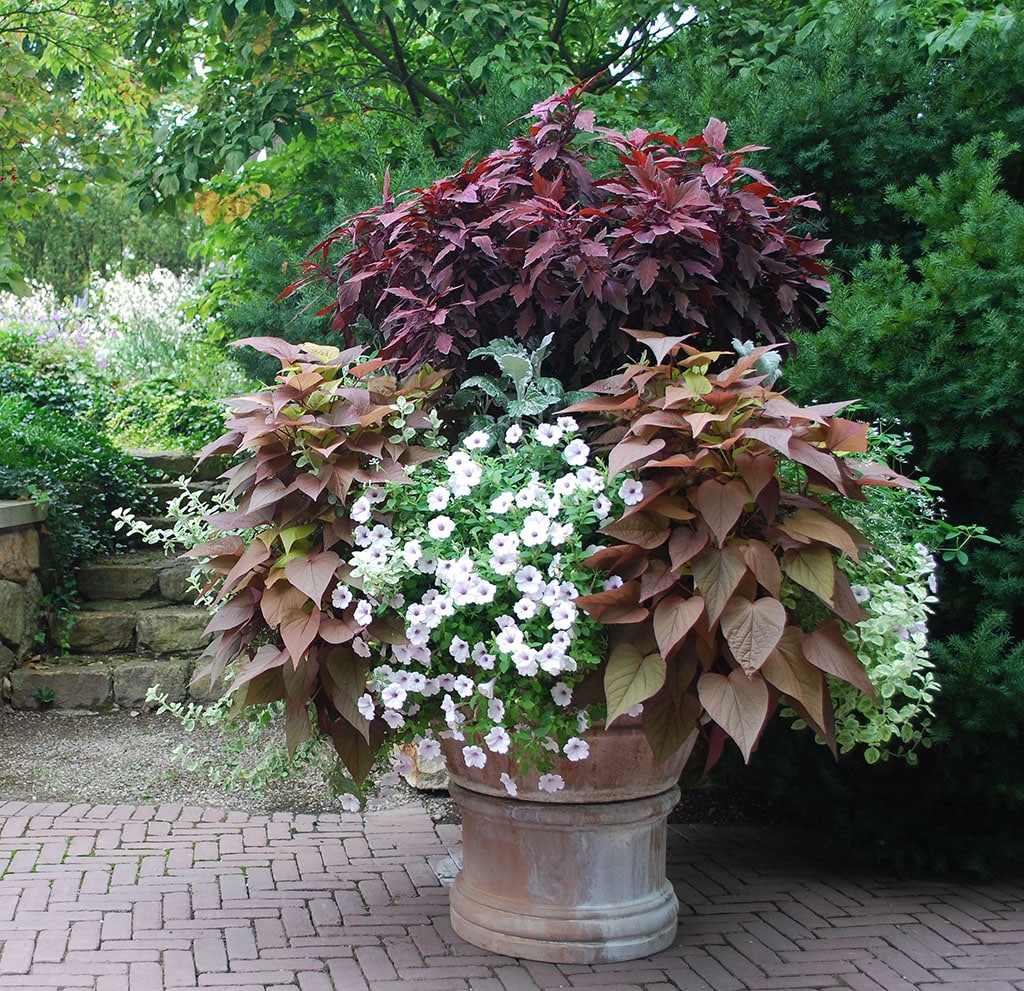
A fun approach for pots with bulbs is the lasagna pot. Place your bulbs in layers by planting depth, like building layers of lasagna.
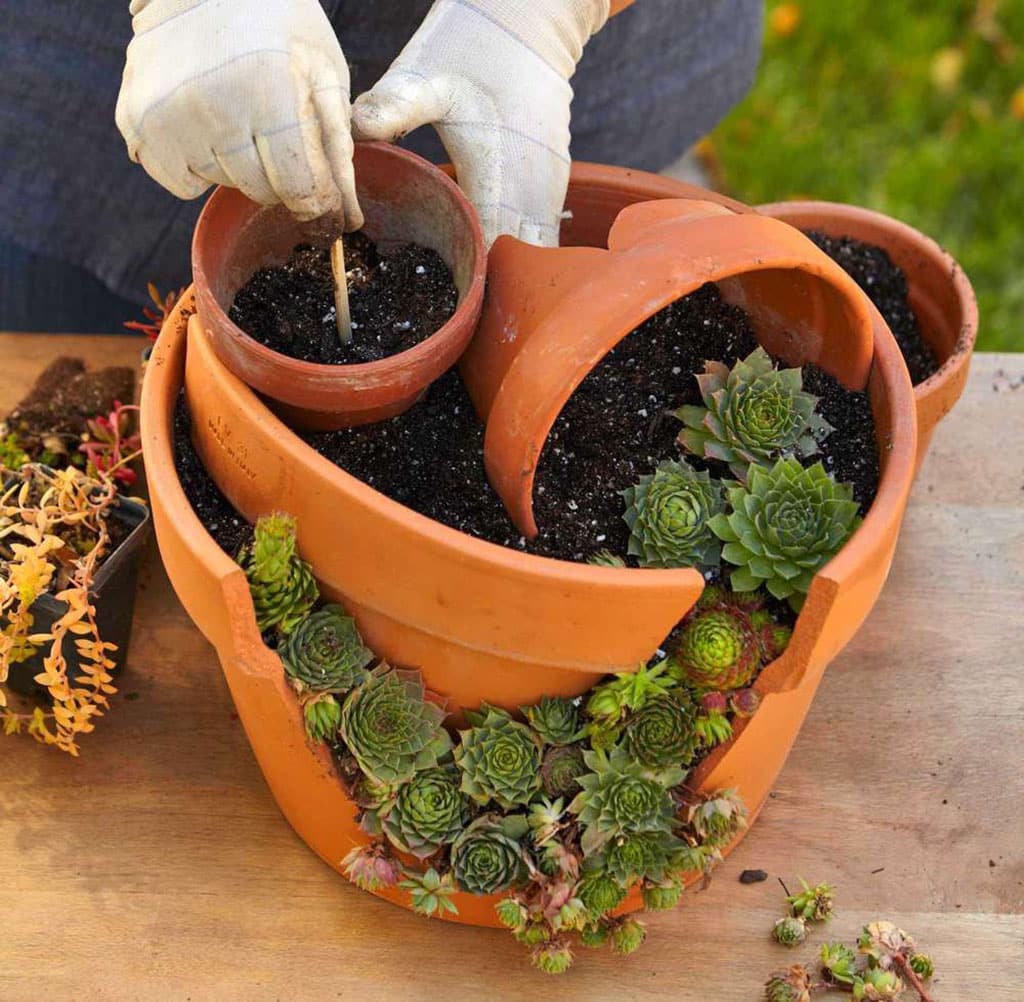
You can even make cool planting arrangements using broken pots in layers, like this:
Water your pot as often as needed to maintain optimal conditions for your plants; it helps to choose plants with the same water requirements for planting together. Potted plants need regular fertilizing, because one downside to excellent drainage is that it flushes out nutrients.
Fertilizing lightly once a month is a typical approach, though this may vary depending on your plants’ preferences. Buy a liquid fertilizer and mix according to directions, and scarify (scratch) the soil a bit to help absorption.
Soil in pots doesn’t last forever — renew the top third of the soil every few months. Also, root pruning can keep plants in check and thriving. Just gently dig them up and snip away excess with your secateurs (that’s pruning shears for those Americans out there). And change out your annual flowers according to season — pansies thrive in cold weather and petunias like warmth, for example.
You may also need to move your pots around according to the angle and intensity of the sun. Here in the Algarve, even plants that require full sun need some shade from the intense sunlight of midday in summer.
There’s no time better than right now for starting your own little garden, even if your corner of the world is limited to a small patio, a front doorstep, or a balcony. Make a visit to your local garden shop for plants that will thrive in your space. Most of all, have fun and enjoy the happiness that a garden can bring.
Read more articles from Justine Strand de Oliveira on gardening: Artichokes: all about this interesting vegetable, which is actually a flower bud or The smell of water… and other observations on my mediterranean garden in Portugal