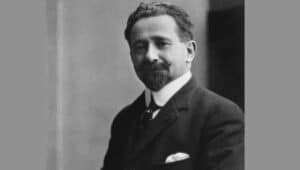
Under the leadership of the two leaders of the majority Democratic Party, Bernardino Machado and Afonso Costa, it was agreed that Portugal send a message of support to Britain, together with an offer of military help.
Britain answered that Portugal should look to the defence of its own colonies in Africa. German troops from German South-West Africa had promptly invaded Angola, and Portugal found itself involved in a war which it had not joined.
In both 1898 and 1913, Britain and Germany had negotiated bilaterally on sharing Portugal’s colonies. These secret negotiations together with the British Ultimatum of 1890 had the effect of strengthening both Portuguese nationalism and Portuguese interest in the African colonies.
Portugal enters the war
In late 1915, Britain asked Portugal to commandeer the German and Austrian ships which were sheltering in Portugal’s neutral harbours. After this seizure took place in February 1916, Germany declared war on Portugal, and Portugal agreed to send three divisions to reinforce the British lines on the Western Front in Flanders.
Troops underwent basic training at a temporary military camp at Tancos, about 130 km north-east of Lisbon. Two divisions (known as the Corpo Expedicionário Português – CEP) consisting of around 57,000 men were eventually stationed on the River Lys in the British sector in Flanders.
The war brought serious shortages in Portugal itself, and the government was blamed for the shortages and for involving the country in someone else’s war.
The morale of the troops in Flanders was also challenged. While officers were allowed to return to Portugal for their leave, the rank and file were not. Many officers, having used their leave, were prevented by the new government of Sidónio Pais from returning to their posts.
During the winter of early 1918, life in the trenches was wet and cold, and troops from Portugal found the experience demoralizing. Using British-style uniforms, equipment and rations, young Portuguese felt abandoned by their country. While British troops were singing of Tipperary and the Old Kent Road, Portuguese sang the following verses: In this life of digging, We’re digging as you can see, If the Boches make an advance, The whole CEP will run away; and O great Sidónio Pais, Leader of the Revolution, Don’t allow us to suffer more, Bring home our division.
The Battle of La Lys
The Portuguese commander, General Tamagnini de Abreu, warned his government of the increasing unreliability of his troops, of insubordination, desertions and even suicides, and was ignored. Eventually, the British agreed to replace the two Portuguese divisions in the front line. The first division left on April 6; and the 20,000 men of the second division were preparing to withdraw on the morning of April 9 when they were attacked by an overwhelming force of eight German formations.
The Portuguese and the British formations on either side of them were swept away. One Portuguese machine-gunner twice performed heroics in holding up the German advance, and Aníbal Milhais was later awarded the Ordem Militar da Torre e Espada, do Valor, Lealdade e Mérito, the highest Portuguese decoration for bravery.
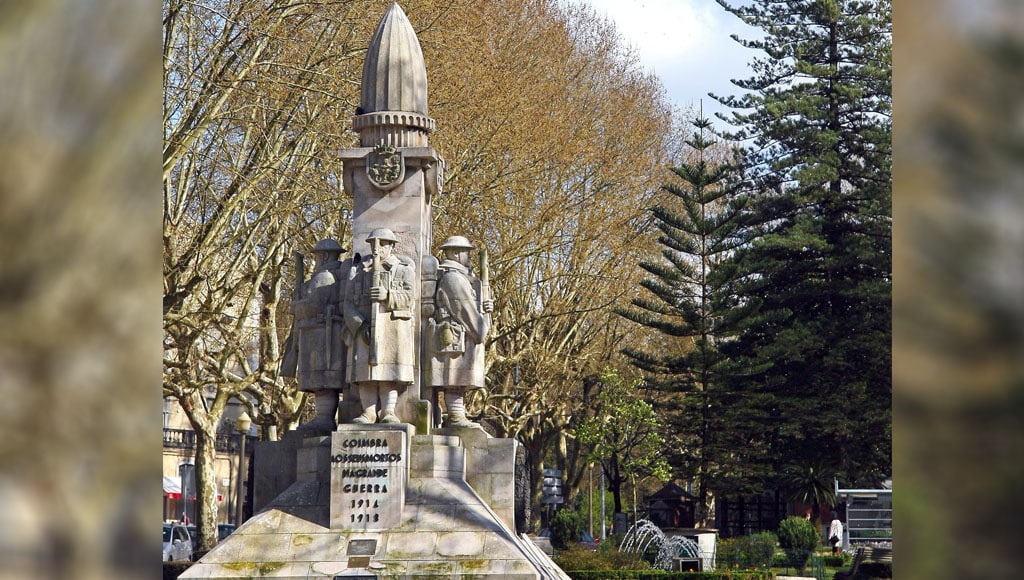
In total, the Portuguese lost about 400 killed and 6,500 prisoners of war, and the anniversary of the Battle of La Lys is still celebrated in Portuguese garrison towns on April 9. It is worthwhile to remember that the performance of the demoralized Portuguese Army was not markedly different from that of British formations in similar circumstances.
The Versailles Treaty
After the Armistice in November 1918, the negotiations for the peace treaty at Versailles were protracted, and the document was signed eventually on June 28, 1919. It became increasingly clear that the major powers at Versailles were motivated by their own agendas, and that the smaller nations (such as Portugal, Serbia, Greece and Romania) had very little influence on the terms of the final treaty.
Although Portugal achieved its war aims of maintaining its colonial empire, of establishing the legitimacy of the Portuguese Republic, and of reducing the threat of a Spanish takeover, the cost to the country was very high.
Effects felt in Portugal
The shortages which had appeared during the war continued. Coal, matches, fish, meat, flour, cooking oil, rice, beans, sugar, butter were all in short supply. Farmers complained that they were not paid enough for their produce. As Britain cut off credit to the young republic, inflation reached a high of 440% in the two years January 1918-January 1920. The Spanish flu outbreak claimed up to 100,000 victims in 1918 alone, and the high rate of emigration to Brazil further weakened the country.
Those politicians who had advocated participation in the war now had to manage the outcome. The party of the entrists was the Democratic Party, led by Machado and Costa. Representing Portugal in Paris, Costa was unable to secure for Portugal any reparations; or the captured German ships; or a seat on the executive council of the new League of Nations (that seat went to Spain, a non-combatant in the war).
Machado gave Costa the responsibility of raising a loan from the Americans, but he somehow did not check on the trustworthiness of the lenders, and Portugal was essentially cheated.
The Democratic Party and Costa himself had become deeply divisive in Portuguese politics. Worse still, the brand of republicanism promoted by Costa was marked by his failures. Roaring inflation, the lack of necessities and of security on the streets could be laid at the door of the Democratic Party and its decision to enter the war.
The utopia of civic republicanism faded from public memory, replaced by aspirations to order, stability and security.
Between 1918 and 1926, there were 30 different governments, and large-scale forgery together with the assassination of political leaders paved the way for the ensuing dictatorship.
Read more from Peter Booker about Portugal’s history: Afonso Costa and the First Republic or The Republican Party and the Implantation of the Republic