At the time, suffrage was limited to literate taxpayers, and as the working class had no legitimate means of political protest, many of them joined the Carbonária.
The question behind these figures is this: if the Republican Party won so few seats, it clearly was not supported by many voters. How was it then that the Republic was immediately so popular and became so rapidly established after the fall of the monarchy in 1910?
Owing its origin to the Jacobins of the French revolution of 1789, the PRP was founded in 1883. The aims of the Jacobins had been liberty, equality and fraternity within a republican constitution.
In Portugal, there had been an undercurrent of a similar republican feeling ever since the return of D João VI from Brazil in the 1820s. The PRP embraced liberalism, and in their view, the monarchy personified the unchanging and oppressive nature of the Portuguese Constitution. One commentator asked: “With what right do they [people] demand a programme from the PRP? The monarchy has shown incompetence and shameless oppression, and the republicans seek the summary demolition of the regime.”
The first PRP deputy to the national Congress was elected in 1879, and as its electoral support was diminished by the competition of the newly-founded Socialist Party, the PRP reached a high point of only four elected members in 1890, three of them representing the Lisbon electoral district.
There were two events which boosted the appeal of the PRP among the electorate. The first was the British Ultimatum of January 1890. As Britain peremptorily ordered the Portuguese government to withdraw from central southern Africa (the territory between Angola and Mozambique), the whole of Portugal was insulted and affronted.
The republican ideal had not commanded general support, and the four members of 1890 owed their electoral success to popular indignation at the Ultimatum, and from the time of the Ultimatum, all classes of liberal society gravitated to the republican solution.
On January 11, 1891, a year after the Ultimatum, the PRP published its manifesto and, just three weeks later, the first attempt by republicans to overthrow the monarchy in Portugal took place as a military uprising on January 31, 1891, in Porto. Most people saw Portugal’s acquiescence in the Ultimatum as a national humiliation, and evidence of the weakness of the monarchy.
Brazil had overthrown its Emperor only in November of 1889, and support for a similar action in Portugal was very strong in Porto. The revolt lasted only a few hours and 250 people were subsequently sentenced to periods of exile in Africa. The crackdown on participants in the revolt was so effective that it weakened the republican movement to the extent that, for a time, the PRP stopped contesting legislative elections because of its poor chances of success.
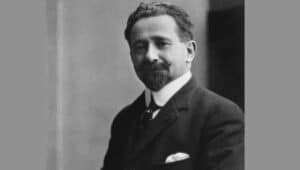
The second event occurred in 1903, when Bernardino Machado, losing faith in the monarchy, abandoned the Regenerador Party and threw his weight behind the PRP. Machado had been a popular government minister and, after 1910, served as Prime Minister and as President of the Republic, each on two occasions. He set about reorganising and strengthening the PRP, building a party organization in parishes, municipalities and electoral districts.
After the regicide of 1908, the party’s results improved to seven seats, and in 1910, the PRP achieved 14 seats in the election, but out of a Congress of 155 seats, it was still not a major result. In rural Portugal, election results depended on anti-republican political bosses, but in the city of Lisbon, the PRP achieved 62% of the votes.
A vital concern to the republicans was anticlericalism. Freemasonry may have been an inspiration to the republican movement, but a major motivation was the fundamental belief in a revolt against the close alliance established in mid-century between the Catholic Church and the Constitutional Charter.
A genuinely liberal regime would require a separation of Church and State together with a civil registry of birth, marriage and death. Although republicans respected religious freedom, they believed that the Church had no role in the Constitution. The PRP conducted an intense propaganda campaign against the Church and, citing the religious devotion of Queen Amélia, managed to link anticlerical and antimonarchical feelings among the population.
Anticlericalism, and particularly anti-Jesuitism, became very popular, especially in the large cities. Republican propaganda urged that Jesuits were debased and, in late 1910, there was even a magazine illustration which showed two “scientists” measuring the cranium of a “degenerate” Jesuit.
By agreeing with João Franco in 1907 that the government of the country could be conducted as a dictatorship without reference to Congress, the king had become the enemy of the people. The regicide was carried out on February 1, 1908, by members of the Carbonária – an organization dedicated to violent means but lacking a political agenda.
The assassins aimed first to target Franco, but their planned coup on January 28 failed to locate him. But on their return to Lisbon on February 1, the King and the Crown Prince presented a perfectly visible target, and at least two assassins performed the deed.
The brief reign of D Manuel II lasted for only 32 months. During that time, the republican movement strengthened and its leaders began to ridicule the monarchy. A republican revolt broke out on October 3, 1910, but many plotters avoided taking part.
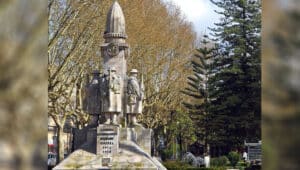
Admiral Cândido dos Reis was a key revolutionary, and fearing that the coup had failed, he committed suicide. It is a testament to the political feeling in Tavira that soon after the Implantation of the Republic, the Câmara renamed a main thoroughfare after this Admiral, a name which is still in use.
The lack of resolve and determination in the response by troops loyal to the government was a major factor in the success of the Implantation of the Republic (October 5, 1910). The State ceased to administer the Church, priests ceased to be salaried public officials, and civil registration was implemented. Laws against blasphemy were abolished, and small non-Catholic secret religious communities emerged.
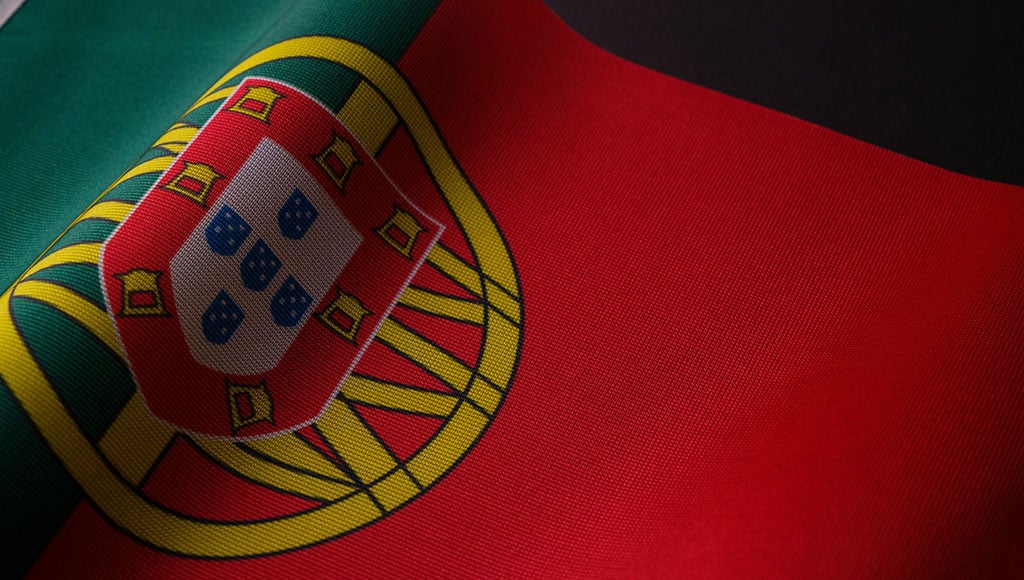
Republicans were horrified at stories of women supposedly being kidnapped and incarcerated in convents. Significant feminist movements appeared for the first time as divorce was legalized, and the status of illegitimate children was improved. The eventual flag chosen for the new Republic of Portugal was based on the red and green of the flag of the Republican Party.
People flooded the streets in answer to this appeal:
“As Republicans and citizens committed to society, on October 5 we take to the streets with our ever-loved green-red flags, which on this day will flood the streets of the main Portuguese cities, raising the atmosphere and our hearts with hope and certainty in a new Republican regime capable of transforming politics into our main mottos:
“Liberty, Equality, Fraternity…then there will be a true Republican Democracy in the streets, in the workplaces, in social associations, in the fields, in a newly regenerated country that will acclaim this more just society, with order, security and tradition, united under the same plural cry: LONG LIVE THE PORTUGUESE REPUBLIC! – PRP”
Read more from Peter Booker about The Carbonária Portuguesa and the Regicide or Portugal in post-war Europe