The attempt at revolution began on October 4, and the ship Adamastor bombarded the royal palace, the Necessidades Palace, where the young king D Manuel II was playing bridge after entertaining the President of Brazil, who was in Portugal on an official visit.
Following advice, the young king fled to the Palace at Mafra, nearly 30 kilometres away. He was joined there by his mother D. Amélia and grandmother, the Dowager D. Maria Pia and the royal family spent its last night in Portugal at Mafra Palace.
It had been far from certain that the coup would succeed, and one prominent republican, Admiral Cândido dos Reis, committed suicide because he had good reason to believe that the revolution had failed. As it happened, the coup succeeded only because the royalist military commanders failed to take decisive action against the revolutionaries.
Early next day, October 5, the Republic was proclaimed from the balcony of the Câmara (City Hall) in Lisbon.
On the same day, the young king boarded the royal yacht Amélia IV at Ericeira and left the country for his long exile. It was his first wish to land at Porto, but he was dissuaded by news that Porto was in the power of the Republicans. He and his close family made for Gibraltar, where the ship refuelled before making its way to England.
In the previous year, D. Manuel had been inducted at Windsor as a Knight of the Garter, and in his distress, he and his family were welcomed by the king, George V. D. Manuel spent the remaining 22 years of his life at his house in Twickenham, where he died of a severe throat condition at the early age of 42. He had just visited the 1932 Wimbledon Tennis Championships as a spectator.
The Provisional Government
The date of October 5 is remembered in Portugal at the annual bank holiday known as the Implantation of the Republic.
The Provisional Government (October 5, 1910 – September 3, 1911) was effectively a revolutionary dictatorship. It had not been elected but had assumed power after an armed uprising, and after the king had fled the country.
Because the election immediately preceding the revolution had seen only 14 deputies elected on behalf of the Republican Party, it is clear that its actions were not supported by the overwhelming majority of voters in Portugal. But such considerations were far from the mind of the most energetic and radical members of the new government. It was impossible that the following reforms could have been carried through during a normal parliamentary session.
The Republican Reforms
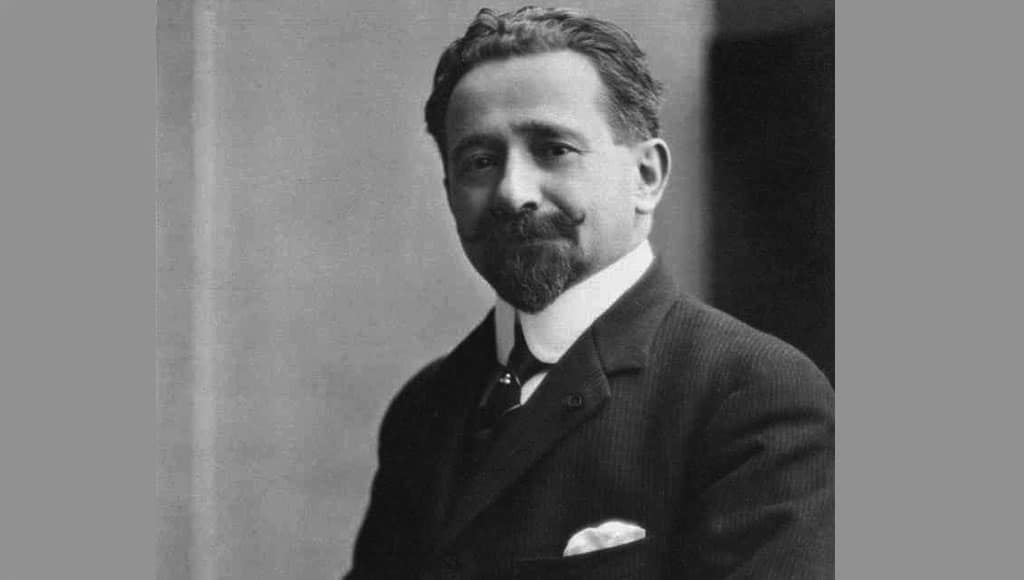
The new Minister of Justice, Afonso Costa, was by far the most radical and energetic member of the new government, and he began to put into effect the aims of the Republican Party, to the great chagrin and opposition of the Catholic Church.
In the 11 months of the Provisional Government, Costa decreed the banishment of all religious orders, and in particular the Society of Jesus (the Jesuits had also been banished by Pombal in 1759, but had gradually re-established themselves in the country); the closure of monasteries and convents; the prohibition of religious teaching in schools; the abolition of the religious oath in civil ceremonies; the prohibition of wearing religious robes in the street; and the separation of Church and State. At a stroke, all possessions of the church in Portugal became the property of the state.
Besides being very unpopular in Portugal itself, many American and European states found the anti-clericalism of the Provisional Government profoundly disturbing. Pictures of Jesuit priests escorted by armed militia were offensive to the foreign press and foreign governments.
Those clergy in Portugal who resisted these reforms were persecuted, and all but one of the country’s 12 bishops were excluded from their dioceses. In the face of this resistance, Costa famously declared that Catholicism would be eradicated from Portugal within three generations.
Under further moves, civil marriage and divorce were legalized; marriage partners were deemed to have equal rights; and natural children were awarded legal status. Further legislation permitted the right of workers to participate in strikes; reformed laws covering the press; and eliminated royal and noble ranks and titles. The municipal guards of Lisbon and Porto were amalgamated into the new National Republican Guard (the GNR that we have nowadays).
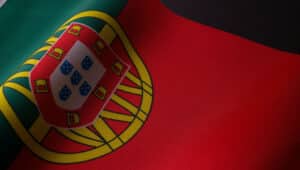
The Portuguese flag was modified and the blue and white royalist flag was replaced by the present red and green flag of the Republic. The currency was reformed as the real was superseded by the escudo; the national anthem (the Hymno da Carta) was replaced by A Portuguesa, composed by Alfredo Keil in 1890 in response to the British Ultimatum of 1890.
The orthography of the Portuguese language was simplified and codified but without the agreement of Brazil, the major Lusophone nation. This high-handed approach led to language differences for another hundred years. And lastly, the Lisbon Câmara selected an official bust to represent the Republic – similar to the bust of Marianne in France.
The disintegration of the PRP
It is not uncommon that a revolutionary party, having achieved the goal of ejecting an incumbent government, should find that its previous united solidarity suddenly develops fractures. Within a year, the PRP had become three parties – the Democrats, Evolutionists and Unionists.
The Democrats led by Afonso Costa were the most radical and numerous; the Evolutionists, under António José de Almeida, were essentially the centrist element; while the Unionists of Brito Camacho assumed a more conservative programme.
Instability
The government of Portugal during the 16 years of the First Republic can be characterized as chaotic. There were 45 separate Presidents of the Council (as the Prime Ministers were then called) and eight Presidents of the Republic, only one of whom served the full four-year term.
It was unfortunate that the young Republic was presented with the dilemma of the Great War in 1914. Whether to join the Allies or to join the Central Powers – this question caused further fractures in the already difficult political situation.
In the upshot, President of the Council Afonso Costa, and President of the Republic Bernadino Machado fatefully answered the call of the allies. The effort of committing troops to the Western Front as well as to Angola and Mozambique was insupportable to the army, and the effect on prices and the availability of essential goods at home caused riots and strikes among the working population.
Memorials to Afonso Costa
There are two public memorials to the great revolutionary Afonso Costa – one in Lisbon and the other in Porto, the citadels of republicanism. They were each erected after the return of democracy to Portuguese politics at the Carnation Revolution.
The next article will discuss the participation of Portuguese troops in the Great War, and the fatal effect of WW1 on Portugal’s first experiment with republicanism.
Read more from Peter Booker about The Republican Party and the Implantation of the Republic or The Carbonária Portuguesa and the Regicide