The significance of the Cayenne in Porsche lore cannot – must not – be underestimated. When it was launched in 2002, the idea of a sports car brand like Porsche building a two-tonne SUV led many to proclaim the demise of this hallowed constructor. The Cayenne was the type of heresy not even Porsche could survive.
Well, that was not exactly how it turned out, was it? The Cayenne made Porsche as big as it had ever been. It showed everyone there was a market for high-end SUVs and, in a way, changed the auto industry forever.
Looking at the automotive landscape today, only McLaren find themselves without an SUV in their catalogue – but that will come too. Ferrari, Rolls-Royce, Bentley, Lamborghini, Maserati … they all succumbed to the profit margins a big SUV brings. To this day, the Cayenne alone has found more than 1.5 million customers worldwide.
Porsche’s relentless upward trajectory in terms of brand awareness, sales and financial results ended quite abruptly in 2025, when they, and the rest of the world, realised the electric car is not the solution all people want – at least not yet.
Profits tanked, a new CEO was summoned to Stuttgart, and a rethink of the whole brand’s strategy is in full swing.
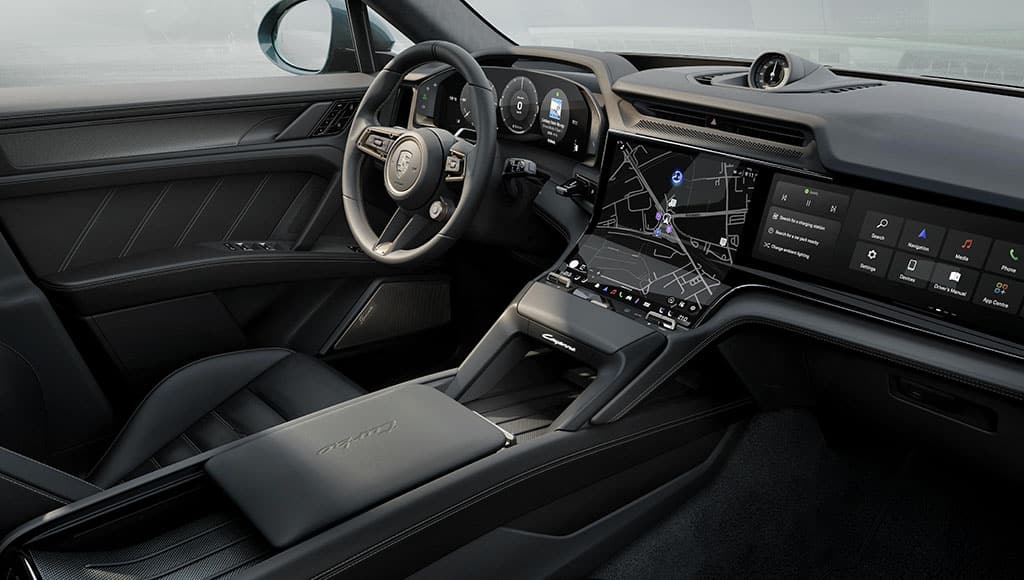
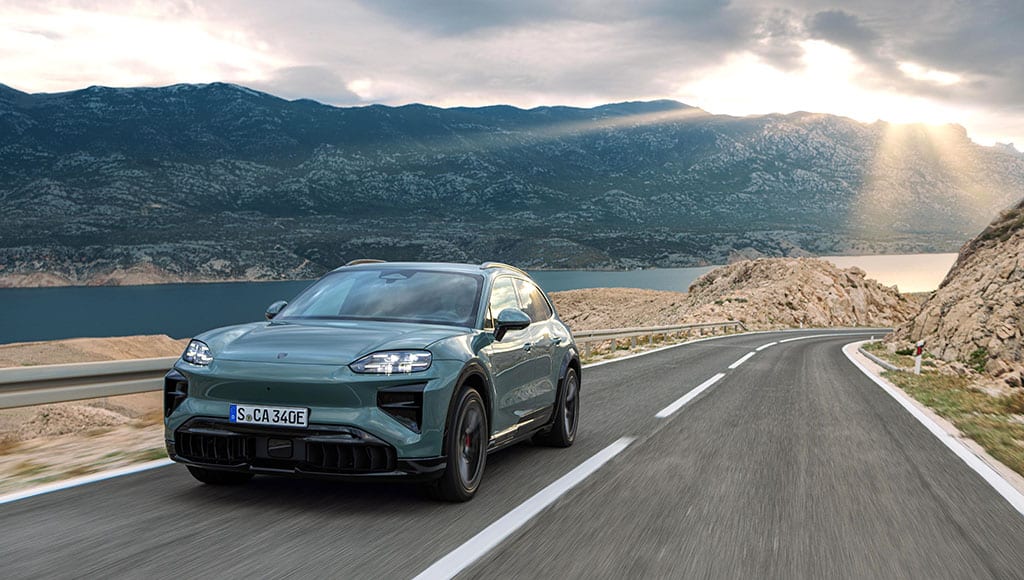
In the meantime, the new electric Cayenne is here. The timing is far from ideal, but Porsche didn’t really have a choice. The battery-powered Cayenne will be sold alongside the combustion model for the foreseeable future, thus leaving every door open for the customer. Wise decision.
The new electric Cayenne is, as it had to be, a technological tour de force. Porsche’s most advanced car to date brings, in top-of-the-line Turbo guise, a whopping 1156 horsepower, 1500Nm of torque and a 0-100km/h time of 2.5 seconds. Two. Point. Five. In a thing that weighs 2.7 tonnes! I don’t know if that’s incredible or just plain scary.
The Cayenne’s platform is used by other VW Group models, but its 800v architecture and 108 kWh (that’s usable capacity) battery have a new cell chemistry that mixes nickel, manganese and cobalt for better energy density.
Porsche claims the Cayenne Electric, in standard, S and Turbo versions, can offer more than 600km of range. The engineers worked tirelessly to improve aerodynamics, getting to an amazing drag coefficient number of just 0.25 Cx. A charging rate of 400 kWh means 10-80% charge in 26 minutes or 150km in 5 minutes.
I don’t think we can call any 2.7 tonne SUV beautiful, but the new Cayenne sure looks purposeful. I like that it’s not over-styled, but rather even a little understated. It has presence and it has that all-important Porsche stance.
This is an all-new car, and it has a suitable all-new interior based on a completely new architecture for Porsche. The central curved touchscreen dominates, but Porsche has, mercifully, left us physical buttons for climate control and system settings.
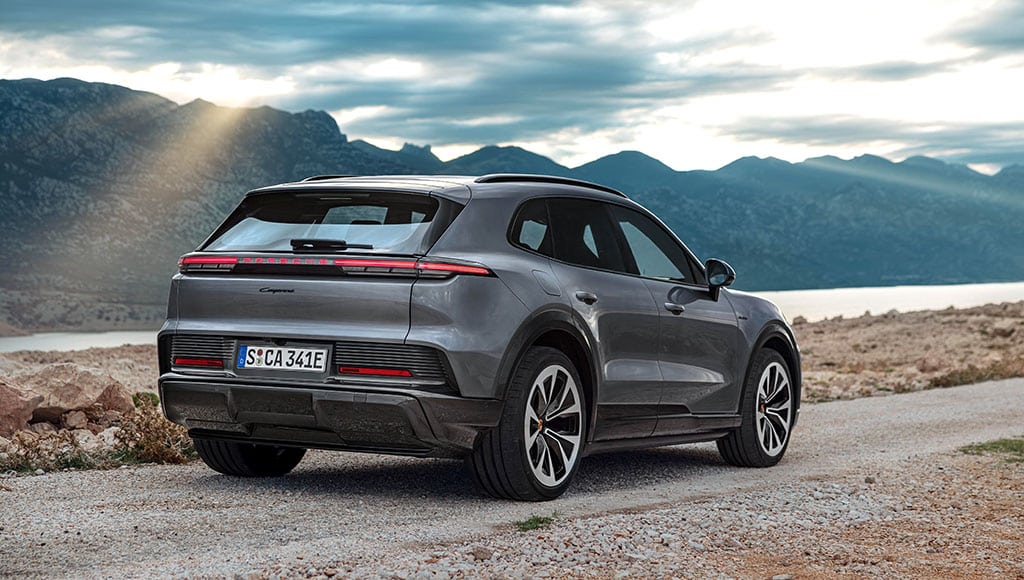
Graphics are industry leading. There is so much to learn, it will take a while for owners to completely get the grasp of it, but the whole infotainment system is so good, it will be worth it. There is an optional passenger screen, which I am guessing most buyers will go for, as it makes the cabin look that little more avantgarde.
In terms of quality, the new Cayenne feels rock-solid. The materials are excellent and the fit and finish have that Porscheness (for lack of a better word) to it, as it is going to last a hundred years and still look and feel good in 2130.
And get this: the door panels can be heated. The centre armrest can be heated. I guess only seat heating is very last decade. There is plenty of space aboard, obviously, comfort is king and the ambience is fantastic. Road trips will be a must.
If you want to go beyond paved roads, the off-road pack gives the Cayenne Electric incredible ability, with a higher ground clearance, attack angles and advanced down-hill assistance. A proper SUV in other words, and a true heir to the original Cayenne, which was super-capable when the going got rough.
An important mention to the entry-level, standard model, with its 446 horsepower and 4.8 seconds to 100km/h. In the real world, it just makes more sense than the Turbo, with more than enough performance to make every driver happy.
Pricing is also a factor here. The Turbo starts at €172,000 and the standard car at a nudge over €110,000. How much do you really need that 1156 horsepower extravaganza? Well, for some, nothing else will do, but Porsche needs the entry-level version to do the numbers. The Turbo is more of a ‘look at what we can do’ kind of car that is meant to sell the other ones. Especially because the standard Cayenne Electric costs €13,000 less than the cheapest combustion-engined sibling.
It’s (almost) back to square one for the Cayenne then. Porsche built a great car. Now let’s see if the market is ready for it.
Read more from Guilherme Marques about motoring: Mini John Cooper Works – Toy story
MOTOR TRADE | Business, Services, Marketplace – CLICK HERE