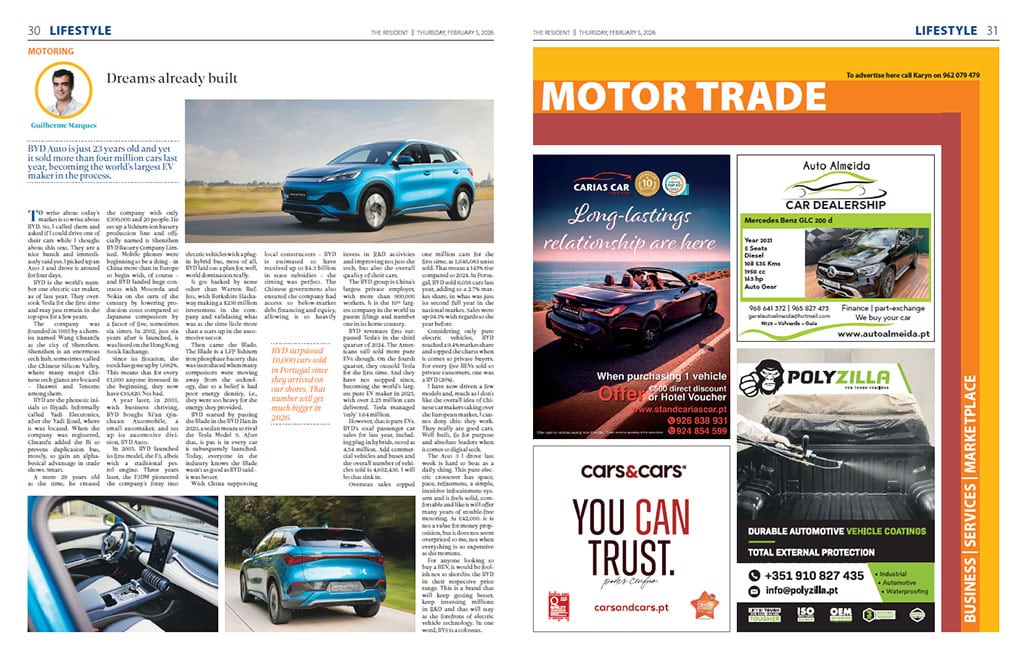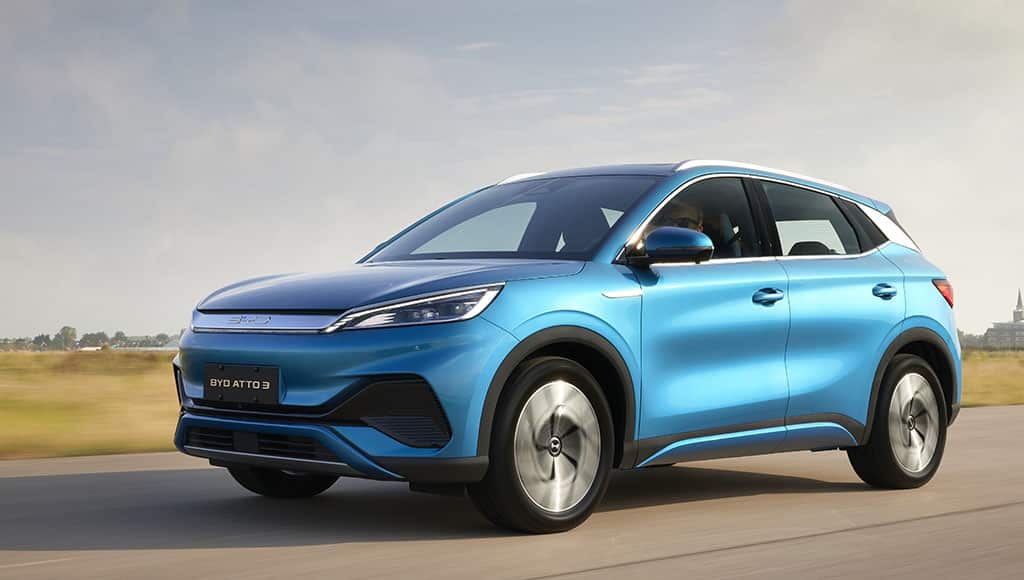
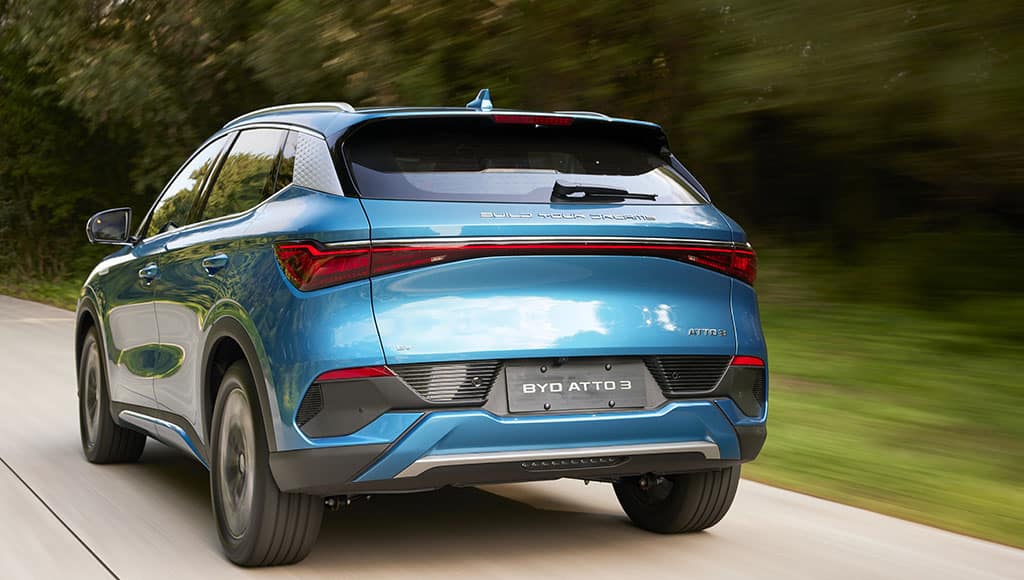
To write about today’s market is to write about BYD. So, I called them and asked if I could drive one of their cars while I thought about this text. They are a nice bunch and immediately said yes. I picked up an Atto 3 and drove it around for four days.
BYD is the world’s number one electric car maker, as of last year. They overtook Tesla for the first time and may just remain in the top spot for a few years.
The company was founded in 1995 by a chemist named Wang Chuanfu at the city of Shenzhen. Shenzhen is an enormous tech hub, sometimes called the Chinese Silicon Valley, where many major Chinese tech giants are located – Huawei and Tencent among them.
BYD are the phonetic initials to Biyadi. Informally called Yadi Electronics, after the Yadi Road, where it was located. When the company was registered, Chuanfu added the Bi to prevent duplication but, mostly, to gain an alphabetical advantage in trade shows. Smart.
A mere 29 years old at the time, he created the company with only €300,000 and 20 people. He set up a lithium-ion battery production line and officially named it Shenzhen BYD Battery Company Limited. Mobile phones were beginning to be a thing – in China more than in Europe to begin with, of course – and BYD landed huge contracts with Motorola and Nokia on the turn of the century by lowering production costs compared to Japanese competitors by a factor of five, sometimes six times. In 2002, just six years after it launched, it was listed on the Hong Kong Stock Exchange.
Since its flotation, the stock has gone up by 1,682%. This means that for every €1,000 anyone invested in the beginning, they now have €16,820. Not bad.
A year later, in 2003, with business thriving, BYD bought Xi’an Qinchuan Automobile, a small automaker, and set up its automotive division, BYD Auto.
In 2005, BYD launched its first model, the F3, albeit with a traditional petrol engine. Three years later, the F3DM pioneered the company’s foray into electric vehicles with a plug-in hybrid but, most of all, BYD laid out a plan for, well, world domination really.
It got backed by none other than Warren Buffett, with Berkshire Hathaway making a $230 million investment in the company and validating what was at the time little more than a start-up in the automotive sector.
Then came the Blade. The Blade is a LFP lithium iron phosphate battery that was introduced when many competitors were moving away from the technology, due to a belief it had poor energy density, i.e., they were too heavy for the energy they provided.
BYD started by putting the Blade in the BYD Han in 2020, a sedan meant to rival the Tesla Model S. After that, it put it in every car it subsequently launched. Today, everyone in the industry knows the Blade wasn’t as good as BYD said – it was better.
With China supporting local constructors – BYD is estimated to have received up to $4.3 billion in state subsidies – the timing was perfect. The Chinese government also ensured the company had access to below-market debt financing and equity, allowing it to heavily invest in R&D activities and improving not just the tech, but also the overall quality of their cars.
The BYD group is China’s largest private employer, with more than 900,000 workers. It is the 10th largest company in the world in patent filings and number one in its home country.
BYD revenues first surpassed Tesla’s in the third quarter of 2024. The Americans still sold more pure EVs though. On the fourth quarter, they outsold Tesla for the first time. And they have not stopped since, becoming the world’s largest pure EV maker in 2025, with over 2.25 million cars delivered. Tesla managed ‘only’ 1.64 million.
However, that is pure EVs. BYD’s total passenger car sales for last year, including plug-in hybrids, stood at 4.54 million. Add commercial vehicles and buses and the overall number of vehicles sold is 4,602,436. I will let that sink in.
Overseas sales topped one million cars for the first time, at 1,046,083 units sold. That meant a 145% rise compared to 2024. In Portugal, BYD sold 6,059 cars last year, adding to a 2.7% market share, in what was just its second full year in the national market. Sales were up 94.1% with regards to the year before.
Considering only pure electric vehicles, BYD reached a 9.4% market share and topped the charts when it comes to private buyers. For every five BEVs sold to private customers, one was a BYD (20%).
I have now driven a few models and, much as I don’t like the overall idea of Chinese car makers taking over the European market, I cannot deny this: they work. They really are good cars. Well built, fit for purpose and absolute leaders when it comes to digital tech.
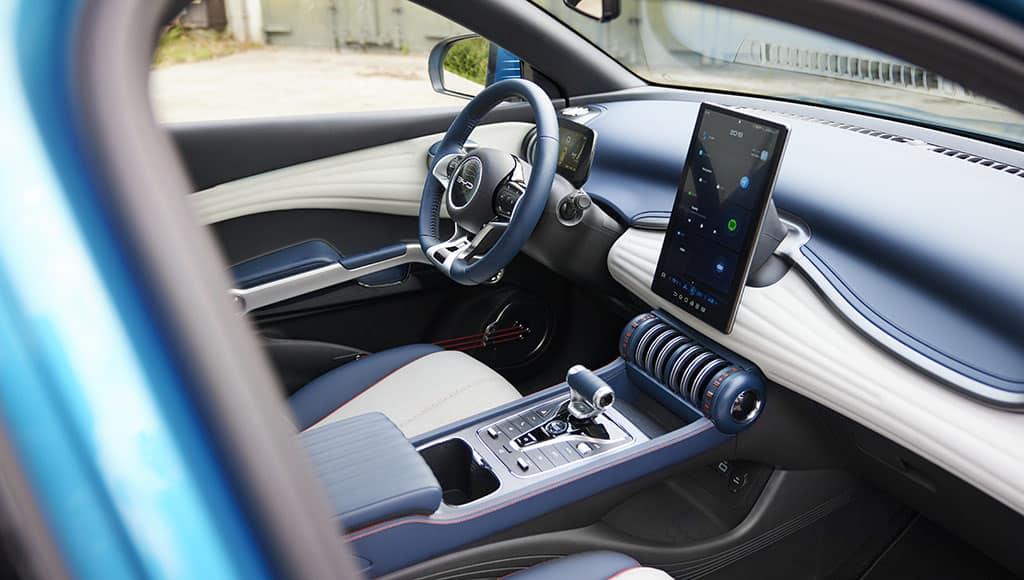
The Atto 3 I drove last week is hard to beat as a daily thing. This pure electric crossover has space, pace, refinement, a simple, intuitive infotainment system and it feels solid, comfortable and like it will offer many years of trouble-free motoring. At €42,000. it is not a value for money proposition, but it does not seem overpriced to me, not when everything is so expensive at the moment.
For anyone looking to buy a BEV, it would be foolish not to shortlist the BYD in their respective price range. This is a brand that will keep getting better, keep investing millions in R&D and that will stay at the forefront of electric vehicle technology. In one word, BYS is a colossus.
Read more from Guilherme Marques about Motoring – 2025: a year in numbers or Audi Q5 – Keystone
MOTOR TRADE | Business, Services, Marketplace – CLICK HERE