From March 24 to 26, delegates gathered in Rome for the annual Aerial Firefighting Global Conference. The primary discussion was to examine the worsening outlook in Europe where more than one million hectares of forest were consumed by flames during 2025 – principally in southern countries bordering the Mediterranean.
During the past five years, average devastation has been: Portugal 96,000 ha, Spain 80,000 ha, Italy 56,000 ha and Greece 50,000 ha. By proportion of Iberian national territory, Portugal has been the worst by far with 3.02% compared to Spain’s 0.78%.
Wildfire is no longer a seasonal hazard which can be dealt with ad hoc by fragmented, poorly-equipped defensive services. It demands year-round vigilance and a recognition of the geographical spread northward as the cumulative effects of climate change bring prolonged periods of very high temperatures, gales, droughts and floods due to heavy rain.
The vacillation of these extremes results in drastic debilitation to agriculture, with desertification affecting what is now prime farmland. Generally, human existence will become more uncomfortable causing drastic changes to norms for living.
To combat the wildfire threat, a complete reorganisation of fire and rescue services is most urgent. Much money must be made available from EU funds to support the Copernicus and Horizon programmes and from national funds to operate multi-purpose aircraft with specialised equipment which can meet the needs of the local geography.
A first priority is to set up an adminstrative headquarters to provide a strategic command of all national resources. An academy will train pilots for special skills such as flying at night and in conditions of smoke and haze so that they may work with the controllers of drones.
However, the most important innovation is to obtain “information superiority” by integrating data from satellites, meteorological stations, and land observation posts with AI-supported analytics. This will then enable swift decision-making in times of stress so that personnel and machines can be deployed advantageously.
Reactive suppression will thus be replaced by proactive anticipation of fire outbreak and movement, and will enable a permanent force of pilots and aircraft to carry out surveillance during the winter.
Terrain may be mapped with co-operation of landowners to provide a mosaic of firebreaks, hydrants and safe loading points for amphibious water tankers and scooper helicopters.
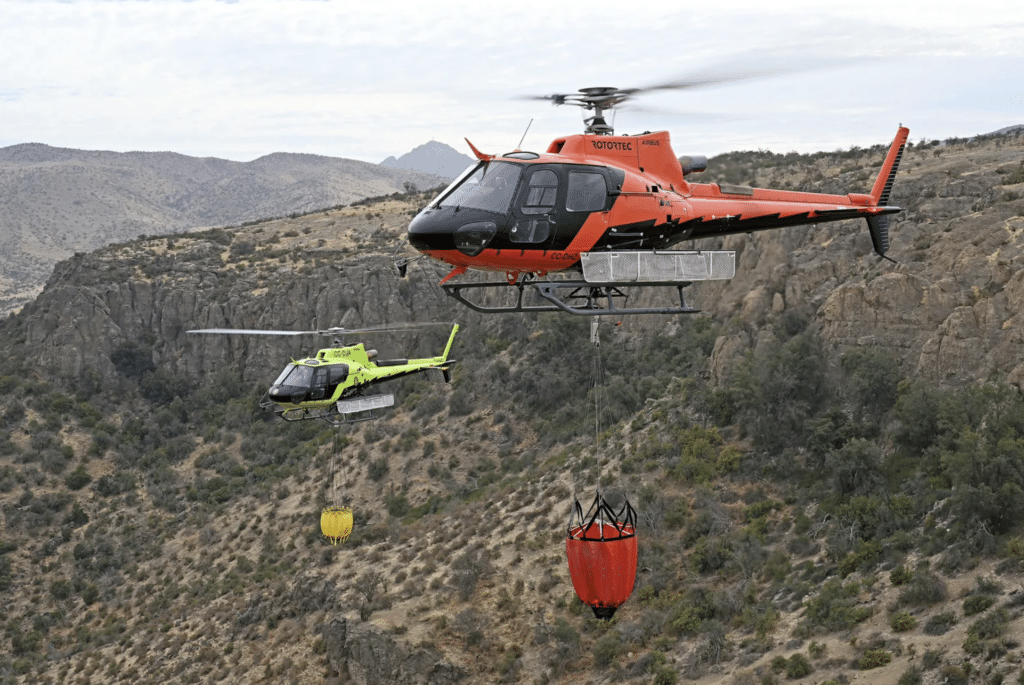
Airbus has recently carried out a series of exercises whereby two Aliaca reconnaissance drones and a Cirrus SR20 light aircraft obtained images and infrared video footage of a synthesized fire area. These were transmitted to a mobile communications vehicle where they were located and merged with satellite and meteorological data concerning wind strength, humidity and temperature to provide immediate directions for a model H125 helicopter carrying retardant and a “water bomber”, which were already airborne and thus able to successfully douse the perimeters of the fiery outbreak.
During the past year, research has produced a new range of effective retardants. These will not replace water as an extinguisher but will make it easier to control the rapid spread of fire fronts, especially when they are in proximity to habitation.
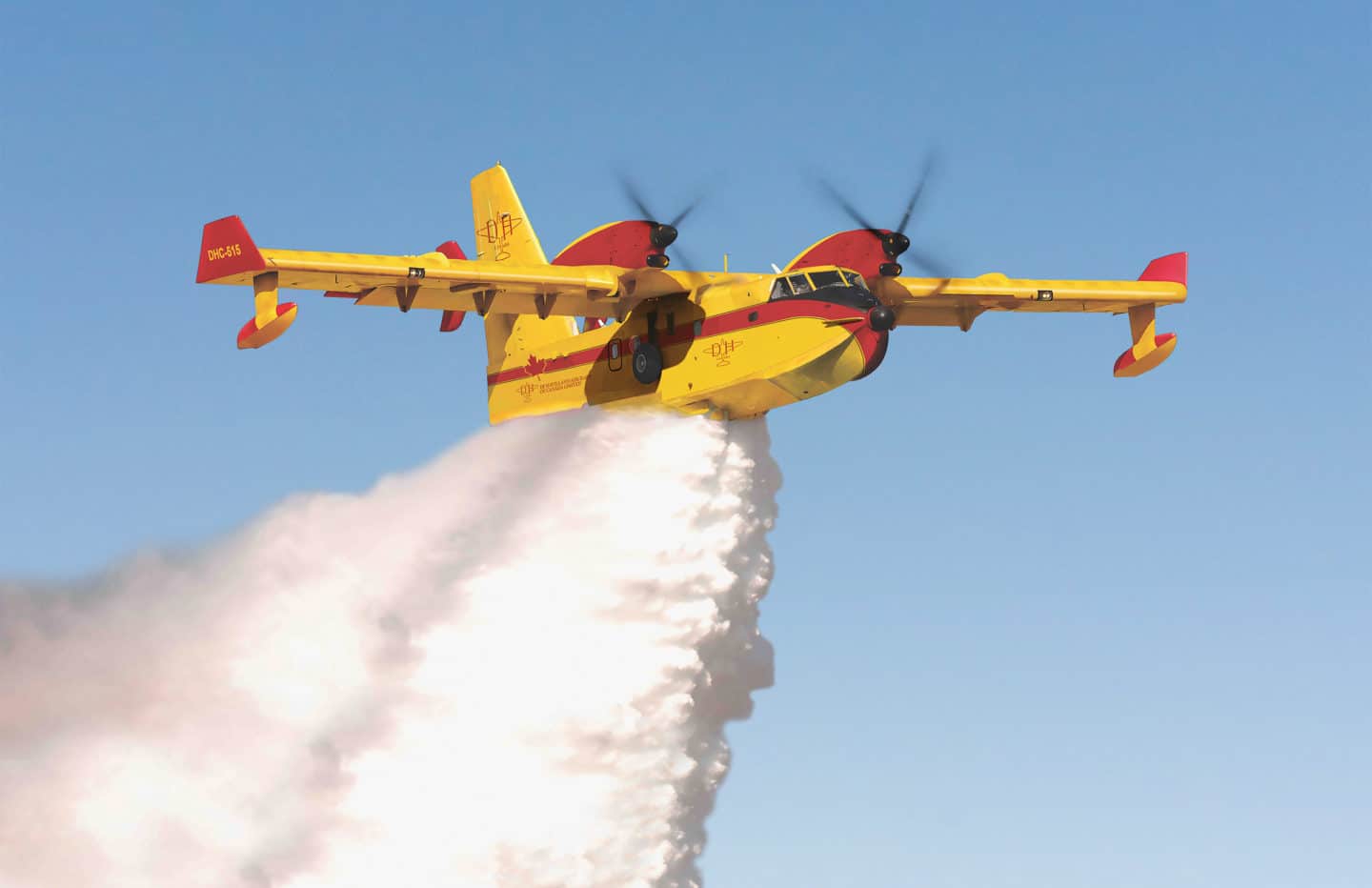
Mention must be made also of the veteran Canadair planes which have seen long service in European theatres despite problems with maintenance. Production is now underway for the much-improved DHS-515. This has been aligned with the European RescEU programme and has enabled an assembly line commitment to supply six member states; Greece will take delivery of the first seven units.
As stated in the essay Earth, Fire and Water (Resident, February, 2026), Portugal stands much to gain by investing in these pan-European innovations because wildfires and other aberrations of 21st century weather can cause havoc to our fragile economy.
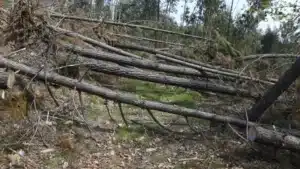
Progress has already been made with land-cleaning schemes being a priority, especially with detritus from Storm Kristin drying in the spring sun. But the problem of fragmented forestry management due to a plethora of absentee owners and disputed inheritances must be resolved by compulsory purchase where grave danger exists.
Finally, the morale (and pay) of teams composed of bombeiros (firefighters), policemen and military must be improved by training courses in the new techniques and the provision of modern tools for a hazardous job.