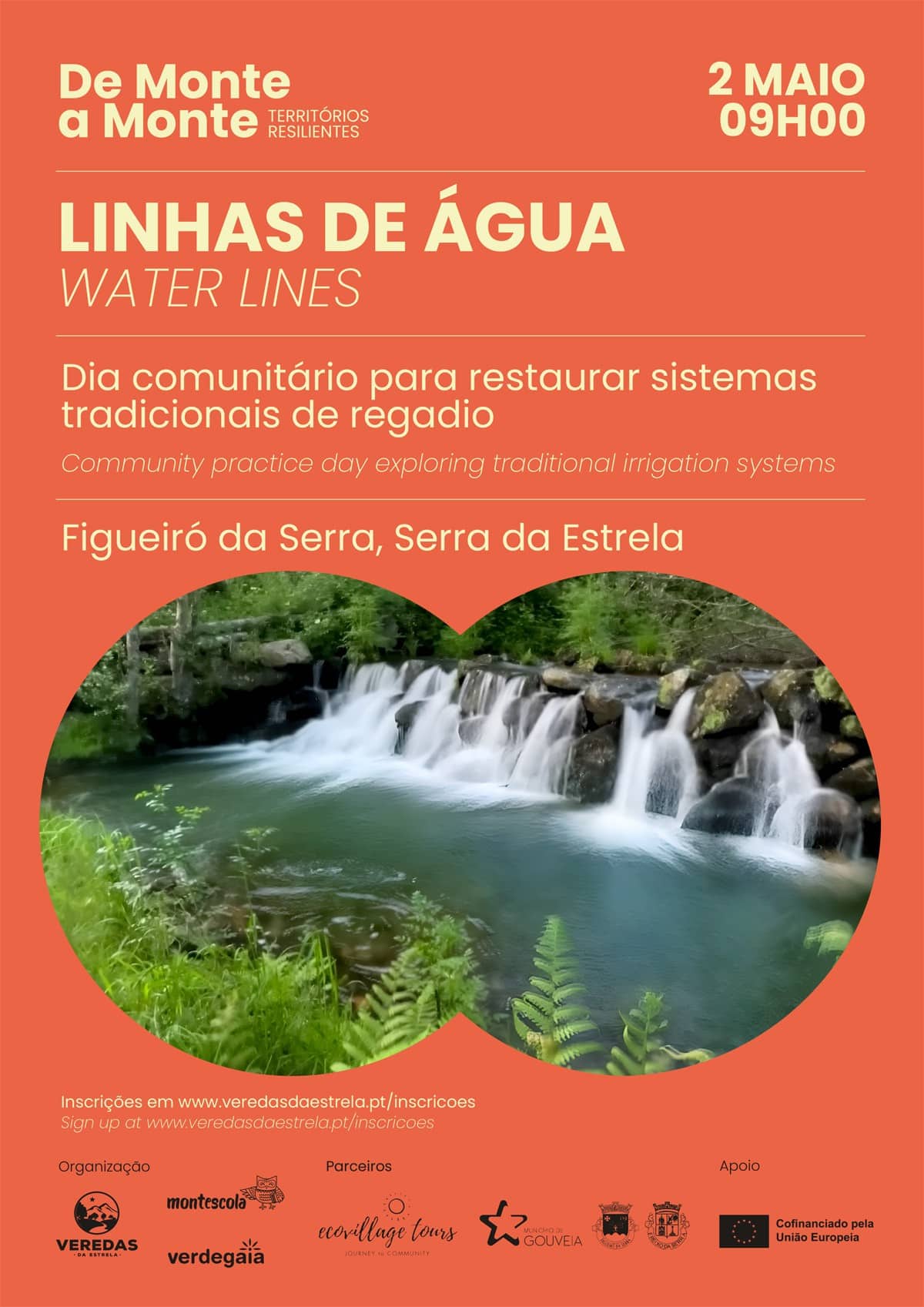
On May 2, Figueiró da Serra, a picturesque mountain village in the municipality of Gouveia, will host an event entitled “Water Lines”, organised by Veredas da Estrela association in partnership with Ecovillage Tours.
The event brings together international visitors and local residents for a day of community action and learning dedicated to traditional irrigation and water retention systems.
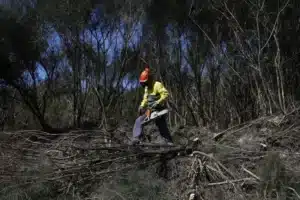
At the Chestnut Forest of the Future – an ecological restoration project for a burnt-out chestnut grove – work is planned to restore an ancient irrigation system, from water collection at the spring to storage. The programme also includes opportunities for knowledge-sharing and a guided hike along the levadas and watercourses on the slopes of mainland Portugal’s highest mountain range.
In a region facing growing challenges related to water scarcity and the risk of wildfires, the restoration of traditional water systems is of particular importance. Beyond their productive function, these systems contribute to water retention in the landscape, strengthening the ecological resilience of the Serra da Estrela mountain itself and the whole Mondego river catchment. The event opens the community’s doors to interested visitors, fostering an exchange between local knowledge and the perspectives of outsiders, within a context of mutual learning and hand-on work.
“Traditional irrigation systems reflect not only a historical connection with the land, but remain highly relevant. In a region such as Serra da Estrela, where water is an increasingly critical resource, restoring and maintaining this infrastructure is essential for both agriculture and community life. Figueiró da Serra still manages the supply of drinking water locally from mountain springs, a situation that is becoming increasingly rare in Portugal and which underlines the importance of caring for community owned systems,” says Nik Völker, spokesperson of Veredas da Estrela association.
The event is part of the Ecovillage Tour of Portugal itinerary, created by Catarina Rosa, a researcher and practitioner in the fields of sustainability and rural regeneration, through the international regenerative tourism initiative Ecovillage Tours.
The journey aims to demonstrate what tourism can be when it contributes fairly and sustainably to the regions visited. To this end, it promotes immersive visits to local community initiatives focusing on sustainability, social and environmental regeneration, and community life.
In the Serra da Estrela, it is also linked to the Erasmus+ project “De Monte a Monte: Resilient Territories”, which brings together participants and learners from Portugal and Galicia to share knowledge and practices related to the resilience of mountain territories.
“In the multiple crises we are currently facing, it is essential to highlight the traditional practices that remain alive and relevant in the daily lives of communities, as well as the rural innovations emerging both locally and globally. For those coming from outside, taking part in these activities allows them to realise that the resilience of these areas is not an abstract concept, but something built through concrete actions, such as cleaning a water tank, restoring a water channel or improving water distribution across the landscape, and that it is highly relational. This type of experience builds very strong bridges between participants and communities that can continue to resonate long after”, says Catarina Rosa, founder of Ecovillage Tours in Portugal.
This initiative forms part of a broader effort to promote the small-scale practices that have historically sustained agriculture in mountainous regions: careful water management, through traditional irrigation and water retention systems, is now essential for coping with extreme weather events such as droughts and floods. In particular, in the headwater areas of the Mondego basin, such as the Serra da Estrela, these practices have a direct impact on the regulation of downstream water flows. In addition, the maintenance of balanced forest systems contributes not only to mitigating the risk of fire, but also to water retention in the soil and the reduction of peak runoff, thereby strengthening the resilience of the entire river basin.
Attendance of the Water Lines event is free of charge, but registration is required as places are limited. Please register here. The event is co-funded by the European Union’s Erasmus+ programme.